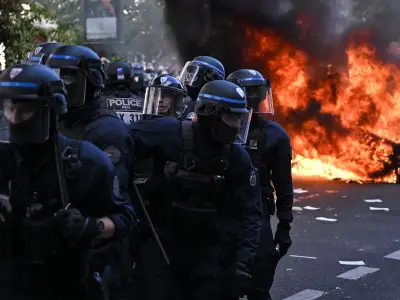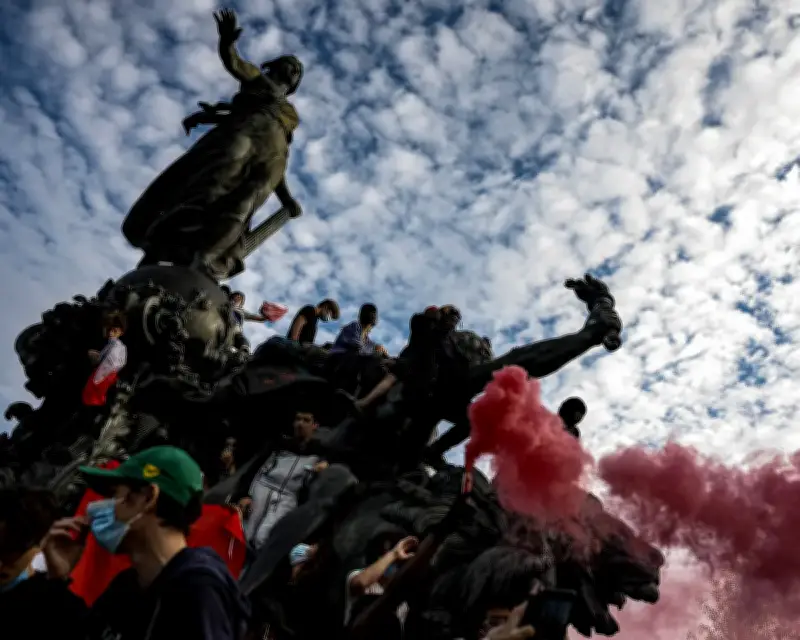
Adolescents across France have taken to the streets, protesting that the government is failing to uphold their right to an education. The government's response, which has included riot police, has sparked outrage and a sense that the authorities have lost their way. While some outside France may view these protests as part of the country's long tradition of insurrection, the underlying issues are far from a cliché.
Deteriorating Conditions in Schools
The situation that has provoked high-school walkouts and teenage anger is rooted in a series of alarming statistics and anecdotes. France ranks 27th in the most recent OECD education rankings, with schools suffering from collapsing ceilings, rats in classrooms, and, in one school in Bagnolet, no drinkable water. The average number of students per class has risen from 27 in 2010 to over 30 today. Half of primary and high schools were missing teachers at the start of the school year, many without substitutes or replacements.
Julie, a 34-year-old teacher who joined the demonstrations, attributed staff shortages to "low salaries and poor treatment." She commutes an hour and 45 minutes each way between Paris and a school on the city's outskirts, earning €2100 (£1,780) a month plus overtime. Teachers' salaries in France are only 56% of those in Germany, even as over €200bn in public subsidies goes to businesses annually.
Students Pay a High Price
Instead of a teacher-led revolt, high-schoolers have cracked first. They have paid a high price for refusing to accept a failing system: a 16-year-old has lost the use of an eye, a 15-year-old has lost a hand, and a 14-year-old has a broken jaw, all from police munitions. Hundreds more have been injured. In total, 4,400 people, the vast majority minors, have been arrested in a little over a week, nearly half the number of arrests made during the gilets jaunes protests.
Fatoumata Sylla Wague, a 17-year-old in her final year at the Lycée Paul Éluard in Seine-Saint-Denis, where pupils were among the first to set up blockades, told me, "Sure some people were burning trash cans, but trash cans can't feel anything." She and her fellow students felt the teargas launched by police in response. Despite "unlivable" temperatures, mould, electricity cuts, and often not enough tables or chairs, Fatoumata would rather have been in class. She wants to teach history and felt compelled to take part. "If I'm fighting for our rights today, it's because I really want to teach, but in good conditions. And so this is for the next generation of students and teachers."
A Deeper Disconnect
The protests reflect a broader disconnection. In 2021, The Lancet found that 75% of French 16-25-year-olds exhibited signs of eco-anxiety, telling researchers they were "frightened" about the future. Students and young workers also feel pessimistic about AI, and Fatoumata worries about the rise of far-right movements in France and elsewhere.
Successive governments have dealt with troubled urban areas through heavy-handed policing, often targeting young people with random checks. Centralised policymaking sends the least experienced teachers to these areas, while senior teachers can request transfers to less difficult schools. A future far-right government, the kind Fatoumata worries about, would likely ramp up these tensions. Rightwing politicians have already called for harsher sentences and more law and order.
One sign at Paris's Place de la République read, "On n'est pas mal éduqué, on n'est pas écouté" ("We're not poorly educated, we're just not being listened to"). Responding to the crisis will require tangible acts, such as upgrading dilapidated facilities. Arnaud Richards, 50, head of student services at Iqbal Masih middle school in Saint-Denis, offered an example: the technical high school he previously worked in, Gabriel Péri, reopened in 2022 after a total reconstruction, leading to a calmer climate. "Having the school itself be a beautiful place made the community feel more respected," he said, which "created a calmer environment" for both students and staff.
But a real answer doesn't stop with better facilities. As Fatoumata said: "Honestly, I don't think the government cares, they just want to shut us up with false promises. We know nothing will change, because the government doesn't listen to us." Of all the things going wrong for France, this underlying lack of togetherness, the feeling that nobody is listening, will be the most difficult to deal with.