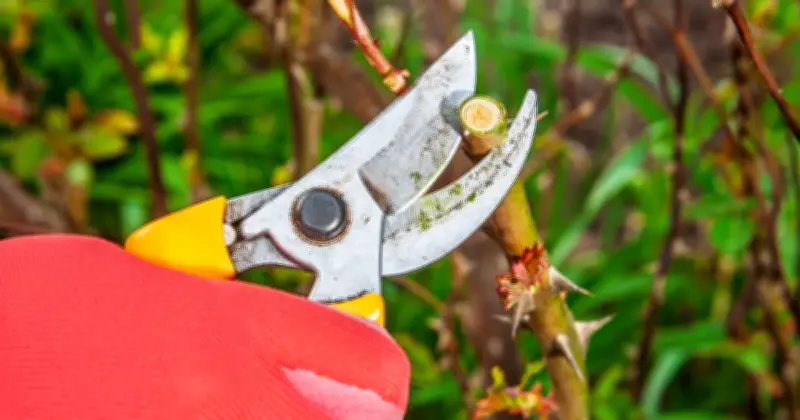
TV gardening experts Monty Don and Alan Titchmarsh have both urged gardeners to prune climbing roses this October, offering detailed guidance on how to do so. The shared recommendation comes as autumn gardening tasks take centre stage, with pruning highlighted as one of the most important jobs this month.
Why climbing roses need a prune
Climbing roses are described as quintessentially English and highly versatile, ideal for masking unsightly walls or fences or covering archways. Smaller varieties can be trained around poles, particularly useful in smaller gardens where floor space is limited.
Most climbing roses produce blooms repeatedly through the summer, with some varieties continuing to flower into early autumn. Pruning them correctly encourages strong new shoots to replace older, damaged stems and improves the summer flower display. Annual pruning also keeps climbers from overwhelming their supports and avoids the frustration of overgrown canes.
Alan Titchmarsh's pruning method
According to Alan Titchmarsh, the main task is to “remove any dead stems”. Sharing advice on his TikTok account @gardeningwithalantitchmarsh, he noted that pruning climbing roses keeps them “healthy and flowering”.
At this time of year, Titchmarsh recommends cutting old, unproductive stems back to a junction (the knobbly area where the top growth meets the rootstock), which can then be trained in its place. This removes much of this year's growth while leaving the stems that will carry next year's flowers.
Monty Don's approach
Monty Don shared on his gardening blog that climbing roses can be “pruned hard now”. He advises starting by removing any damaged or crossing growth or very old wood, which can be pruned right back to the ground.
Don said: “The main stems should be fanned out at an equidistance as horizontally as possible, tying them to wires or a trellis. Then all the side shoots growing from these main stems, which produced this year's flowers, can be reduced to a short stub of a couple of leaves.
“The effect should be a tracery of largely horizontal growth with pruned side shoots running along their length.” As a final step, gardeners need to ensure the stems are all tied firmly in to avoid winter damage.