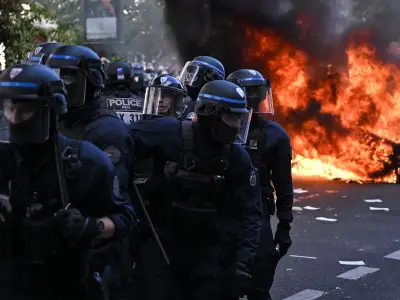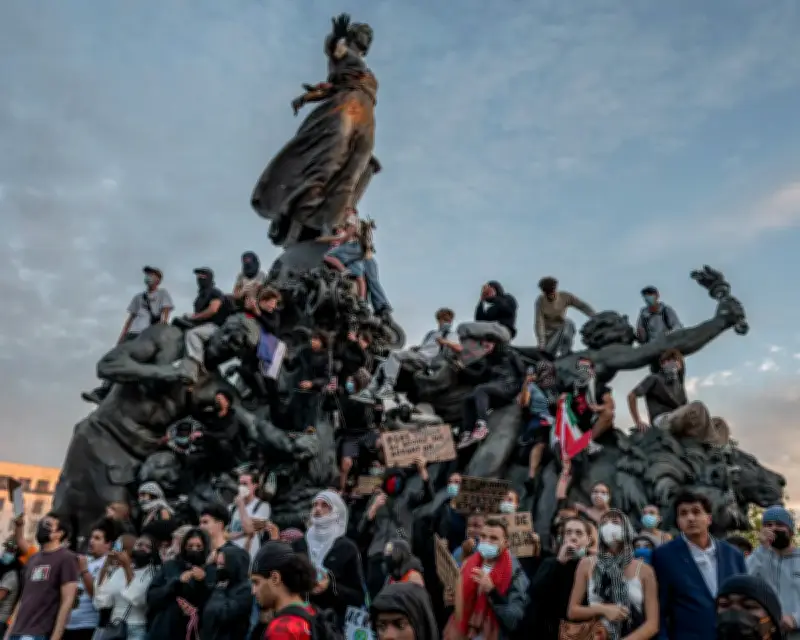
Hundreds of thousands of protesters in France have gathered to demonstrate against what they call an overcrowded, ill-equipped and understaffed education system. The youth-led movement, which started on 17 September, has brought tens of thousands of young people and adults onto the streets, with further strikes planned.
Origins of the movement
The protests began when pupils returning to the Lycée Saint-Exupéry in Créteil, southwest of Paris, after the summer holidays discovered they couldn't continue their studies because of staff absences. The 15- to 18-year-olds blockaded their high school in protest.
After negotiations with the education ministry, staffing gaps were filled, but complaints about crumbling buildings, overcrowded classrooms, and long school days resonated across the suburbs. "This movement grew from the ground up, from teenagers speaking to others outside their lycées. And over a couple of weeks, it has spread to hundreds of schools across France," said Angelique Chrisafis, the Guardian's Paris correspondent.
Teenagers on the streets
Sociologist Fabien Truong praised the "maturity and coherence" of the protesters, pointing to a "social media effect" whereby teenagers in wealthier areas shared videos of scurrying rats, gaping ceilings and leaking toilets in poorer schools. "It's beautiful, this solidarity with students from more privileged backgrounds fighting for others and more equality," he said.
Angelique spoke to teenage girls at a barricade in central Paris who said: "We're told in France that state education is a great leveller, but that's not the case. We are being taught our lessons, but we're getting out on to the street because we can't bear to know that other students in poorer areas are in buildings that are crumbling."
What's wrong with French schools
Thousands of French schools at all levels are in need of repair. Class sizes are bigger on average, and school days are longer, than in other comparable countries, while about 10% of teaching hours across the year are not delivered because of absent teachers. France's expenditure on high schools is 28% higher than the OECD average, but more spending is needed on staff, with teacher shortages linked to low pay progression and difficulties in finding teachers for deprived areas.
Police response and public support
Eighteen investigations into possible police brutality are under way after injuries allegedly involving police weapons, including a 15-year-old who lost his hand after contact with a stun grenade and a 14-year-old whose jaw was shattered. The interior minister suspended the use of stun grenades but rejected accusations of police brutality. An Elabe poll for BFMTV found that 72% of French people thought the students' demands were legitimate, although 55% thought the protests should end.
The movement has sparked debate about public services ahead of next year's presidential election, with radical left leader Jean-Luc Mélenchon supporting the protesters and far-right candidate Marine Le Pen blaming the government for chaos. "There were hundreds of thousands of parents, grandparents and teachers. There is a lot of support for these young people's demands and an understanding that the problems they are raising reflect wider worries about public services," Angelique said.