Starmer Pledges Swift Action to Protect Children from Social Media Harms
Prime Minister Sir Keir Starmer has made a firm commitment to act within "months, not years" to safeguard young people from the dangers of addictive social media platforms. This announcement comes amid growing calls for a comprehensive ban on social media access for children under the age of 16, highlighting the urgent need for regulatory intervention.
Government Consultation Set for March Launch
A significant three-month consultation process is scheduled to begin in March, focusing on two key proposals: banning children from social media entirely and restricting the infinite scrolling features that contribute to digital addiction. This initiative reflects the government's determination to address what many describe as a critical public health issue affecting the nation's youth.
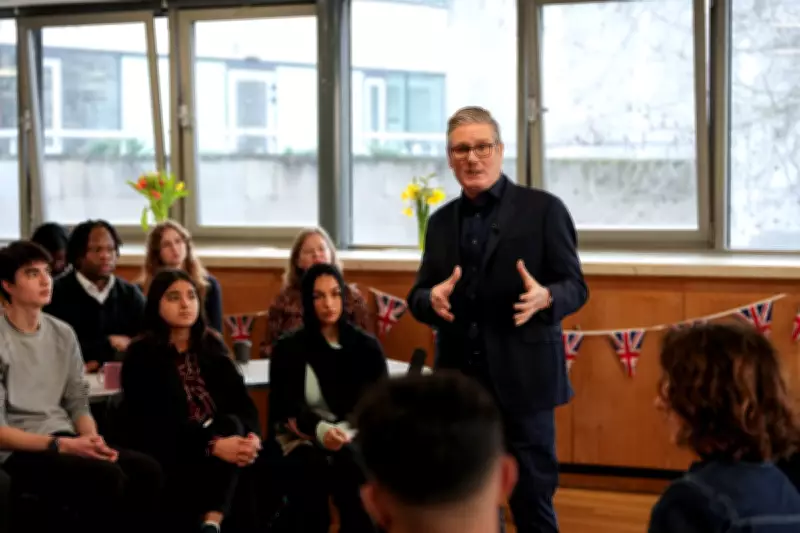
During a visit to a community centre in London, Sir Keir expressed deep personal concern, referencing his own teenage children. He stated emphatically: "I don't think there's a parent in the country who isn't worried about this. The status quo is not good enough. Nobody can make the argument that things can be left as they are. They can't, they're not protective of children, and we intend to act."

Comprehensive Online Safety Measures Proposed
The government's proposed measures extend beyond age restrictions to include several innovative approaches to digital protection:
- Restricting children's access to virtual private networks (VPNs) that might circumvent age verification systems
- Extending Online Safety Act duties to cover one-to-one conversations with AI chatbots
- Implementing a "conduct-based regime" that would hold senior tech executives accountable for product safety risks
- Regulating major technology firms with similar rigor to financial institutions
Technology Secretary Liz Kendall emphasized the need for legislative agility, suggesting that Parliament adopt budget-style processes for online safety debates to keep pace with rapid technological developments. She noted: "Technology is developing much, much more quickly than the law is. We will definitely come forward with our proposals before the summer."
Balancing Protection with Information Access
Sir Keir demonstrated particular sensitivity to concerns about limiting young people's access to news through social media platforms. When questioned by a 17-year-old about potential conflicts between extending voting rights to young people while restricting their social media access, the Prime Minister acknowledged the complex relationship between digital platforms and information dissemination.
"I'm acutely aware of your point about news," Sir Keir responded. "In politics, there's always been a heavy focus on newspapers, but frankly, I don't think many people, and young people certainly, ever read newspapers anymore. It's much more likely to be through social media." He stressed the government's commitment to ensuring that protective measures do not inadvertently cut off "sensible, good access" to news for young citizens.
International Inspiration and Parental Concerns
The proposed Australian-style ban has gained significant support from campaigners who argue that parents currently find themselves in "an impossible position" regarding the online harms to which their children are exposed. This international approach provides a framework for the UK's developing policy, though adapted to national circumstances and legal frameworks.
Sir Keir specifically addressed the addictive design features of modern platforms, stating: "We also need to act very quickly, not just on the age concern, but on the devices and applications that make the sort of auto-scrolling, the constant glueing to the machine that you can never stop scrolling."
The Prime Minister's commitment represents a significant shift in governmental approach to digital regulation, prioritizing child protection while navigating the complex landscape of modern information access and technological innovation.