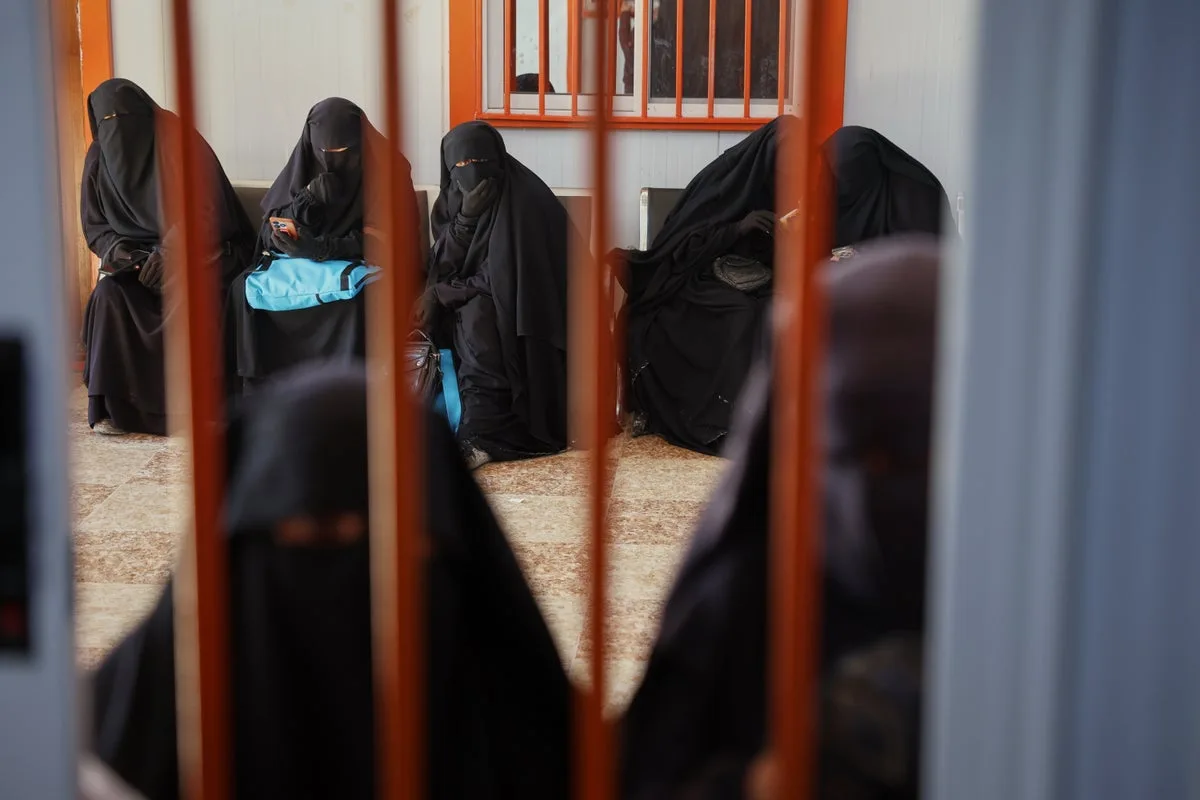
Basic services at al-Hol camp in northeast Syria, which holds thousands of women and children linked to the Islamic State group, are returning to normal after government forces captured the facility from Kurdish fighters, a United Nations official said on Thursday.
Forces of Syria’s central government captured the camp on 21 January during an offensive against the Kurdish-led Syrian Democratic Forces (SDF), which had run the camp for a decade. A ceasefire deal has since ended the fighting. Celine Schmitt, a spokesperson for the UN refugee agency, said services were interrupted for two days during the fighting but a UNHCR team visited the camp and quickly restored basic humanitarian services, including access to health centres, bread and water.
The camp currently holds about 24,000 people, including 14,500 Syrians and nearly 3,000 Iraqis. Around 6,500 from other nationalities are held in a highly secured section, many of whom are IS supporters. At its peak in 2019, the camp held 73,000 people. The government has appointed a new administrator for the camp.
Amal al-Hussein of the Syria Alyamama Foundation said all clinics in the camp’s medical facility are working 24 hours a day, treating up to 150 children and 100 women daily. Over the past 10 days, there have been five natural births, with caesarean cases referred to hospitals elsewhere. However, shortages of baby formula, diapers and adult diapers persist.
Residents reported food shortages and lack of education for children. Safiya Suleiman, a mother of six who has lived in the camp for eight years, said: “We want clothes for the children, as well as canned food, vegetables and fruits. Since one month we haven’t had anything yet.” Mariam al-Issa, from Safira, said: “Because of the financial conditions we cannot live well. The food basket includes lentils but the children don’t like to eat it any more.”
Schmitt stressed the need for investment to help returnees rebuild homes and find income. “They need to get support in order to have a house, to be able to rebuild a house in order to have an income,” she said. Thousands of Syrians and Iraqis have returned home in recent years, but many find destroyed homes and no jobs amid the ongoing economic crisis.