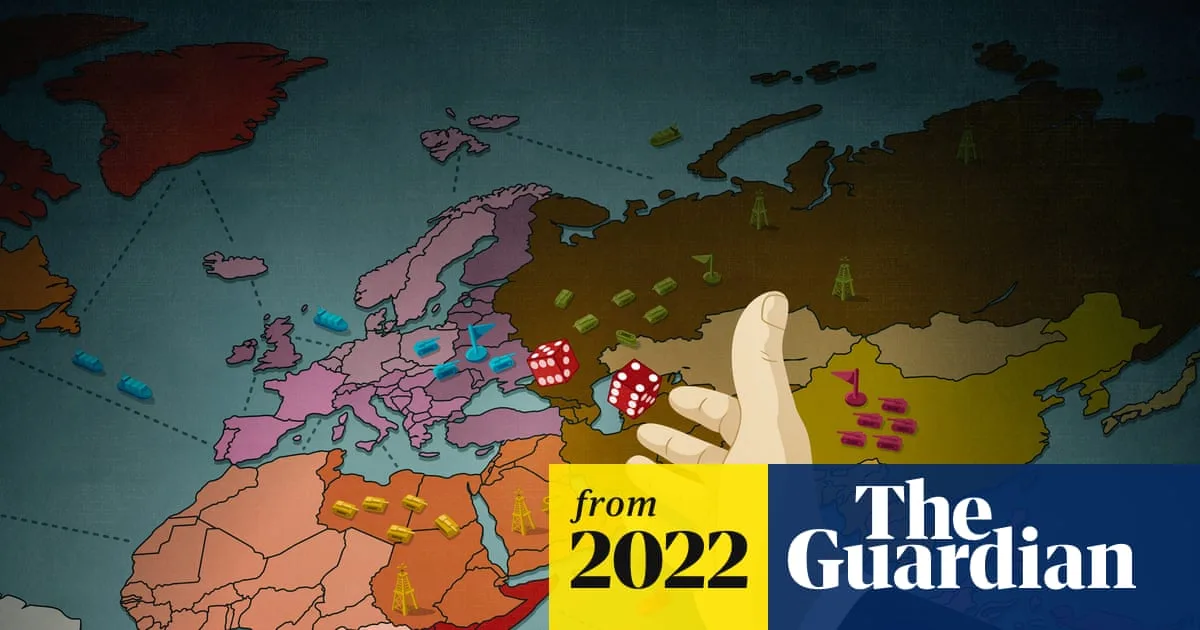
The bestselling book 'Prisoners of Geography' by Tim Marshall argues that global affairs are ultimately governed by immutable geographical facts such as mountains, oceans, and rivers. Marshall’s analysis predicted Russia’s invasion of Ukraine, citing the Great European Plain as a corridor that exposes Russia to attack and compels it to control the flatlands to the west. This line of thinking, known as geopolitics, suggests that geography dictates the choices of leaders, turning international relations into a zero-sum contest over territory.
Geopolitics was widely considered obsolete after the Cold War, with globalisation and technology promising to make geography irrelevant. Journalist Thomas Friedman famously declared the world 'flat,' with goods, ideas, and people sliding smoothly across borders. However, recent events challenge this view. Supply chains have snapped, global trade has faltered, and hostility towards globalisation has risen, fuelled by figures such as Donald Trump and Nigel Farage.
The number of border walls has surged from about ten at the end of the Cold War to 74 today, with the past decade marking a high point in wall-building. Political scientist Élisabeth Vallet describes this as a 'reterritorialisation of the world,' suggesting the post-Cold War hope for globalisation was a delusion. Leaders are now turning back to old strategic doctrines, with US national security adviser HR McMaster warning in 2017 that 'geopolitics are back with a vengeance.'
Russia’s Putin explicitly cites 'geopolitical realities' to justify his war in Ukraine, while pundits such as Marshall, Robert Kaplan, and Peter Zeihan have returned to bestseller lists. Yet critics argue that the world has changed more than these mapmongers realise. Ideas, laws, and culture still matter, and the simplistic view of geography as destiny may overlook the complexities of modern international relations.