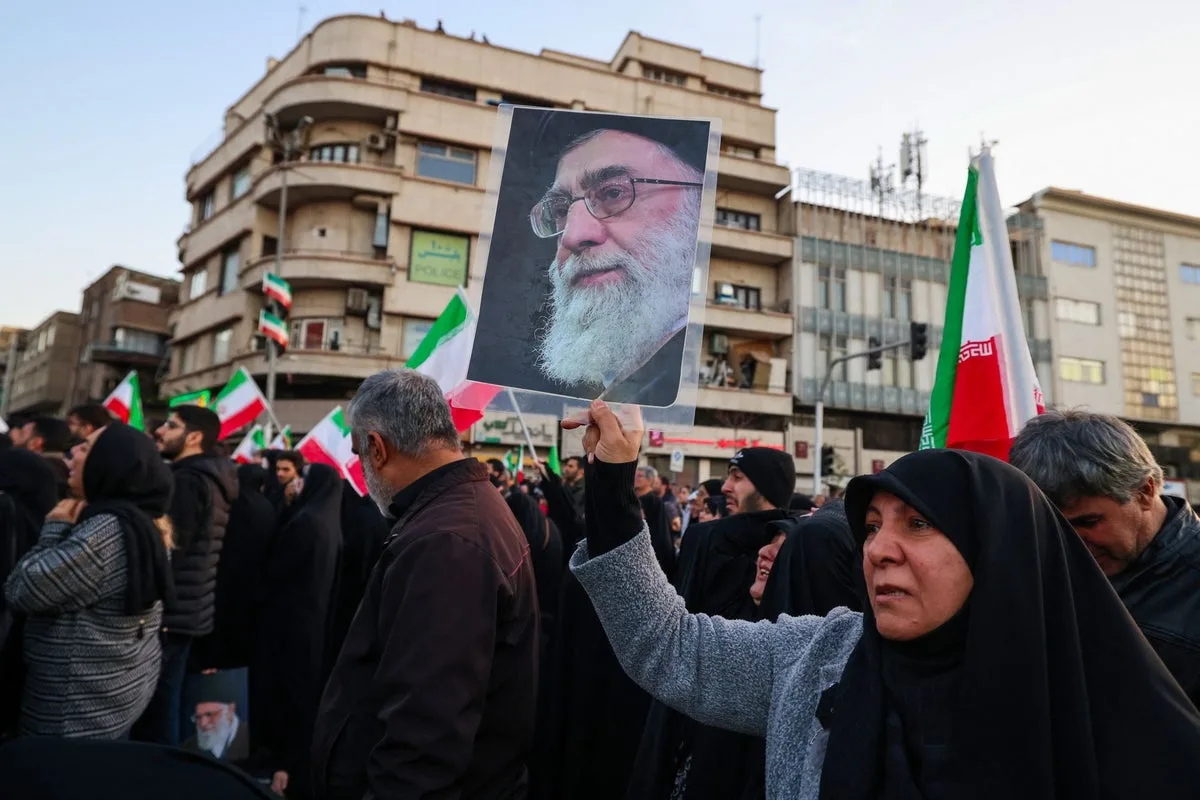
After weeks of massive military buildup, a joint American-Israeli attack on Iran has killed Supreme Leader Ayatollah Ali Khamenei, plunging the Middle East into unprecedented turmoil. Tehran has retaliated with drones and ballistic missiles, while tens of thousands of Iranians have taken to the streets calling for regime change. US President Donald Trump declared the supreme leader's death 'the single greatest chance for the Iranian people to take back their country,' urging them to 'take over your government.'
However, concerns are mounting that airstrikes alone will not lead to regime change. The process for selecting Khamenei's successor is already underway, and real power may lie with the Supreme National Security Council and the Islamic Revolutionary Guard Corps (IRGC). Historian Arash Azizi warned that 'Khamenei’s killing will not lead to unravelling of the Islamic Republic unless the strikes continue and kill more leaders,' adding that 'total chaos inside Iran and even a civil war' is a nightmare scenario.
The protest movement, which began in December, has fizzled out after a bloody crackdown and lacks a clear leader or replacement. Some protesters have called for the return of Reza Pahlavi, son of the last shah, but armed opposition groups like the Kurdistan Freedom Party fear that if the strikes fail to end the regime, future uprisings will be met with even worse violence. 'Massacres will happen,' said PAK member Hana Yazdanpana.
External military pressure rarely ushers in a stable alternative, and the transition period is the most dangerous. Israeli Prime Minister Benjamin Netanyahu urged Iranians to 'flood the streets and finish the job,' but analysts suggest a weakened, chaotic Iran may actually suit Israel's strategic interests. The IRGC remains a formidable force, and Azizi notes that Iran's military-dominated security council has 'effectively run the country since last June.'