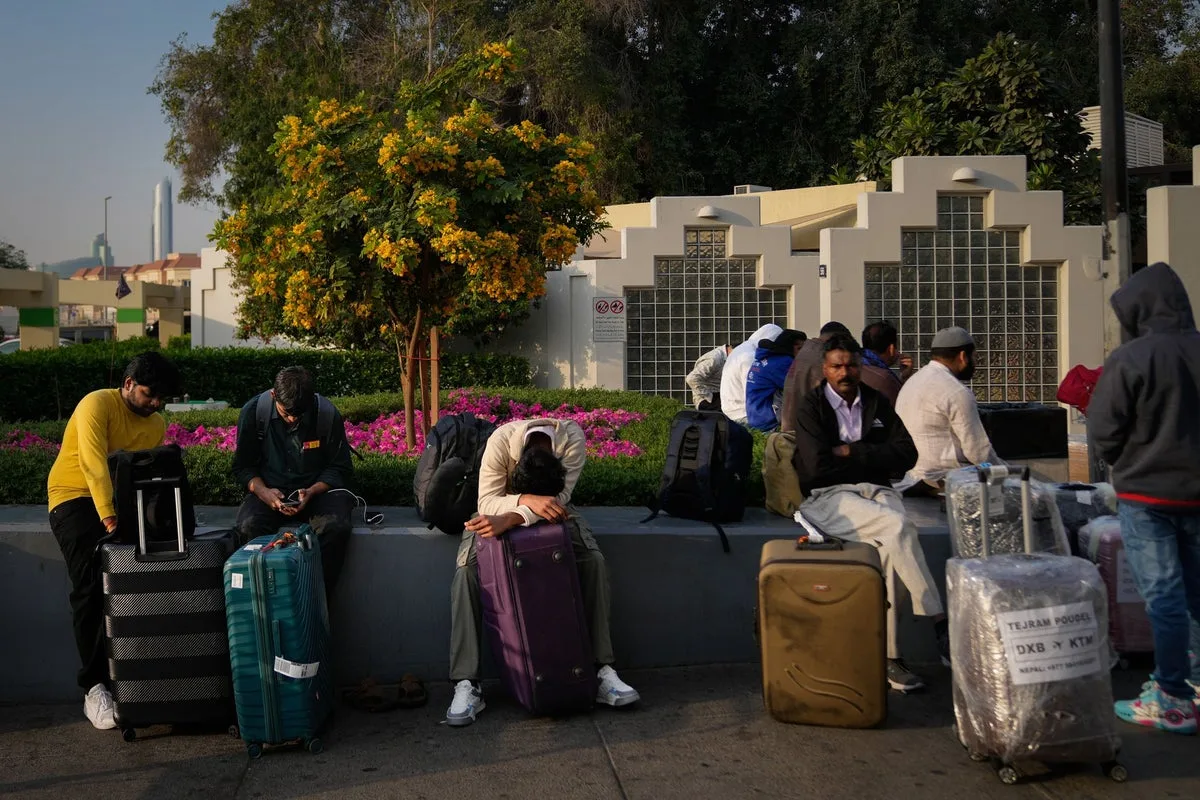
The United Arab Emirates, long marketed as a safe, tax-free haven, faced a stark reality check on Saturday as Iranian drones and missiles rained down on Dubai and Abu Dhabi. The attacks set fire to a five-star resort, threatened the world's tallest building, and killed one person while injuring seven others at Abu Dhabi airport.
Cinzia Bianco, an expert on the Persian Gulf at the European Council on Foreign Relations, described the event as 'Dubai’s ultimate nightmare,' noting that its essence depended on being a safe oasis. 'There might be a way to be resilient, but there is no going back,' she wrote on X.
Officials sought to reassure residents, with Reem Al Hashimy, minister of state for international cooperation, telling CNN that the loud sounds were those of interceptions, and damage was primarily from debris. However, the fallout has undermined the Emirates' efforts to de-escalate tensions with Iran, leading to the closure of its embassy in Tehran.
The UAE, where nearly 90 per cent of its 11 million residents are foreigners, has relied on its serene image to attract wealthy tourists and investors. Real estate firms promote glimmering high-rises and poolside villas as safe havens. But after hundreds of drone and missile attacks, that reputation has been rocked.
British racehorse trainer Jamie Osborne described the scene as 'pretty surreal,' watching missiles streak across the sky. The Ministry of Defence reported intercepting 165 ballistic missiles, two cruise missiles, and over 540 Iranian drones over two days. Debris from intercepted weapons sparked blazes at iconic locations, including the Fairmont hotel on Palm Jumeirah and near the Burj Khalifa.
Tourists expressed unease. Kristy Ellmer, on a business trip from New Hampshire, found the explosions unsettling. Louise Herrle, an American tourist whose flight was cancelled, said she would likely avoid the region amid increased tensions, noting that 'the universe was trying to tell us something.'