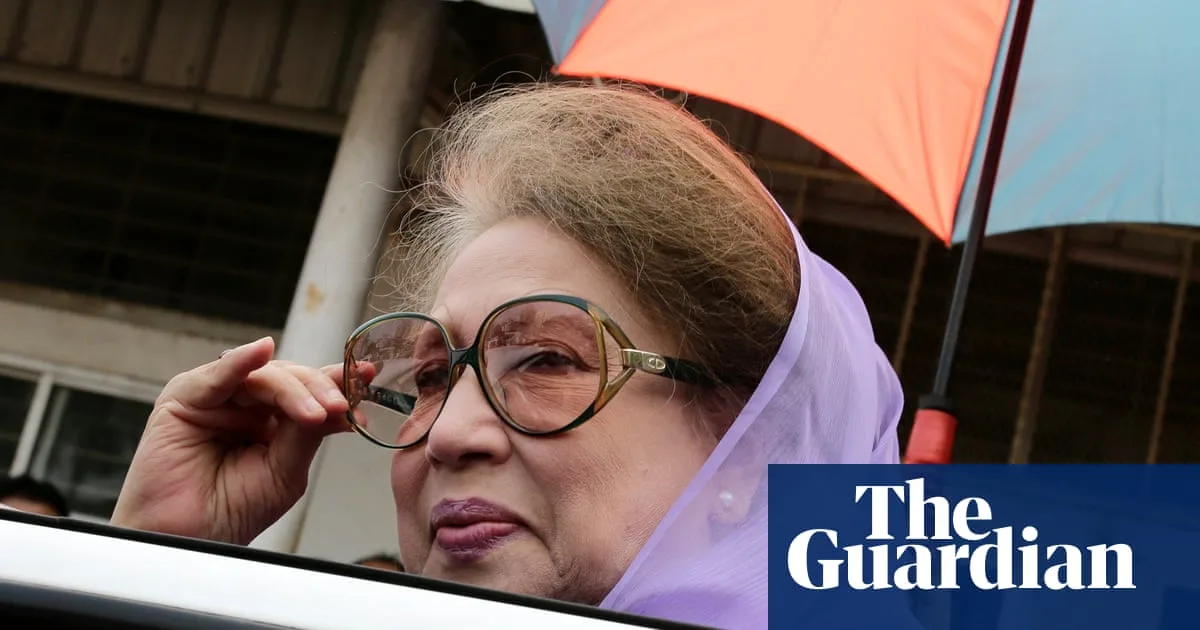
Khaleda Zia, Bangladesh's First Female PM, Dies Aged 80
Former Bangladesh PM Khaleda Zia Dies Aged 80

Begum Khaleda Zia, the former prime minister of Bangladesh and the nation's first woman to hold the office, has died at the age of 80. Her political party, the Bangladesh Nationalist Party (BNP), confirmed her passing in the early hours of Tuesday morning.

A Political Rivalry That Defined a Nation

Khaleda Zia's political career was defined by her intense and long-standing rivalry with Sheikh Hasina of the Awami League. This personal and political conflict shaped the destiny of Bangladesh for decades, creating a deep polarisation within the country's democratic processes. Zia first came to power in 1991 and served a second term from 2001 to 2006, with Hasina often standing as her direct opponent in elections.

Her entry into politics was forged in tragedy. She was the widow of President Ziaur Rahman, who was assassinated during a military coup in 1981. In the aftermath, Khaleda Zia helped build a formidable mass movement against the military dictatorship of Hussain Muhammad Ershad, which was ultimately overthrown in 1990.

Legal Battles and a Brief Political Resurgence

In her later years, Zia faced significant legal challenges. She was convicted in a series of corruption cases which she and her supporters maintained were politically motivated. However, in a dramatic turn of events in January 2025, Bangladesh's Supreme Court acquitted her in the final outstanding corruption case. This legal clearance theoretically opened the door for her to contest in the upcoming elections.

Despite years of ill health and a period of imprisonment, Zia demonstrated her enduring political spirit in November, vowing to campaign for the February 2026 general election. This was set to be the first national vote since a mass uprising toppled her arch-rival Sheikh Hasina's government the previous year. Following the uprising, an interim government took charge, and Zia's BNP was widely viewed as a frontrunner in the forthcoming polls.

Final Months and National Mourning

Zia's health had been fragile for a long period. She returned to Bangladesh in May after receiving medical treatment in the United Kingdom. The interim government, led by Muhammad Yunus, had permitted her to travel abroad for this care in early January—a stark contrast to the Hasina administration, which had reportedly rejected such requests at least 18 times.

Her condition deteriorated sharply in late November when she was rushed to hospital. Despite the best efforts of her medical team, she succumbed to a raft of health complications. In her final days, interim leader Muhammad Yunus called upon the nation to pray for her, describing Zia as a "source of utmost inspiration for the nation."

The BNP's official statement announced: "The BNP chairperson and former prime minister, the national leader Begum Khaleda Zia, passed away today at 6am, just after the Fajr (dawn) prayer. We pray for the forgiveness of her soul and request everyone to offer prayers for her departed soul." Her death marks the end of a major chapter in the complex political history of Bangladesh.