Around two days every week, a pastoral member of staff at St Joseph's RC High School in Horwich, Bolton, is left dealing with the fallout of something that has happened online between pupils, usually outside of the school day.
With social media not always creating a safe space for students to be, headteacher Tony McCabe has welcomed the government's announcement to ban it for under 16s.
Describing it as a 'big moment for our country', Prime Minister Sir Keir Starmer announced the restriction in a Downing Street press conference as he warned social media was having an impact on children's happiness and mental health.
Headteacher Welcomes Ban
"I do welcome the ban," said Mr McCabe. "I would rather social media companies were held to account for ensuring that safe content was made available to children, but because that's not happening, I can see why the government have gone for a ban."
"If it's not safe then it should be banned and they should be looking at ways to make it safer."
Students Share Mixed Reactions
But what do those affected think of the ban, which is likely to be enforced in spring 2027? We spoke to pupils at St Joseph's to get their views on the restrictions and the reaction was mixed.
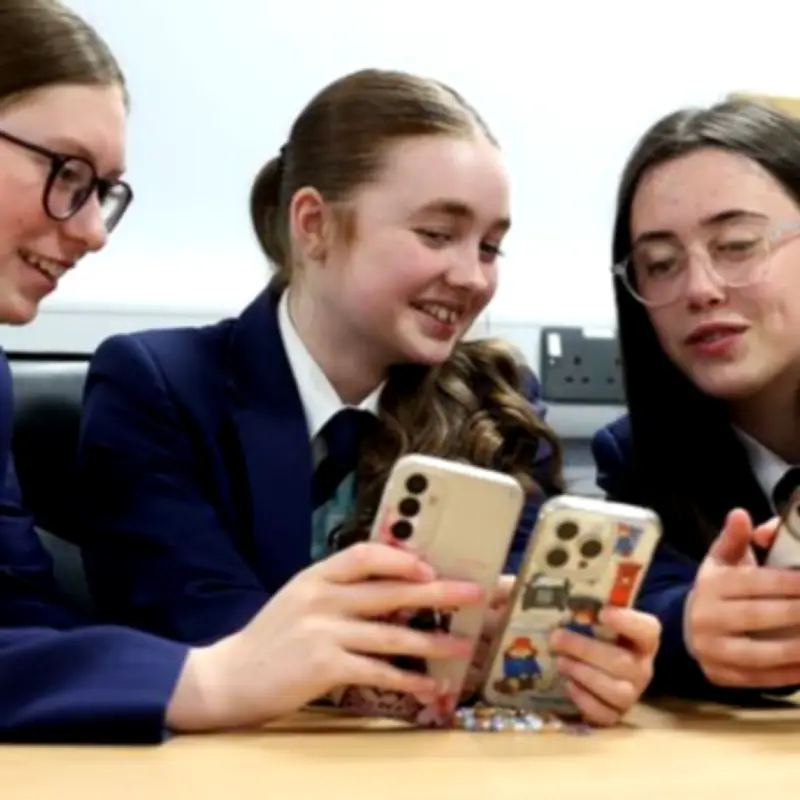
Currently in Year 10 and most of them 15, some have been accessing social media for years now, mostly using Snapchat, Instagram and YouTube. Others enjoy gaming, which is also at the centre of the ban, with the government saying it will take 'world leading' action so strangers will not be able to contact children on such platforms.
The youngsters acknowledge that what's been announced is going to be 'a really big change' and that while most of them will escape the ban because they'll be 16, it's going to be 'a struggle' for younger kids, who have already had a taste of it and will see it taken away.
Dopamine and Happiness
"Certain people are really reliant on social media, and having that short dose of dopamine every day, sometimes that can be the only happiness or enjoyment someone experiences in the day," said Eve Macdonald. "And just taking that away immediately will make it really difficult for them to find different ways to experience happiness."
For some, Katie Williamson, 14, says social media 'is like food and water, they need it to survive'. "For some people it will be like ripping away an escape, ripping away that comfort place," she said. "Some might thrive from not being able to look into other people's lives, but that's a minority I think."
"Those who are 14, 15, like my sister and other people's younger siblings, it's going to really hurt and they're going to need a lot of help to try and overcome it."
Positive Experiences and Parental Controls
Their own experiences of using it have mostly been positive and while some of their parents have taken a more relaxed approach to how long they spend online, most of them are given time limits, with Heer Patel not allowed on it at all and her phone removed from her bedroom at night.
Eve says her phone unlocks at 7.45am and locks again at 9pm. She's allowed on social media for 20 minutes at a time and says it's something she's 'got used to'.
"I get a bit annoyed if I'm mid conversation," she said. "But I'm used to it now so not really bothered. I'm quite active so I never doom scroll."
When she does use social media, she says it's inspirational and she'll use it to find a new gym workout or a recipe. That's also something Nayan-Rishi Chandarana would use it for, telling me about the three ingredient Oreo cake recipe he found online.
Phone-Free Week Experiment
Just before Christmas, three of the girls - Amelia Goodwin, Isabelle Barnes and Katie - decided between them to go without phones for a full week, leaving them locked away at school to avoid any temptation. They all reported sleeping better and while Amelia struggled without hers the most, there were some positives to come out of the mini experiment.
"It didn't bother me as I wasn't too fussed," said Isabelle. "We just found different things to do. Katie likes reading so she started reading a lot more."
Amelia added: "I like Minecraft and play it on my phone as well, so I'd usually be on that at dance class. But because I didn't have it, I was more social and spoke to new people and made new friends."
Safe Space and Escapism
She says that for many people, social media and gaming can be their 'safe space' and admits she sometimes plays games until midnight. "I'm an only child so there are no siblings at home, so I do spend a lot of time on Minecraft and Roblox," she said. "I have good friends on there too."
And Nayan-Rishi says he also chats to people while playing online - "I was playing one game with someone who ended up living down the road," he said. "We now play together all the time."
Awareness of Online Problems
But they're also aware of the problems being online can create. They see their younger siblings being 'more addicted' to it - watching reels on their phone while brushing teeth, having shorter attention spans.
Nayan-Rishi said his sister, who is in Year 5, 'can't watch a film'. "She needs that instant dopamine from watching quick videos and she can't get that from a film," he said. "They don't go out and play."
Loss of Innocence
While Amelia does believe the internet can be 'a comforting space' for many, and they all agree it's a form of escapism, she also says there's a price to pay for that. "When you start using social media your innocence is gone," she said. "You lose that magical time in life and everything changes. You're open to everything in the world. The doors just open and you see everything and hear about everything, things you didn't even know. It's a whole new world."
Government Plans and Enforcement
The government has yet to share specific details of the ban and how it will work. It is looking in more detail at overnight curfews and breaks in infinite scrolling for under-18-year-olds and will set out more detail in July.
The pupils we spoke to aren't convinced that underage kids won't find a way around the ban - using different dates of birth for example. And they're not sure that 16 is the best age for children to be given access to the platforms at such a crucial stage in their lives with GCSEs and college on the horizon.
Growing Up Too Soon
What they do agree on is that it's making kids grow up too soon. "I think it will definitely help people who are addicted to social media," said Eve. "A lot of people have matured a lot quicker, they've lost that aspect of childhood, because it's just turned from playing games and playing out with people to being on a phone."
Public Consultation Results
The government's announcement comes following a public consultation on the issue, which closed on May 26 and received about 116,000 responses, making it the second-largest in history. Over 83% of parents who responded said social media risks outweigh the benefits for children – with 91% backing a minimum age of 16 before platforms can offer their services to children.
TikTok Responds
A TikTok spokesperson said: "We share the government's goal of safe online experiences for teens, which is why teen accounts on TikTok have more than 50 preset safety and privacy settings, such as private accounts, and we continue to invest in the latest technologies to advance platform safety."
"We will examine the details of the government's measures, and we look forward to collaborating constructively with the government on this important issue."