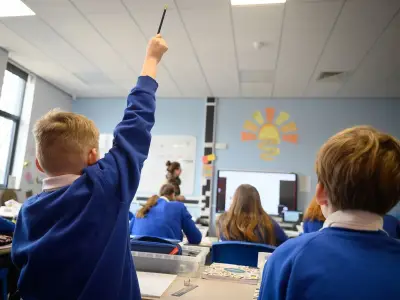
Teenage boys influenced by the manosphere are refusing to mix with girls in class and, in some cases, ignoring female teachers, according to charity founders who run workshops in schools. The warning comes as teaching union NASUWT reported that nearly a quarter of female teachers have been subjected to misogynistic abuse in the classroom, a figure that has risen over the past four years.
Charity founders see harmful attitudes first-hand
Alex Williams and Dwayne Gumbs, founders of the London-based charity Diverse Voices, have witnessed these behaviours during visits to schools. Their workshops use creative methods to encourage young people from vulnerable communities to express themselves on sensitive topics. Over the past 16 years, they have delivered sessions to 40,000 pupils at more than 100 schools across the country.
Alex told Metro: “We have seen as social media and the online world has developed, that young people have more access to information. The scary part is, who is providing that information? What attitudes are being adopted from the influencers that they are engaging with online?”
Boys and girls increasingly separated
Alex noted a significant change in classroom dynamics: “A really big change I’ve noticed is the separation between boys and girls. 10 years ago, if you said in a classroom, ‘Guys, let’s get into groups’, there would be mixed groups. Now if you say it, the boys will be on one side, and the girls will be on one side.”
He added that some male students refuse to take instruction from female staff: “We’ve had male students who refuse to take instruction from female members of staff. Like, literally stonewall, ‘I’m not listening, I can’t hear you, I can’t see you’. And yet, a male voice would say something a minute later, and they would react.”
Workshops aim to open conversations
Diverse Voices uses short films in a learning portal for primary and secondary schools, followed by discussions on topics such as relationships, consent, intimate image abuse, self-image, and controlling behaviour. Students are asked to judge whether depicted behaviour is “acceptable”, “unacceptable”, or “questionable”.
Dwayne explained: “An important part of what we are really trying to do is to open the conversation up and create an environment where the majority of the learning comes from peer-to-peer conversations, as opposed to us lecturing them about what’s right and what’s wrong.” The charity also provides resources for schools to continue lessons, with teachers reporting that conversations continue even in the playground.
Alex emphasised the role of men in tackling violence against women and girls: “A lot of what we’re actually asking boys to unlearn, they are learning from men. So, that just puts the responsibility on us as men to actually be positive role models and to affect change.”