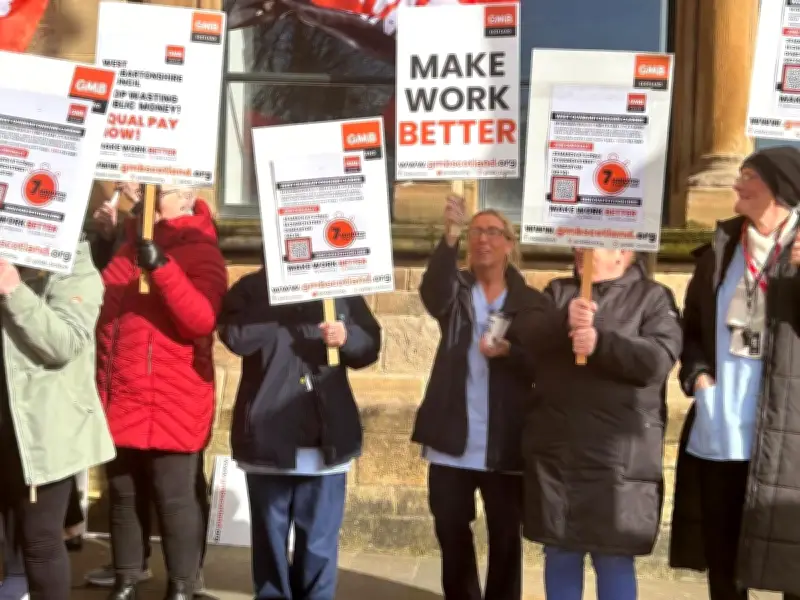
Home care staff in West Dunbartonshire are set to strike after a long-running dispute over changes to their working rotas ended in stalemate. The workers, represented by the GMB union, voted overwhelmingly in favor of industrial action, with 92% backing strikes in a consultative ballot that saw a 73% turnout.
Dispute Over Rota Redesign
The dispute centers on changes introduced by West Dunbartonshire Health and Social Care Partnership (HSCP) that reduced 80 shift patterns to just four. Carers argue this will lead to reduced hours and negatively impact both care standards and their family lives. Protests have been held outside West Dunbartonshire Council headquarters, but HSCP officials confirmed the changes would proceed.
GMB organiser AnnMarie Carrigan stated: “We have had meeting after meeting when we have clearly explained, again and again, the very real but needless hardship being inflicted on care workers by the new working patterns. Managers would promise to look at ways to ease the pain but, as soon as the meeting is over, simply pressed on with a self-harming plan that is threatening care and up-ending the lives of some of their most skilled and committed workers.”
Impact on Staff and Services
A union poll revealed that 85% of staff reported worsened mental health due to anxiety and stress from the new patterns, while 72% said they lost money because they were forced to reduce hours. Carrigan added: “It is clear from this overwhelming vote in support of industrial action that our members have had enough of warm words and no action. They are dismayed and angry but, above all, disappointed at being treated with such disregard and disrespect.”
She urged managers to “urgently return to the table with concrete proposals to find a fair way forward or prepare for strikes that can only cause more disruption to a vital care service built on the shoulders of our members.”
HSCP Response
A spokeswoman for West Dunbartonshire HSCP said: “We recognise and value the vital contribution our carers make every day in supporting some of the most vulnerable people in our communities. The vast majority of the workforce have embraced the redesign, and we are already seeing positive benefits in delivering services that are fully responsive to the needs of those who rely on them. Extensive engagement has taken place throughout this process and we remain committed to continuing to work constructively with staff and trade union representatives and avoiding any disruption to services.”