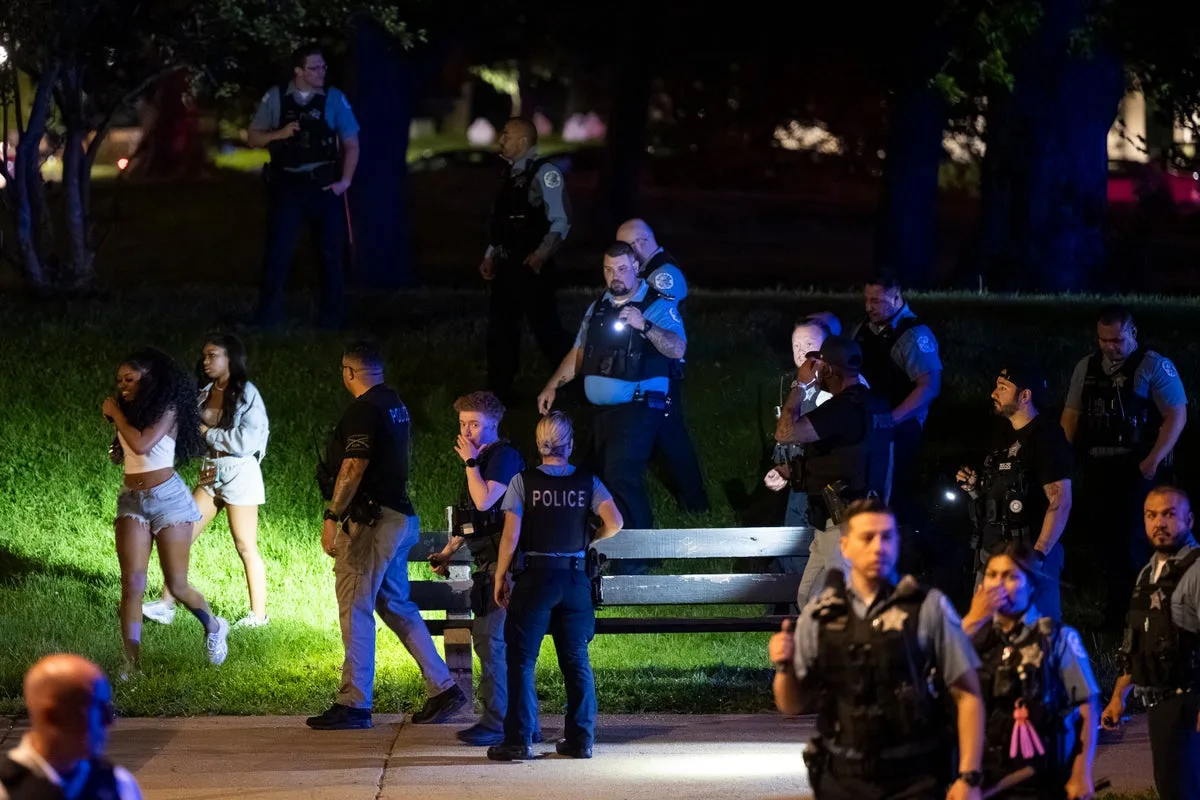
Large, spontaneous gatherings of young people, known as 'teen takeovers' and often organised via social media, are escalating into violence and disorder across the United States, prompting a range of police responses from monitoring to mass arrests.
Over the July 4 holiday weekend in Raleigh, North Carolina, several thousand young people converged, leaving nine people shot and wounded, including an adult bystander. In Pensacola, Florida, a 19-year-old was shot dead during a similar event, while in Newport Beach, California, police arrested over 400 after officers were reportedly targeted with 'explosive mortars and other projectiles'.
Teens like 18-year-old Damarion Spann from Chicago argue the gatherings are misunderstood. They point to formal curfews and limits on group sizes at malls and cinemas that have made it harder to socialise, exacerbating a sense of disconnection stemming from remote learning during the pandemic. Spann, who is Black, noted that school closures in Black neighbourhoods and the removal of basketball nets have reduced safe spaces to gather.

Police departments are attempting various strategies. In Detroit, officials say they have 'thwarted' 19 gatherings this year by monitoring social media coordination, according to Teferi Brent, director of the Mayor's Office of Neighborhood and Community Safety. Blue Island, a Chicago suburb, fines parents to cover clean-up costs, while Florida has allowed prosecutors to apply racketeering laws typically used against gangs if takeovers appear to involve an 'organised network'.
However, some experts caution against punitive approaches. Melissa Milchman, executive director of the Coalition for Juvenile Justice, said adolescent brain development means the threat of harsh punishment is unlikely to deter risky behaviour, and mass arrests can penalise those seeking innocent fun without preventing lawbreaking.
Spann added that the events offer a rare sense of freedom. At the gathering he attended, he reconnected with old friends. He said media coverage misses the appeal: 'You feel like a young person who has freedom, who's not being held to something.'