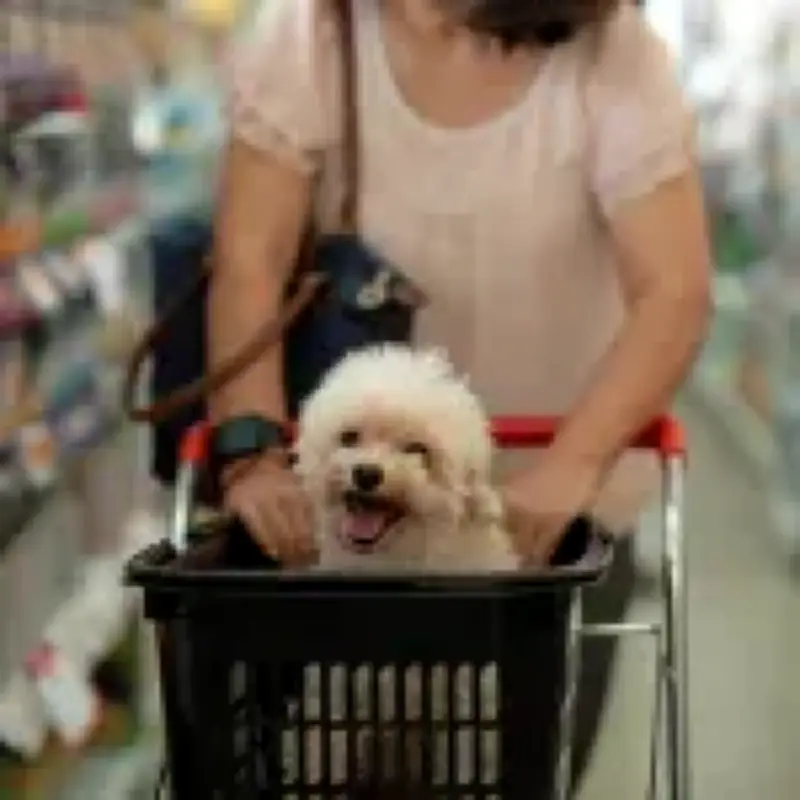
Shoppers are increasingly divided over the presence of dogs in supermarkets, with some labeling the practice 'unsanitary and inconsiderate' while others see no harm in well-behaved pets accompanying their owners.
A recent thread on Reddit's r/AskUK questioned why it had become 'suddenly acceptable' to bring dogs into grocery stores, with the poster claiming staff and fellow shoppers were affording animals 'superior rights.' Many commenters agreed, including @MarieCry, who said she was 'baffled' by a woman carrying her dog and touching produce at Aldi, calling it 'unsanitary and inconsiderate.' Others described owners as 'entitled' and 'disgusting,' recalling incidents of dogs soiling supermarket floors and arguing 'dogs shouldn't be where food is sold.'
Mixed Opinions on Dog-Friendly Shopping
However, not everyone shares this view. @elhazelenby commented, 'I don't personally see the problem if they are well behaved,' while @TableSignificant341 said it 'doesn't bother [them] in the slightest.' @Top_Tell9383 added, 'Do you really think having a dog in a grocer is that unhygienic compared to the average person? They're hardly going to be licking the fruit and shaking fur on it — if anything letting kids run amok would be less hygienic.'

Legal Distinctions and Store Policies
UK law draws a clear line between assistance dogs and pets. Trained assistance dogs are protected under the Equality Act 2010 and cannot be refused entry, while pets, therapy dogs, and emotional support animals have no such legal right, leaving businesses to set their own policies. The Equality and Human Rights Commission (EHRC) guidance notes that handlers aren't required to provide certification for assistance dogs, which can make it difficult for staff to differentiate and enforce rules.
Most major UK supermarkets, including Asda, Sainsbury's, Morrisons, Aldi, Lidl, Co-op, and M&S, allow only assistance dogs in their stores. Tesco confirmed to Metro that assistance dogs are 'welcome' in all stores and that 'owners are not required to carry an ID book to enter,' but did not clarify its policy on pets.
Hygiene Concerns and Expert Advice
Hygiene is a central concern in the debate. Food hygiene and health and safety consultant Sylvia Anderson told Metro that the safety risk depends on whether a supermarket has 'sensible controls' in place. 'Food businesses have a legal responsibility to make sure the food they sell is safe and protected from contamination,' she said. 'Dogs should certainly not be wandering into kitchens, food preparation areas or food storage areas, and I would also have concerns about dogs being allowed too close to open or unprotected food.'
Anderson highlighted bakery stands, fresh produce displays, deli counters, and self-service food areas as the most obvious contamination risks, and stressed that 'protocols should be put in place to ensure proper hand washing and disinfection if an animal urinates, defecates or is sick inside a food premises.'
She added: 'If a business chooses to be dog-friendly, that's absolutely their decision, but it still needs to be managed properly. They should think about where dogs are permitted, keep them away from food preparation and storage areas, protect open food, have appropriate cleaning procedures in place and make sure staff understand the rules.'
Ultimately, owner responsibility plays a key role. A calm, well-supervised dog on a lead is vastly different from one allowed to jump against shelves, lick products, or run loose among shoppers.