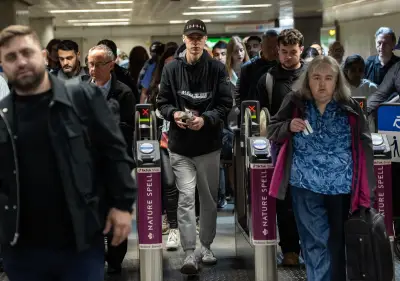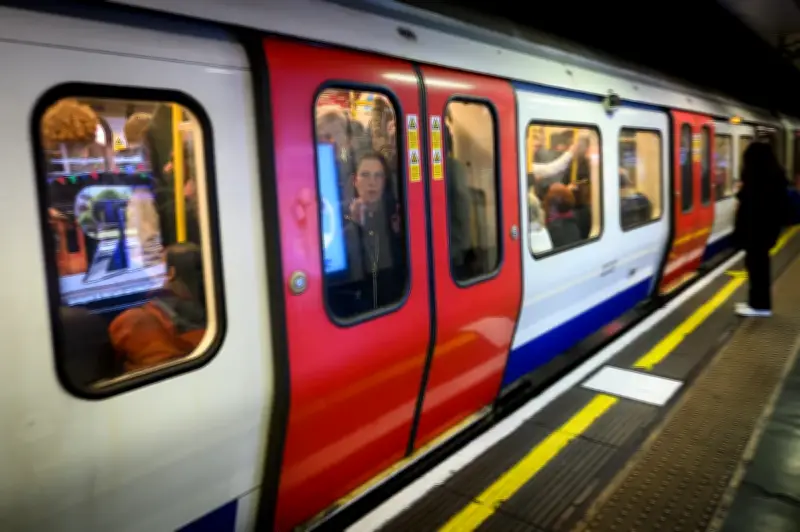
Last-ditch talks are taking place on Tuesday between the RMT and Transport for London (TfL) in a bid to avoid a series of Tube strikes in the run-up to Christmas and into the New Year.
The National Union of Rail, Maritime and Transport Workers (RMT) and London Underground were due to meet under the auspices of the ACAS conciliation service in an attempt to resolve a long-running dispute over a four-day week for Tube drivers.
Strike threats sometimes go to the wire before they are called off. However, the two sides have been in negotiation for months so an eleventh-hour resolution would come as a surprise.
Talks aim to break deadlock over four-day week
ACAS talks in June also failed to resolve the stand-off and a walkout went ahead that month. If the talks are successful, the planned industrial action could be called off. But, if the two sides fail to reach an agreement, the first RMT walkout will go ahead on Thursday, followed by seven more in the run-up to Christmas and into the New Year.
No service would be expected on the Circle or Piccadilly lines throughout the day or on the Waterloo & City line after midday on Friday. Services are expected to start later than normal on Friday, from about 7am, with disruption across all lines until around midday. From then, there will be continued disruption through the afternoon and evening as services return to normal by around 6pm that evening.
Wider disruption and union disputes
The Elizabeth line, DLR, London Overground, buses and trams are expected to operate as normal, though they will be busier than usual. The union has been accused of threatening to “steal Christmas” from Londoners and the many businesses in the capital including pubs, clubs, shops, restaurants and theatres who rely on strong takings during the festive season.
The RMT’s industrial action is looming after the Transport Salaried Staffs’ Association (TSSA) held a snap strike on Friday and Saturday in a dispute over the sacking of one of its members. The walkout from midday on Friday was after a vote by less than 24 TSSA members in a control room in South Kensington, west London. The industrial action shut the Piccadilly line for more than 24 hours and also heavily impacted the District line. Politicians slammed the walkout for holding London “to ransom” on the back of a vote by so few workers.
The TSSA is also threatening to strike on Great Western Railway services in a dispute over pay, pensions and working arrangements.
Background to the RMT dispute
The RMT went out on strike earlier this year over the proposals for a four-day week, with no cut in the pay of drivers, many of who earn more than £70,000-a-year. The union objected to the reforms as they meant some drivers who wanted to stay on a five-day week would have had to move depot. It also claimed they would damage drivers’ working conditions.
But the RMT’s stance has been hugely undermined by the Aslef train drivers’ union fully backing the reforms which it described as offering the best working conditions on the whole of the rail network.
Seeking to avoid the strikes, Transport for London more recently proposed a third option for drivers. They were initially given the option of a four-day week, working 34 hours, with new terms and conditions. They would be paid for 35 hours per week and would do other non-driving work such as safety training for a few extra days a year. Alternatively, they could stay on the current 38.5 hours over five days, old terms and conditions, with days off in lieu for hours worked over 35 a week.
Subsequently, TfL proposed the third option of drivers working 36 hours over five days, opting into the new terms and conditions, keeping the same leave allowance, and staying at their depot. But the RMT again rejected this offer and stepped up its strike threat with its proposed eight walkouts.
Planned strike dates
- Thursday 26 November 2026
- Thursday 17 December 2026
- Saturday 19 December 2026
- Monday 4 January 2027
- Wednesday 6 January 2027
- Wednesday 17 February 2027
- Tuesday 23 February 2027
- Thursday 25 February 2027
The talks offer a glimmer of hope that the industrial action could be called off but a series of past meetings have failed to make a significant breakthrough.