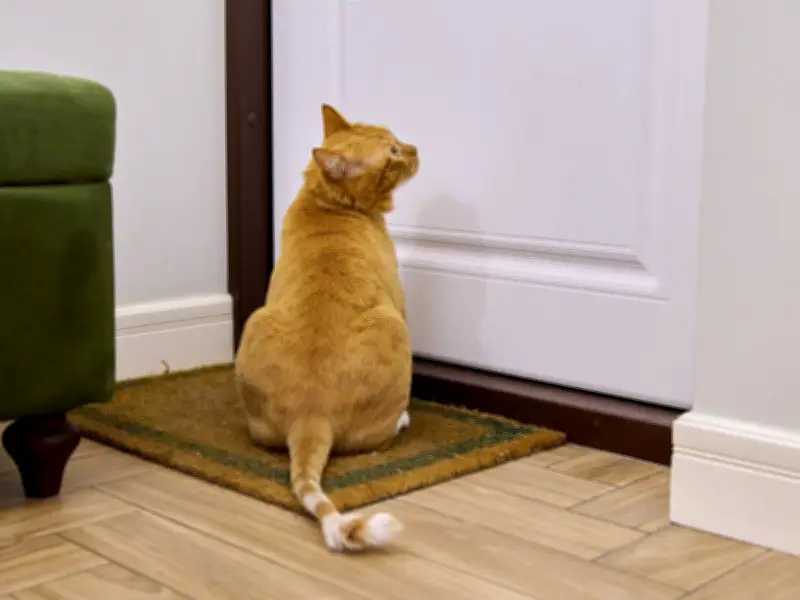
Cats are known for their mysterious behaviour, but their aversion to closed doors has a clear explanation, according to a feline behaviour expert. Amanda Campion, who has studied cat behaviour for over 30 years, says the issue stems from their territorial instincts.
Territorial instincts and mental maps
Campion explains that cats consider the entire home their territory and maintain a detailed mental map of every room and corner. When a door is closed, that map is disrupted, which is unsettling for the cat. They are not being difficult but are responding to a sudden change in their environment.
She said: "You shut a door, and your cat's on the other side, and now it's crying because it wants to come back to the side it just asked to go out of. Why? Cats are territorial, and a closed door actually disrupts their mental map of their territory. They're not being difficult; they're actually responding to a sudden and unexpected change in their environment. [It's about] curiosity and control, because cats like to explore. So try opening a door and filming their reaction - it's never dramatic."

Reactions from cat owners
The video resonated with many cat owners, who shared their own experiences in the comments. Some said they have adopted an open-door policy at home, while others suggested training cats from kittenhood to understand which doors are off limits.
One viewer wrote: "We have an open door policy in this house, and even if we wanted to close, the meowing would be so loud we couldn't. But I deeply enjoy my cats walking around the house when I'm in bed and falling asleep."
Five key cat behaviour tips
Cats Protection lists five important things to know about cat behaviour:

- Cats that 'misbehave' may just be exhibiting normal cat behaviour.
- If your cat's behaviour changes, it could be a sign of stress, fear, or illness, and you should see your vet.
- Never punish your cat for 'misbehaving' as it will not help and may increase stress.
- You have a legal duty to care for your cat's needs, including normal behaviours.
- Understanding and treating the cause can reduce unwanted behaviours like spraying, scratching, and fighting.