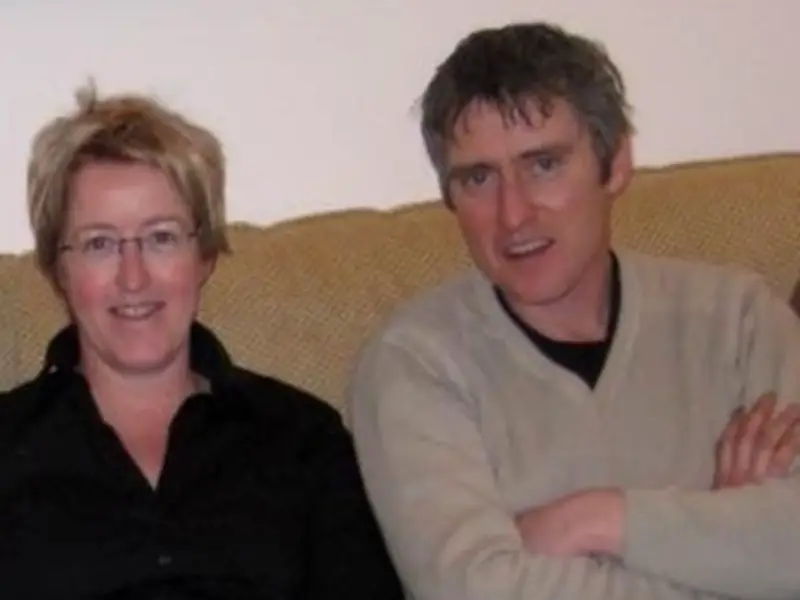
Sarah Lundy's husband Darren went out to get milk on a Saturday night. The following morning, she realised he was gone. The evening before was a happy one, and she wonders if he deliberately planned it that way.
A perfect night before tragedy
Their seemingly relaxed Friday night was spent sharing a bottle of wine and a few beers, laughing together as they listened to old '80s and 90s music. Sarah was exhausted the next day, but still managed to find the energy to take their then nine-year-old son Charlie out for a morning of mini-golf, followed by a trip to the cinema. Heartbreakingly, the mum-of-one now deeply regrets that perfectly ordinary outing. "I regret it because it means we had a few hours less with him," she told the Mirror. "But you don't know, do you?"
The night of disappearance
That Saturday evening, May 12, 2018, Sarah, now 57, wanted an early night, but Darren wanted to stay up later. Sarah, from Blackpool, recalled: "Darren shouted up and went, 'I'm nipping to the shop, I'm going for cigs and milk', which he did quite often. It was one of these little things that he did, and I went to sleep. I didn't realise until the morning that he hadn't come back." The days that followed remain a blur of agonising waiting, police officers coming and going, and loved ones gathering at the house. Finally, after three days, Darren was found dead in his car. He had died by suicide. At 49, Sarah was suddenly a young widow, faced with the devastating task of telling their young son what had happened. She describes it as the hardest thing she has ever had to do.
A history of struggle
As a family, they had already endured so much. Sarah and Darren first met in the 1990s, just as online dating was beginning to take off. She quickly fell for the "funny, sarcastic and clever" Darren, who was already a devoted father to his two children from a previous relationship. Speaking out publicly for the first time, Sarah recalled their instant connection: "We went for our first date, and pretty much from that point, we kind of knew that it was an instant attraction, and we just made each other laugh. We never had a dull time." But just six months into their relationship, the couple was dealt a cruel blow when Darren was diagnosed with Multiple Sclerosis (MS) - a chronic, incurable condition affecting the brain and spinal cord.
Despite the looming diagnosis, the young couple felt "invincible." Darren was determined to not let the condition change him. "He didn't want to tell anybody," Sarah reflected. "I think sometimes men struggle to be vulnerable and open, to admit something is affecting their life, whether physically or mentally." Darren even urged Sarah to leave him to save herself from the future reality of the disease, but she refused, committed to their life together. For a long time, the couple kept the diagnosis private while the illness progressed slowly. But as the years passed, and they welcomed their son Charlie alongside raising teenagers and working hard, Darren's condition began to decline.
Declining health and mental toll
He started losing his mobility and fine motor skills. Eventually it was no longer safe for him to work as a heating and ventilation engineer, a job he'd been so proud of. By the time Charlie was two, Sarah had become the main breadwinner in the family. Darren, once fiercely independent, struggled deeply with his confidence. "Slowly but surely, things were stripped away with him," Sarah said. "He wouldn't want to put himself in vulnerable situations, so we didn't go out or see friends as much. The world became fairly small." As a Fractional Chief Marketing Officer (CMO), Sarah increasingly found herself stepping into the role of Darren's carer - a shift that naturally altered their dynamic. "It doesn't mean you love them any less," explained Sarah. "You just love differently." Darren began to struggle with everything from dressing to severe tremors that made sipping a cup of coffee difficult.
By 2017, the progression of his MS began taking a heavy toll on his mental health, leading to "fixed thoughts." Though mental health teams became involved, and Sarah initially thought he was over the worst of it, the burden was immense. "It was traumatic because he talked to me about wanting to take his life, but he didn't want anybody else to know," she shared.
Life after loss
In the painful aftermath of Darren's death, Sarah had to instantly adjust to life as a solo parent while processing her raw grief. With no other source of income, she forced herself back to work after just four weeks. Driven and determined, she refused to simply pull the shutters down, wanting to stay busy and provide the best possible life for Charlie. To make matters more difficult, she had to undergo surgery mere weeks after losing her husband, all while managing household maintenance that had once been Darren's domain. Then there was the legal reality of the inquest. While Darren's inquest was relatively quick, concluding in October 2018, Sarah was still left in an agonising state of limbo for months.
"Even though we knew he died by suicide, you don't have it on the proper death certificate, you don't have a reason, you don't have closure," Sarah explained. "It's a brutal process because you have to write a lot of things down, and sit under oath to talk about his previous mental health issues. You almost feel guilty. I suppose I felt guilty that I couldn't stop it, even though I understood his position." Sarah stresses that navigating this legal process with very little support is an under-discussed aspect of spousal grief. "There's time just hanging, and people are wonderful, but they do fade off because you're not at the forefront of people's minds anymore, even though it's still at the forefront of yours, obviously, for a very long time."
Moving forward and raising awareness
Today, Sarah and Charlie are both doing well. Now a thriving 17-year-old, Charlie is studying for a T-level in electrical engineering. Sarah couldn't be prouder of her teenage son, noting the hardships they endured have forged an unbreakable bond between them. On International Widows Day, Sarah is asking the public to remember those who have lost a partner, sharing the sobering reminder that nearly 50% of people will experience the loss of a spouse at some point in their lives. "It doesn't matter if it's been one year or ten years," she said. "Just a little hand on the shoulder and a simple 'How are you getting on?', and, 'We haven't forgotten you'." #WidowedAndForgotten is a national awareness campaign launched by The Widowed Collective to mark International Widows Day 2026 on 23rd June. The campaign highlights the hidden loneliness, isolation and sense of invisibility experienced by many widows and widowers long after the initial period of bereavement has passed.