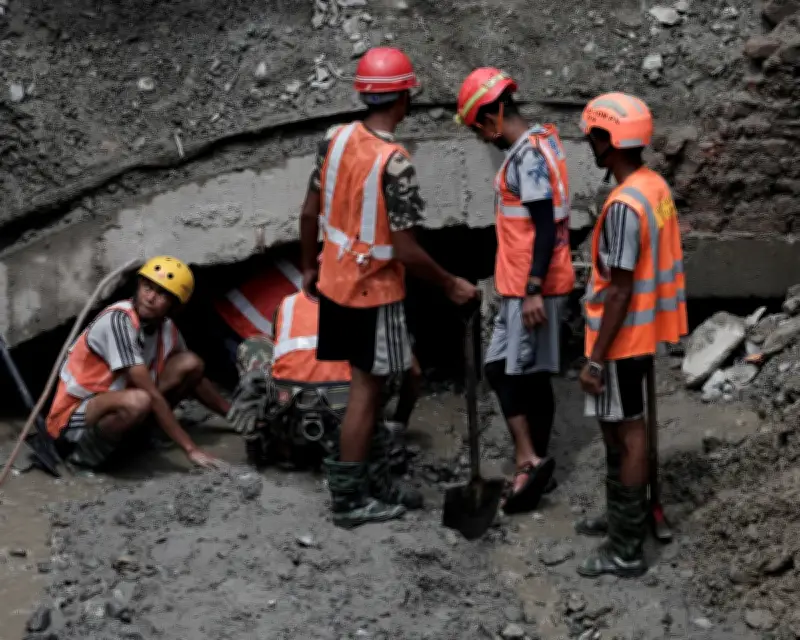
Two workers have been pulled out alive from a hydropower tunnel in Nepal nine days after deadly flash floods left them trapped.
The workers were rescued during an ongoing operation at the Trishuli 3A tunnel, a hydropower project in one of the areas worst affected by last week's deadly Nepal floods, according to army spokesperson Brig Gen Raja Ram Basnet.
Rescue details and survivor identification
Local television news channels showed images of the first recovered survivor covered in mud and being carried from the site on a rescuer's shoulder.

Sanjay Shah was the first to be rescued and was taken to the Nepal Army barrack in Trishuli. Subsequently, another person, identified as Kabir Maharjan, was also rescued from the tunnel. They were rescued from a depth of 170 metres inside the tunnel, confirmed Basnet.
Cause and scale of the disaster
Most of the projects were destroyed when a surge of water, debris and mud came coursing down the river valley last week, triggered by the collapse of a melting glacier on the border between Nepal and China-controlled Tibet.
Rescue efforts have increasingly centred on the hydropower tunnels, where authorities believe workers may have survived for more than a week due to air pockets. So far, more than 270 people have been rescued from hydropower projects.
Ongoing rescue operations
At the Upper Trishuli 3A facility, it took rescue workers almost six days to find the tunnels because of the thick mud. The authorities said they believed around 30 to 40 people were still alive in the tunnel.
Army and specialist teams have been working round the clock to try and clear mud and heavy boulders from the tunnel entrance. On early Friday morning, hopes were raised further when voices were heard deep within the tunnel.
About 900 workers are missing from 12 hydropower projects in Nepal, with roughly 500 believed to be trapped in tunnels, according to local authorities.