Nathan Fitzgerald Dies After Head Injury in Suburban Match
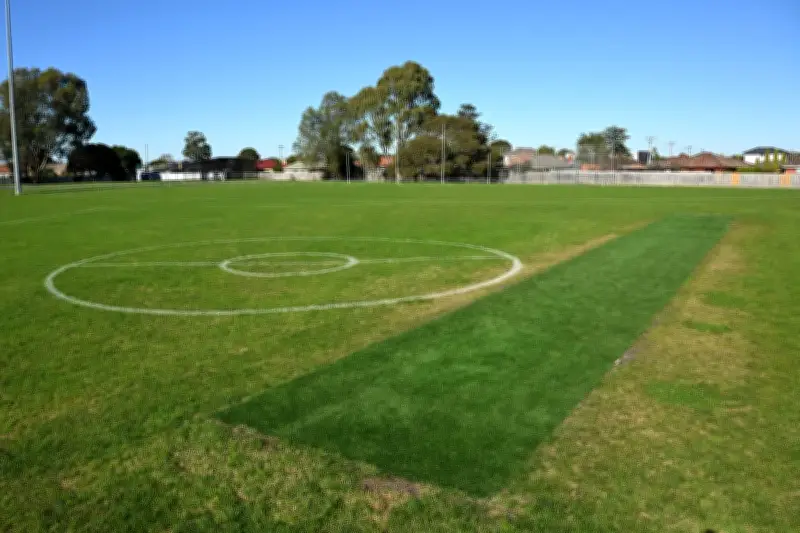
Nathan Fitzgerald, a 27-year-old teacher and reserves player for Epping Football Club, died in hospital on Monday after suffering multiple head injuries during a match against Lalor at Lalor Recreation Reserve. The incident occurred when Fitzgerald's head struck another player's leg and then slammed into a multilayered synthetic surface covering a concrete cricket pitch on the football oval.
Fitzgerald, named in the back pocket for the Epping reserves, had been looking forward to the second week of school holidays. He had watched the Socceroos with his father and younger brother earlier that morning and planned to watch Richmond play Carlton on Saturday night. He had recently proposed to his long-term girlfriend. He taught maths and science at Mernda Central College, which has nearly 1,800 students from prep to year 12. Some of those students were at the ground watching their teacher play.
Concrete Pitch Under Scrutiny
The covered concrete pitch has drawn significant attention. Neurophysiologist Prof Alan Pearce told Guardian Australia that "common sense would tell you that this was an accident waiting to happen. There is no give in a concrete structure, so there is no absorption for the brain." Former player-manager turned campaigner Peter Jess, who calls the AFL "a concussion factory," has called on the league to conduct annual safety checks of grounds used at all levels of the sport. He says it is unacceptable that lower levels of football are subject to different safety standards than the top tier.
However, enforcing universal safety protocols across tens of thousands of ovals for junior, men's, women's, and seniors games every week is a stretch for a league that still cannot ascertain what is and is not a goal.
Different Risks for Local Footballers
Local footballers face different dangers than AFL professionals. League footballers play on well-curated turf under the control of four umpires with strong union support, but bodies are getting bigger, the game faster, and hits harder. In contrast, local players contend with varying standards of play and umpiring, oval quality and availability, and access to medical help. These risks are compounded at clubs operating on shoestring budgets in booming municipalities where oval space is scarce.
Local players note that covered concrete pitches are not unusual and are no more dangerous than uneven surfaces, grounds doubling as dog parks, rock-hard turf wickets, or fences too close to the boundary line. Most who have played contact sport have stories of tragedies or near misses. Two years ago, Michael Pisker, a player in Melbourne's premier amateur division, was kneed in the eye socket, suffered catastrophic injuries, spent a fortnight in a coma, and lost an eye.
Inherent Risk Versus CTE Tragedy
The tragedy of Nathan Fitzgerald's death differs from the tragedies of chronic traumatic encephalopathy (CTE). The great shame of CTE is that players and parents did not know the risks and were not educated on the dangers. Fitzgerald's death was a reminder that Australian rules football is still an inherently dangerous sport, measured in terms of eyeballs and bums on seats, administered like a mid-tier law firm, and analysed like a puzzle to be solved.
It highlighted that there is a whole football community outside the AFL that generates the same passions and is subject to different but equally grave dangers as the pros. Every week, nearly 700,000 Australians play footy for their clubs and schools. On the weekend, one of them did not come home.