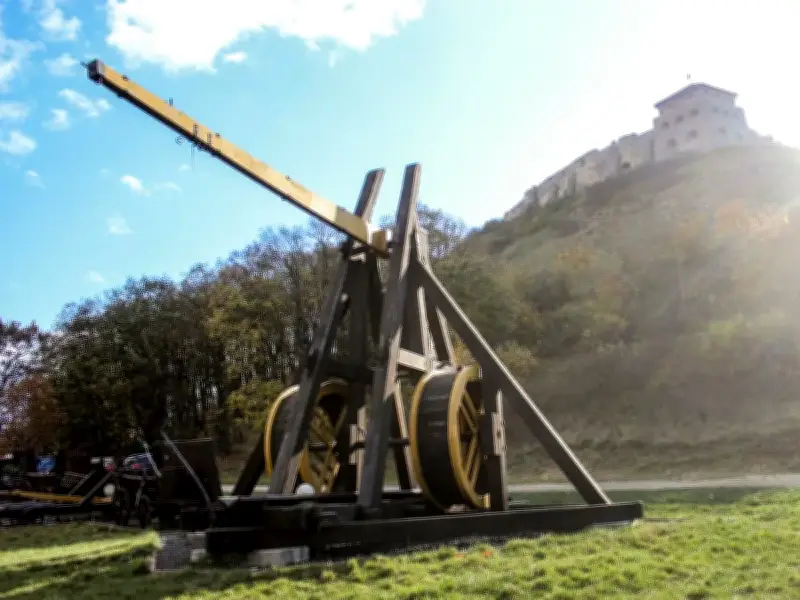
Archaeologists have identified a skeleton found at Stirling Castle in Scotland as the first confirmed victim of a trebuchet, a medieval siege weapon. The remains, named Skeleton 150, show more than 160 fractures, including a skull smashed in 61 places.
The skeleton was discovered below the chapel floor of Stirling Castle and is believed to have belonged to a young man in his 20s, who was about five foot four inches tall. Researchers say he was buried in the castle chapel after normal burial grounds became inaccessible.
Evidence of trebuchet trauma
Jo Buckberry, a bioarchaeologist at the University of Bradford, deemed the skeleton the first confirmed evidence of trebuchet trauma in the archaeological record. She told Science.org that the skeletal breaks “indicate a very large area of impact and devastation”, adding: “It’s likely the individual was killed by a siege engine.”

Dr Buckberry counted more than 160 separate fractures across the remains, including up to 60 zigzagging breaks to the ribs. She likened the wounds to those inflicted in the modern era by trains or cars, saying: “It looks like he was hit from behind by something traveling at a great velocity. The most similar cases I was finding were car crashes and people hit by trains. But how do you get from there to a guy in medieval Scotland? What is large and moving very, very quickly in 1304?”
Siege of Stirling Castle in 1304
Researchers believe the young man was likely killed during the siege of Stirling Castle in 1304, carried out by English King Edward I after he captured the castle that year. The King’s side employed trebuchets during the siege.
Trebuchets had reached England in the early 13th century and had claimed many lives during the First Barons’ War of 1215 to 1217, with the earliest recorded use at the Siege of Dover Castle in 1216. Until now, archaeologists had not recovered evidence of extensive trebuchet injuries in the archaeological record.
War Wolf trebuchet
Dr Buckberry later concluded that the warrior had likely been killed by a particularly infamous trebuchet, “War Wolf”, the largest ever made. War Wolf was built under the orders of King Edward and was estimated to have measured up to 90 feet in height with its arm fully extended, capable of launching projectiles weighing up to 120kg.
Lukas Waltenberger, a forensic osteologist at Vilnius University who was not involved in the research, said the wounds indicated a “high-velocity, high-force, high-speed impact”. The skeleton was unearthed in 1997, and researchers have been studying the remains for nearly 30 years.