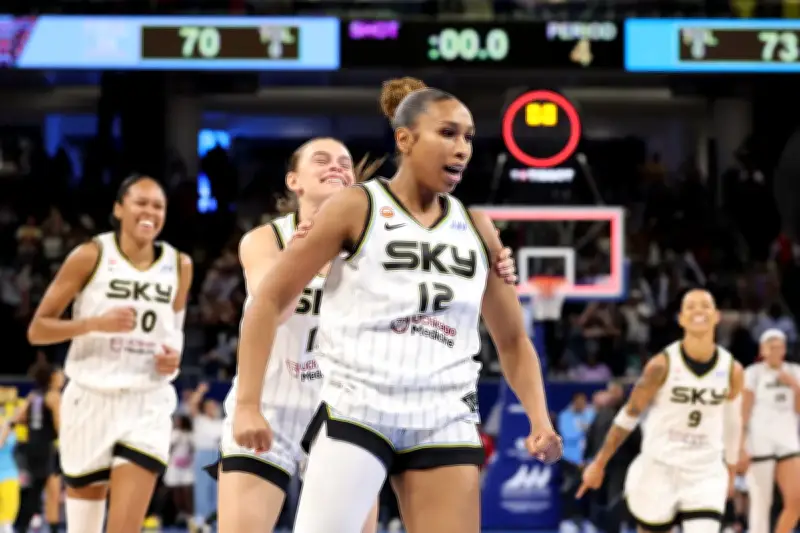
Sex toys were thrown onto the court during the Chicago Sky–Golden State Valkyries game on Friday, the latest in a series of disruptions that have engulfed the WNBA in culture-war controversy. The incident follows similar stunts that began last season, and comes as the league finds itself at the centre of debates over transgender participation in women's sports.
League's surge brings unwanted attention
The WNBA, which for most of its 30-year existence was largely ignored by sports fans, has seen ratings, attendance and interest explode since Caitlin Clark turned professional. But not all attention is good attention, and the league has become a target for culture warriors.
Clark's arrival has been polarising, partly because she is a white superstar in a league historically dominated by Black players. Her teammate Sophie Cunningham has added to the tension by declaring she is against trans women playing in girls' and women's sports, despite the league never having had a trans player assigned male at birth.

Stunts and self-promotion
Protests outside games involving Clark's team, the Indiana Fever, have often received more news coverage than the games themselves. The Sky–Valkyries incident is not the first time sex toys have been thrown onto a WNBA court, and the league is not the only one where it has happened.
A group of crypto traders has taken responsibility for previous incidents and the most recent one in Chicago, declaring support for Cunningham's stance. They attempted the same stunt last season to promote a meme coin, and there appears to be plenty of self-promotion behind the recent ones too.
Impact on the league
Former NBA player Enes Kanter Freedom has also joined the controversy. The WNBA, which has long prided itself on its LGBTQ fans and players, now faces a transphobic row ignited by one of its own players, while young men throw sex toys at female athletes in the name of protecting women's sports.
If the league is to sustain its growth, it needs to continue producing stars like Clark, four-time MVP A'ja Wilson and Olivia Miles. It can only ban the young men who disrupt games, but there seems to be an endless supply of them, and the bond with many LGBTQ fans who have helped build the league is being damaged.