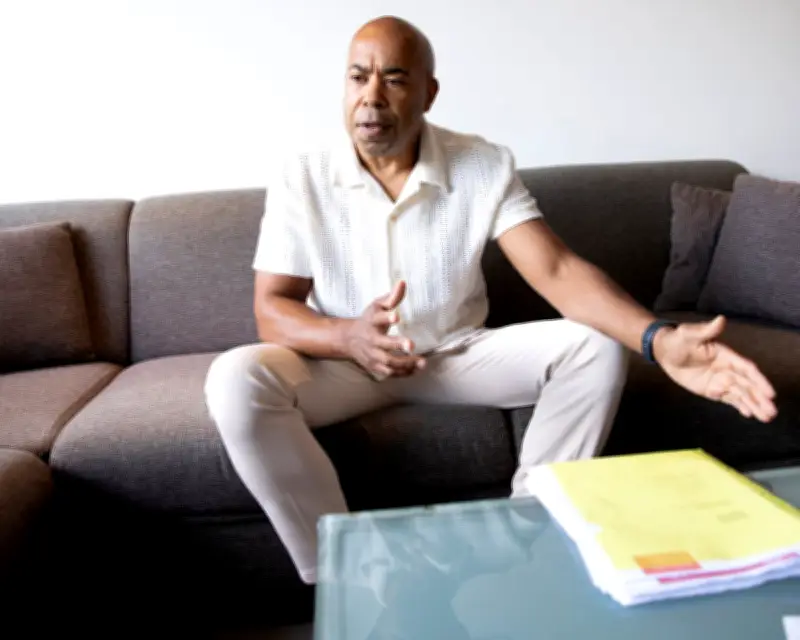
Henri Duiker, a Dutch father, won a landmark ruling from the Netherlands Institute for Human Rights after his 12-year-old son was denied entry to a swimming pool in Zoetermeer because he could not prove his age, while white children were not asked for identification. The case has highlighted what is known as the "Dutch paradox" – the tension between the country's reputation for tolerance and the reality of systemic racism.
Incident at Watergeus pool
On 12 July 2024, Duiker's son and a friend attended a "disco" swim evening at the Watergeus pool. When Duiker checked on them, he found his son standing alone by the desk. Pool attendants had demanded ID to prove he was under 13, but his friend of the same age and size was not asked. Duiker's partner observed that for 10 minutes, only children of colour were requested to show passports. “She saw that every white child was simply allowed to walk through, and every black child, without exception, was asked for their passport,” Duiker said. “And if they didn’t have it, they weren’t allowed in.”
Ruling and response
Last month, the Netherlands Institute for Human Rights ruled that Optisport Zoetermeer, the company operating the municipal pool, had used unlawful racial discrimination. The company has since apologised and abolished the specific control measure. In a formal apology letter, chief executive Albert Arp stated: “The specific control measure applied on the evening of 12 July 2024 was abolished after that date.” The municipality of Zoetermeer also expressed sadness, saying: “We are an inclusive city where all residents, particularly children and young people, feel welcome, safe and are treated equally – and where there is no place for discrimination.”
Broader context of racism in the Netherlands
The incident is not isolated. Last week, the Dutch football association asked police to investigate online racist abuse towards World Cup players. At an event commemorating the abolition of slavery, Prime Minister Rob Jetten admitted discrimination and racism were “still systematically present and deeply rooted”. In 2019, UN special rapporteur E Tendayi Achiume described the “Dutch paradox” where equality and tolerance are national values but people of minority ethnic origins are often seen as “neither truly nor wholly Netherlanders”. In 2022, then finance minister Marnix van Rij admitted institutional racism played a role in a tax office fraud scandal that disproportionately affected families with dual nationality.
Duiker's perspective
Duiker, who received hateful messages for speaking out, believes the Netherlands must take reports of unequal treatment more seriously. “People act in the Netherlands as though things are fine, and the worst thing is that when it happens to you, you hardly dare to say anything,” he said. “Because the first thing they say is: ‘Oh, he’s playing the racism card again.’” He added: “I have Surinamese parents, I am a Dutchman … but 53 years later I’m still a foreigner for some people. This is about my son and all of the other children who don’t dare to fight.”
Political and community response
In Zoetermeer, councillors Shaniqua Monsels and Yasir el Achkar have put the issue on the agenda. El Achkar said: “At first we wondered if we should pay attention to this in public or behind the scenes. But [Duiker] made it clear that many more children were discriminated against and wanted it to be visible to them, and to society, that he fought and we all won.” The council and Optisport have accepted the ruling, and procedures for access and age verification have been reviewed.