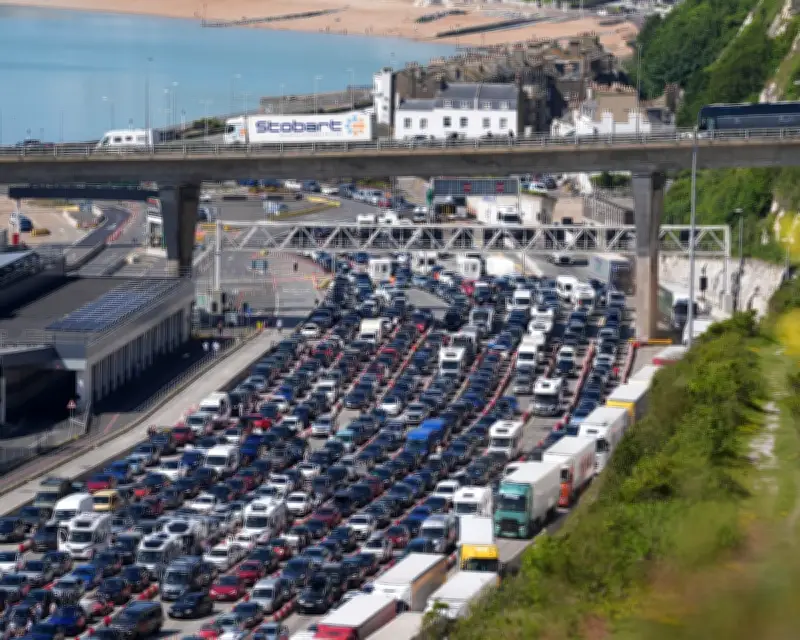
The Port of Dover and cross-Channel ferry passengers face "utter chaos and miles of tailbacks" under the EU's entry/exit system (EES) unless technology issues are resolved or checks are suspended by next week, MPs have warned. The home affairs select committee chair, Karen Bradley, urged the UK government to "apply maximum pressure" on French authorities to act on the EES before peak holiday traffic arrives.
Delays and Traffic Surge Expected
Dover normally experiences its busiest weekend when most schools break up for summer, with traffic expected to peak from Friday 17 July. The port reported that EES checks at the start of the May half-term holiday led to four and a half hours of delays. This summer, Dover anticipates almost 50% more vehicles travelling through the port compared to usual volumes.
The warning came after the EU on Tuesday rejected calls from airports and airlines across Europe to suspend EES fingerprinting and facial recognition border controls, despite admitting to "20 difficult spots" where the system caused tailbacks. EU officials said only 20 of 1,500 border crossing points were affected.
Infrastructure and Technology Issues
A committee of MPs visited Dover last week to inspect changes made to the port's layout, including land reclaimed from the sea and 84 automatic kiosks installed for EES. These kiosks, designed to speed up traffic, cannot be used due to problems with technology supplied by France. Bradley stated: "We saw for ourselves that there is going to be utter chaos next week unless the French authorities step up. And the people who will suffer are British holidaymakers and firms attempting to transport goods."
She added: "The western docks currently serve as a processing centre for coach passengers undergoing the EU's entry/exit system. But the £40m biometric kiosk facility meant for car travellers remains closed due to technology and software delays from French authorities. The Home Office must apply maximum pressure right now to either get this up and running or suspend the checks, otherwise there will be miles of tailbacks."
Government Response
Home Office minister Alex Norris told MPs on Wednesday that the government would "push very heavily" for the movement of people to be prioritised at EU borders. "When you get to peak volume … the volumes that are coming shortly, it fundamentally comes down to a question of a prioritisation of flow or prioritisation of compliance with the scheme itself," he said. "We push very heavily, we will do every day between now and then … to make sure that the French use flexibilities available to prioritise flow."
Pressed on whether he would support a full suspension of the EES, Norris later said: "I would not set that as the goal and the aspiration, because I don't believe that's deliverable."
Political Criticism and Industry Concerns
Shadow Home Office minister Matt Vickers criticised the "delusional attitude among EU colleagues" that the "EES is working just fine". Reiterating his call for the scheme to be halted during the peak holiday season, the Conservative MP said: "The government must stand behind the interests of British travellers."
The port's chief executive, Doug Bannister, last week wrote to the business and trade committee to warn of the impact on local towns, transport, freight, and trade if EES problems are not resolved. He said Dover could not use its facility because of "the inoperability of the EES kiosk technology, which is completely beyond the control of the port". Bannister warned: "Without greater flexibility in how EES is operated during periods of exceptional demand, we will face repeated episodes of severe congestion throughout the summer holiday period."
He added that traffic modelling showed "queueing cars spilling out of the port on to the public highway for miles. This simply cannot be allowed to happen, as both Dover and Folkestone will be severely affected."
Background on EES
EES was launched last October after years of delays, with a provision allowing border police to temporarily suspend the system if deemed necessary to process all travellers. This discretionary power will only last until September. The International Air Transport Association has called for action on the checks, highlighting "delays and missed connections" in Portugal, Spain, Italy, Greece, and Belgium. Ryanair has warned of "queue chaos" in major holiday airports including Málaga, Alicante, and Palma.