Bangladesh Tribunal Delivers Death Sentences in Landmark Protest Killing Case
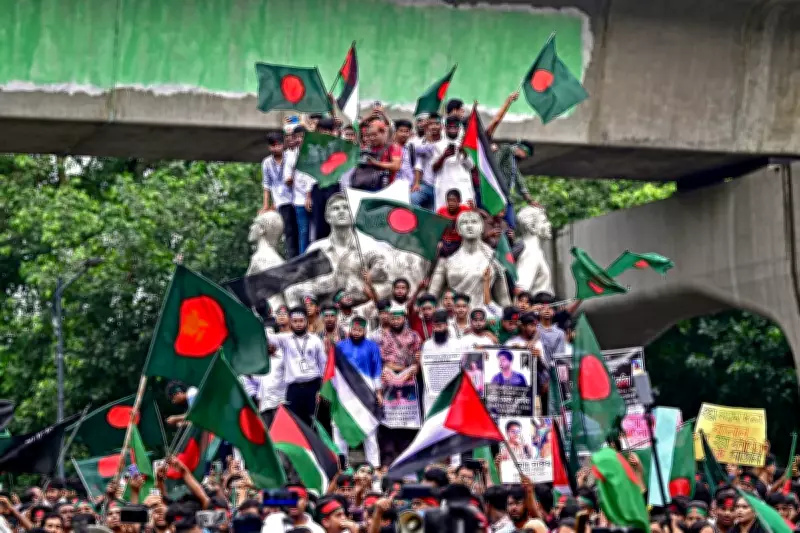
A court in Bangladesh has delivered death sentences to two former police officers for their involvement in the fatal shooting of a student protester during the 2024 political uprising that ultimately toppled Prime Minister Sheikh Hasina's government. The International Crimes Tribunal convicted a total of thirty individuals in this high-profile case, which became a catalyst for widespread demonstrations against the administration.
Details of the Convictions and Sentences
The tribunal specifically sentenced former assistant sub-inspector Amir Hossain and former constable Sujan Chandra Roy to death for their roles in the killing of Abu Sayed, a twenty-three-year-old student at Begum Rokeya University in Rangpur. Beyond these two primary defendants, the court handed life imprisonment to three additional accused individuals and imposed varying prison terms on twenty-five others.
Most of those convicted beyond the two former policemen currently facing execution remain at large and are considered absconding from justice. Legal representative Azizul Haque Dulu, acting for the convicted officers, has confirmed their intention to appeal the verdict through higher judicial channels.

The Incident That Sparked National Outrage
The fatal shooting occurred on July 16, 2024, during escalating protests against Sheikh Hasina's government. A widely circulated video captured Abu Sayed standing in a street with his arms outstretched moments before police gunfire struck him down. This graphic footage circulated rapidly across social media platforms and traditional media, fueling national anger and significantly intensifying the mass protest movement.
Chief prosecutor Aminul Islam stated during proceedings that "Abu Sayeed sacrificed his life to free the country from autocratic rule," framing the case within the broader political context of the uprising. The student wing of Hasina's Awami League party, known as Chhatra League, was subsequently banned following the government's collapse.
Mixed Reactions to the Tribunal's Ruling
Reactions to the court's decision have been decidedly mixed. While some view the sentences as a step toward accountability, Abu Sayed's family has expressed profound dissatisfaction with the outcome. His brother, Ramzan Ali, told international media that "the court handed lighter sentences to senior police officials and the Chhatra League leader" and confirmed the family's plan to file an appeal seeking harsher penalties for all involved.
Human rights organizations have also voiced significant concerns regarding both the specific punishment and the judicial process itself. Rehab Mahamoor of Amnesty International acknowledged that "Abu Sayed and the many other victims of police violence during the July 2024 protests deserve justice and accountability" but strongly condemned the use of capital punishment.
Amnesty International's statement emphasized that "the death penalty has no place in any courtroom" and described it as "the ultimate cruel, inhuman and degrading punishment." The organization further argued that its continued application by the International Crimes Tribunal undermines efforts to achieve genuine and lasting reconciliation within Bangladesh.
The human rights group reiterated longstanding concerns about the tribunal's adherence to international fair trial and due process standards, urging Bangladeshi authorities to establish a moratorium on capital punishment with the ultimate goal of complete abolition. They called for any judicial proceedings to be conducted with stringent impartiality and transparency to ensure legitimate justice for all victims.