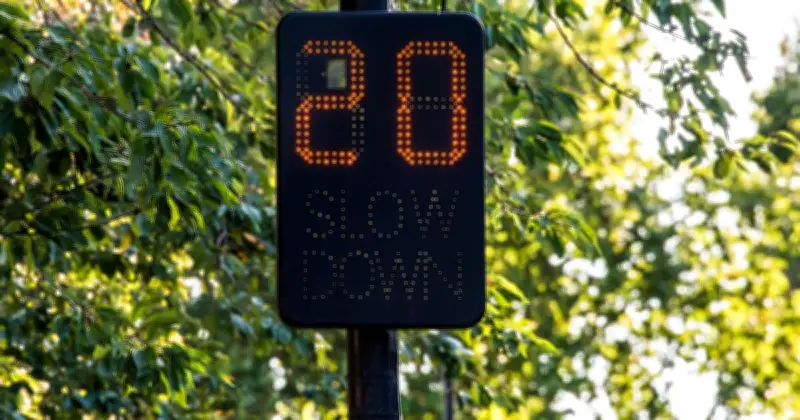
Temporary motorway speed limits displayed within a solid red circle are legally mandatory and enforceable at all times, according to police and motoring authorities, settling a recurring debate among UK drivers.
The clarification comes as millions of motorists use smart motorway networks and major roadworks daily, with many questioning whether reduced limits on overhead gantries must be obeyed when no hazards or workers are in sight. Social media debates and motoring forums have carried conflicting claims, prompting traffic officers to set out the statutory road traffic obligations.
Legal basis under the Highway Code
Under Rule 261 of the Highway Code, any speed limit enclosed within a solid red circle is legally mandatory and enforceable under the Road Traffic Regulation Act 1984. These mandatory limits apply around the clock, regardless of traffic density or the absence of visible construction crews.
National Highways states that whatever the reason for the setting, speed limits displayed within a red circle “will always be enforceable”. The National Police Chiefs' Council (NPCC) also states: “Temporary speed limits, often seen at roadworks or during other events, are legally enforceable by police.”
Advisory limits and enforcement
Ignoring specific overhead signals is a strict-liability offence that triggers automated enforcement cameras, resulting in immediate fines and penalty endorsements. However, there is a technicality for variable speed limits.
Driving course provider PassMeFast says advisory speed limits, often shown on motorway gantries with flashing amber lights and no red circle, are not legally enforceable. They are intended to guide drivers in poor weather or traffic conditions. Authorities could consider ignoring amber speed limits as careless driving if it contributes to an accident.
Penalties for exceeding limits
While many police forces follow NPCC guidance that sets a discretionary threshold, such as 10% plus two miles per hour, police can legally prosecute drivers for exceeding a limit by just one mile per hour.
Temporary speed limits are enforced by speed cameras, particularly on smart motorways and in roadwork zones. Drivers caught speeding may receive a Fixed Penalty Notice (FPN), which could mean a £100 fine and three penalty points on their licence. The penalty may be more severe depending on how fast the driver was travelling.