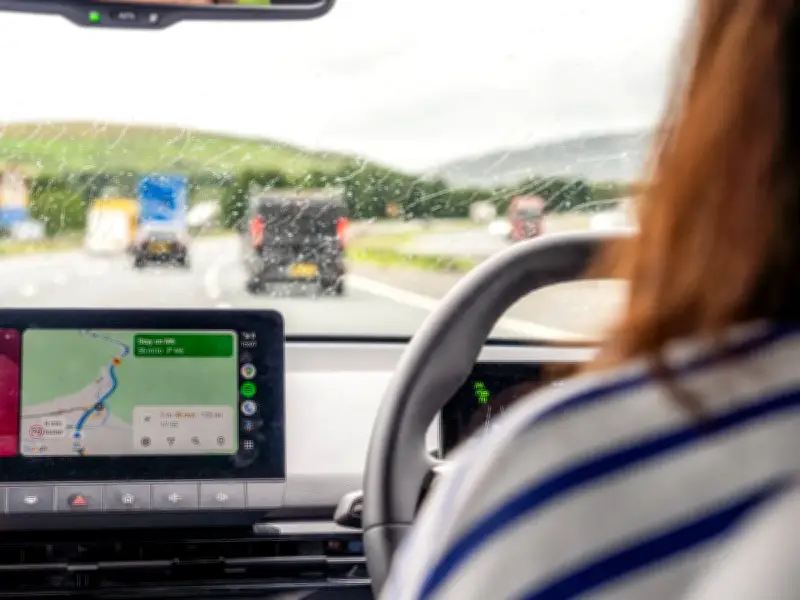
Nottinghamshire Police have clarified the law on using Google Maps while driving after a major operation caught more than 100 motorists breaking the UK mobile phone rules. Touching a mounted phone for navigation can still result in six penalty points and a £200 fine.
What the law says
Under UK Government rules, it is illegal to hold and use a phone, satnav, tablet or any device that can send or receive data while driving. This applies when stopped at traffic lights, queuing in traffic, supervising a learner driver, or driving a car that turns off its engine when stationary. It also covers holding and using a device that is offline or in flight mode.
Exceptions include calling 999 or 112 in an emergency when it is unsafe to stop, being safely parked, making a contactless payment in a stationary vehicle such as at a drive-through, or using the device to park the vehicle remotely.
Hands-free devices such as Bluetooth headsets, voice commands or windscreen mounts are permitted, provided the driver does not touch the device and it does not obstruct the view of the road.
Penalties and the M1 operation
Nottinghamshire Police warned that any driver caught touching or holding a phone faces six penalty points and a £200 fine. Even with a phone securely mounted, drivers can still be prosecuted for offences such as driving without due care and attention.
Earlier in the month, a large number of motorists were stopped on the M1 motorway for phone-related offences. Out of 101 motorists stopped, 46 faced penalties for making calls, sending messages, using navigation or engaging with their phones while driving. Officers in an unmarked HGV identified them during a pre-arranged operation running from 12 to 16 October.
Police warning on mounted phones
Sergeant Jim Carrington of the Roads Policing Team said: "The good news is that more and more drivers now understand that holding a mobile phone at the wheel is not acceptable."
He added: "The bad news is that there are clearly others out there who think they can interact with a device held in a secure mount. As several drivers have just found out to their cost, that is simply not the case, because if you are searching for an address or looking for an alternative route, you are not paying proper attention to the road in front of you."
Carrington also noted that searching for a song or skipping adverts in a podcast may seem innocuous, but can have catastrophic consequences. Drivers who recognise such habits should consider the potential outcomes, which range from a fine and points to a lengthy prison sentence.