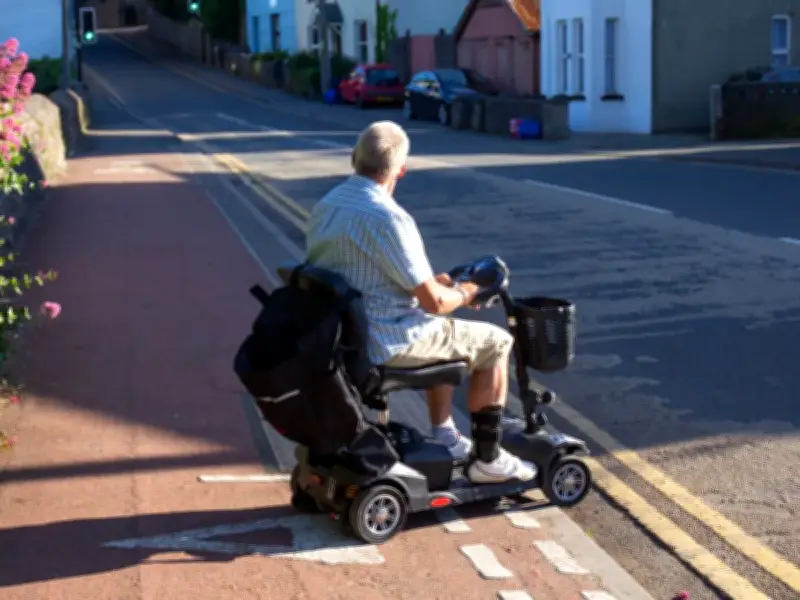
Mobility scooter users in the UK are being warned that using painted on-road cycle lanes could result in a £160 fine. With an estimated 300,000 to 350,000 mobility scooter users in the country, and some industry estimates suggesting the total number of scooters in circulation could exceed 500,000, the risk of accidental rule-breaking is significant.
Cycle Lanes vs. Cycle Tracks
The warning highlights a common confusion between cycle lanes, which are marked on the carriageway, and cycle tracks, which are physically separated from the road. Class 2 and Class 3 mobility scooters are permitted on off-road cycle tracks, but they are not allowed in on-road cycle lanes, even when the lanes appear empty.
Experts note that many users assume cycle lanes offer a safer alternative to travelling on the road, particularly in busy towns and cities. However, mobility scooters and powered wheelchairs are legally prohibited from riding in painted on-road cycle lanes and bus lanes.
Enforcement and Penalties
Local authorities are introducing stronger enforcement measures to protect designated cycling infrastructure. In London, certain cycle lane and traffic contraventions can attract penalty charge notices, which may include fines of £160.
Lee Cartwright, owner of lightweight mobility scooter provider Mobility Solutions Direct, emphasised the need for users to understand the difference before setting off. He said: "One of the biggest misconceptions is that a cycle lane is simply another safe route for anyone travelling on a small, low-speed vehicle."
Cartwright added: "However, mobility scooters have their own rules about where they can be used, and a painted cycle lane is not a permitted alternative to the road or pavement. The distinction between a cycle lane and a cycle track can be easy to miss, particularly when travelling somewhere unfamiliar."
Safety Advice for Users
As more towns and cities invest in cycling infrastructure, understanding the rules can help mobility scooter users travel more safely and confidently. Cartwright said: "Mobility scooters give many people an important degree of independence, so it is essential that users know which routes they can legally take. Choosing the wrong route could put them in conflict with cyclists and other road users, particularly in busy areas."
He concluded: "The safest approach is to familiarise yourself with the rules before heading out, rather than making assumptions based on road markings alone. Knowing the difference between a cycle lane and a permitted cycle track can help users avoid confusion and make more informed decisions about their journeys."