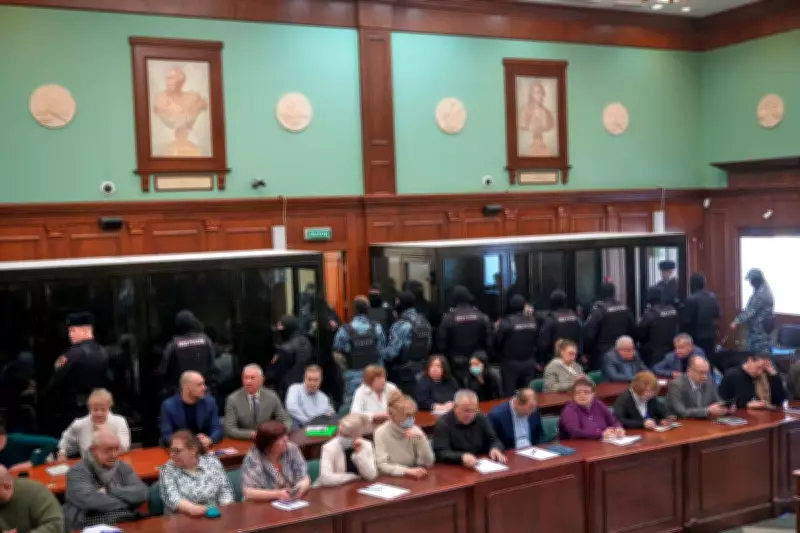
A Moscow military court has delivered convictions for 19 individuals involved in the devastating 2024 Crocus City Hall shooting, one of the deadliest terrorist attacks in the Russian capital in recent years. The attack, which occurred on March 22, 2024, resulted in the tragic deaths of 149 people and left more than 600 others injured.
Trial and Sentencing Details
The trial commenced in August 2025 and was conducted behind closed doors, a standard procedure for terrorism cases in Russia, with authorities citing significant security concerns. All 19 defendants received substantial prison sentences, reflecting the severity of the charges.
Lengthy Prison Terms Imposed
Fifteen of the convicted individuals were sentenced to life imprisonment without the possibility of parole. One defendant received a prison term of 22 and a half years, while the remaining three were each handed sentences of 19 years and 11 months. These sentences underscore the Russian judiciary's firm stance on terrorism-related offenses.

Attack Background and Responsibility
The massacre took place at the Crocus City Hall concert venue, where four gunmen opened fire on attendees awaiting a performance by a popular rock band. After the shooting, the assailants set the building ablaze, exacerbating the chaos and casualties. A faction of the Islamic State group publicly claimed responsibility for the orchestrated attack, which has been widely condemned internationally.
Defendants and Allegations
According to reports from the independent Russian news site Mediazona, the defendants included the four suspected gunmen, all identified as citizens of Tajikistan, who were arrested shortly after the attack. They appeared in court with visible signs of severe beatings. Other convicts comprised three men accused of selling a car to the gunmen, a landlord who rented them an apartment, and ten additional individuals alleged to have terrorist connections.
Political Controversies and Denials
Russian President Vladimir Putin and other government officials have repeatedly asserted, without providing concrete evidence, that Ukraine played a role in facilitating the attack. The Investigative Committee, Russia's premier criminal investigation agency, stated that the assault was "planned and carried out in the interests of the current leadership of Ukraine" to destabilize Russia's political landscape. They also noted that the four gunmen attempted to flee to Ukraine following the incident.
Kyiv has vehemently denied any involvement, dismissing the accusations as baseless and politically motivated. This ongoing dispute adds a layer of geopolitical tension to the already tragic event, highlighting the complex interplay between terrorism and international relations in the region.