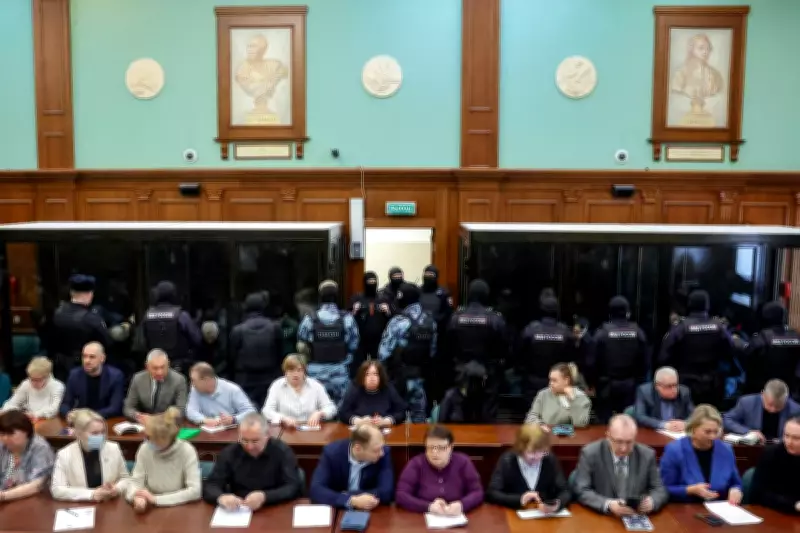
A Moscow court has delivered a decisive verdict in the aftermath of the horrific 2024 concert hall attack, convicting 19 individuals for their roles in the deadly assault that shocked the nation. The trial, which concluded behind closed doors due to heightened security concerns, resulted in substantial prison terms for all defendants, marking a significant legal response to one of Russia's worst terrorist incidents in recent history.
Substantial Sentences Handed Down
In a ruling that underscores the severity of the crimes, 15 of the convicted individuals have been sentenced to life imprisonment without the possibility of parole. The remaining four defendants received lengthy prison terms, with one facing 22 and a half years behind bars, and the other three each sentenced to 19 years and 11 months. These sentences reflect the court's determination to hold perpetrators accountable for the immense loss of life and suffering caused by the attack.
The Attack and Its Aftermath
The March 22, 2024, rampage at Crocus City Hall involved four gunmen who mercilessly opened fire on concert-goers before setting the venue ablaze, creating a scene of chaos and devastation. The assault resulted in 149 fatalities and left over 600 individuals injured, many with life-altering wounds. A faction of the Islamic State group promptly claimed responsibility for the attack, citing ideological motivations, though Russian authorities have pursued alternative theories regarding potential involvement from other actors.

Political Dimensions and Denials
Russian officials, including President Vladimir Putin, have repeatedly asserted without presenting concrete evidence that Ukraine played a role in orchestrating or supporting the attack. These claims have been vehemently denied by Kyiv, which has dismissed them as baseless propaganda aimed at justifying Russia's ongoing military actions in the region. The trial, which commenced in August 2025 in a military court, proceeded under strict secrecy, with proceedings closed to the public and media to address security vulnerabilities.
Identities of the Perpetrators
During the trial, the four suspected gunmen were officially identified as citizens of Tajikistan, highlighting the transnational nature of the terrorist threat. This revelation has raised questions about border security and the recruitment of individuals from Central Asia by extremist organizations. The convictions of all 19 defendants, including these gunmen, represent a comprehensive legal effort to address the network behind the attack, though some observers note that the closed-door nature of the trial limits transparency and public scrutiny of the evidence presented.
As Russia continues to grapple with the aftermath of this tragedy, the court's verdict serves as a somber reminder of the persistent threat of terrorism and the complex geopolitical tensions that often surround such incidents. The day of mourning observed across Russian cities underscores the profound national grief, while the legal outcomes aim to provide a measure of justice for the victims and their families.