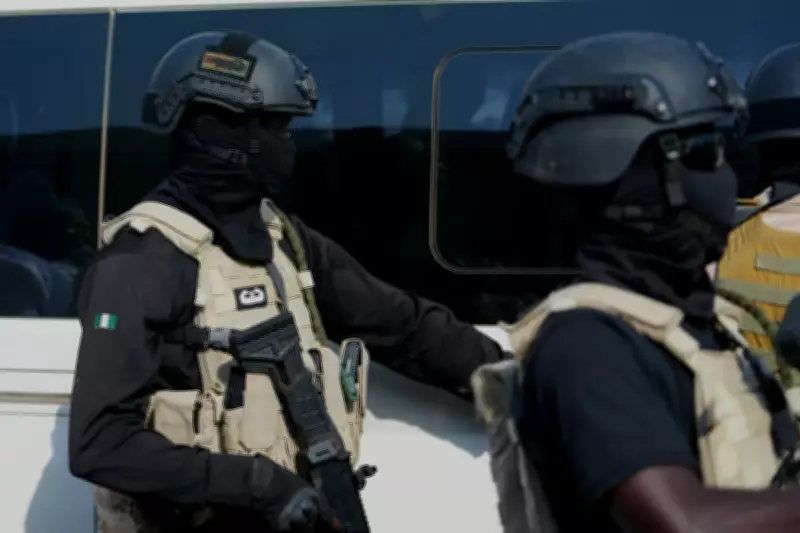
A court in the Nigerian capital of Abuja has delivered a landmark verdict, convicting over 300 terrorism suspects in a high-profile mass trial that concluded on Friday. The proceedings, which spanned four intensive days, mark a significant escalation in the government's efforts to address the nation's persistent security challenges.
Mass Trial Details and Convictions
The mass trial commenced on Tuesday, with a substantial number of the defendants entering guilty pleas to the terrorism charges levied by Nigerian authorities. Following their appearances before a panel of ten judges, many of the convicted individuals have been handed prison sentences of up to twenty years.
Official Statement on the Proceedings
Nigeria's attorney general provided a detailed account to journalists after the trial's conclusion. "In total, we brought about 508 cases. Of these 508, we were able to secure 386 convictions," the official stated. "We have been able to bring justice to them, or bring them to justice. So this is the clear signal that we are sending." This statement underscores the government's intent to demonstrate a firm and decisive stance against terrorism.

Context of Nigeria's Security Crisis
This judicial action unfolds against the backdrop of a complex and multifaceted security crisis plaguing Nigeria, particularly in its northern regions. The country has been grappling with a decade-long insurgency in the northeast, alongside the operations of several armed groups engaged in kidnapping for ransom.
Key Militant Groups and Conflicts
Among the most prominent Islamic militant organizations are Boko Haram and its breakaway faction, which is affiliated with the Islamic State group and operates under the name Islamic State West Africa Province. Additionally, the IS-linked Lakurawa group is active in northwestern communities bordering the Niger Republic.
Further complicating the security landscape are frequent and deadly clashes in the north-central and northwestern parts of the country. These conflicts often stem from disputes over land and grazing rights between predominantly Muslim Fulani herders and largely Christian farming communities.
Criminal gangs specializing in kidnappings for ransom also remain a persistent threat across various regions.
Humanitarian Impact of the Insurgency
The prolonged insurgency in Nigeria's northeast has resulted in severe humanitarian consequences. According to United Nations reports, the conflict has caused significant loss of life and the large-scale displacement of populations, creating an ongoing crisis that extends beyond immediate security concerns.