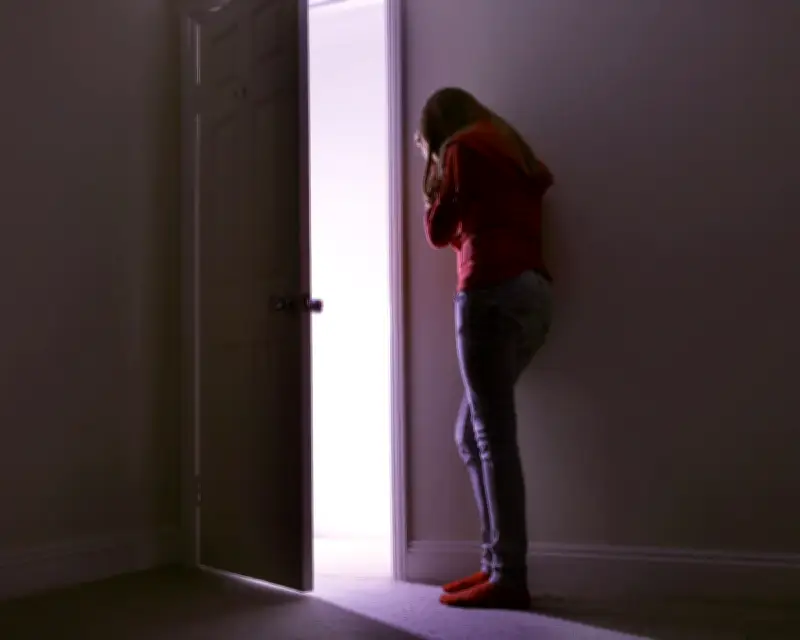
Lucy* was sexually assaulted in her sleep by her son, then in his early 20s, in their family home. He was convicted and given a community order, but Lucy said she felt left to suffer in silence. She has not told her family because she felt "humiliated and embarrassed" by what happened. Despite her ordeal, she also feels uncomfortable about people thinking badly of her son. "I can't make sense of it so I can't expect anybody else to. It's a torture. It's lifelong punishment," she said. "And there's nothing out there to help you at all. I felt like I was the only person this had happened to."
Rise in Parents Seeking Help for Sexual Abuse by Children
Pegs, a social enterprise (acronym for parental education, growth, support) for people affected by child to parent abuse (CPA), said that while data on the issue was scarce, it had begun to notice a rise in parents seeking help for sexual abuse. In response, it surveyed 188 parents who approached it for help, and 17% – predominantly mothers – reported experiencing sexual harm from their child. Michelle John, the founding director of Pegs, said the organisation was seeing more parents reporting sexual harm. "We are seeing graphic assaults and rape, attempted rapes, we're seeing parents being suffocated and inappropriately touched, we're seeing really concerning and high-risk sexual behaviours towards parents and caregivers."
Factors Contributing to the Rise
Poor access to mental health support, social isolation and growing access to harmful sexual content online are all thought to be contributing to the rise. Similar factors are also believed to be fuelling an increase in matricide. While there has been little research on sexual abuse towards parents, generally CPA is linked to neurodiversity, trauma and specific mental health conditions such as oppositional defiant disorder – persistent uncooperative and hostile behaviour towards authority figures.
First Academic Research on the Subject
Amanda Holt, a professor of criminology at the University of Roehampton whose recent paper, Understanding Harmful Sexual Behaviour Towards Parents, is thought to be the first academic research into the subject, concluded that "we can no longer avoid talking about it". Sexual abuse is now "interwoven into the dynamics of child to parent abuse for a significant number of families", her research found, and was linked to exposure to domestic abuse and childhood trauma. "I've been researching in the field of child to parent abuse for 20 years, and we talk about physical, psychological and financial abuse, but never sexual abuse," she said.
Data from Support Service
As well as interviewing mothers and practitioners, she analysed data from 2,000 parents who sought help from a UK-based support service for CPA in 2023, and found that 13% had experienced harmful sexual behaviour from their child. Of these, 96% were mothers and 4% were fathers. The children, aged five to 31, were 66% male and 33% female. Parents reported their children making sexual noises and simulating sex acts, making sexual threats, being physically violent including touching, grabbing and thrusting, and also carrying out non-contact behaviour such as voyeurism and exposure.
Mothers Fear Blame and Custody Loss
"The mothers I interviewed talked about how they'd sought help for quite a long time because their child had shown what they thought were quite worrying signs of sexualised behaviour before it was actually targeted at them. But often it was minimised, they were told to just get on with it," she said. She also found mothers were fearful of speaking out due to concerns they would be blamed, accused of sexually abusing their child, or they would lose custody.
Influence of Online Content
John said many of the parents Pegs spoke to were fearful their children were being exposed to harmful sexual and misogynistic content online that could be influencing their behaviour. "They've reported their children making indecent images using ChatGPT," she said. "Parents are putting safeguards in place, but children are finding different ways to go around it. We're supporting some parents that don't even have access to wifi because of this."
Lucy's Story: A Lifelong Punishment
Lucy said she had spoken to mental health services about her son searching for "rape" online as a teenager, but she "didn't think of it as a concern" to herself. His mental health deteriorated when he went to university, he began drinking and using drugs and became socially isolated. But there were no signs that he had developed an "obsession" with her, as police later found out after seizing his computer, until the night she woke up after being drugged by her son. "I'm always thinking, is there something I could have done differently? Did I miss something?" she said. "And you question what people think about you – do they think that I've been abusing my own child? You become quite paranoid."
She said she obsessively searched online for help in the aftermath but could find nothing, and when she did speak to therapists she often felt misunderstood. "I feel passionately about this being a subject that's not hidden," she said. "It's not about me, I've missed the boat. But if I can help just one person not feel lonely then it's a job done for me." John added: "It takes a lot of bravery and courage to speak out [about sexual assault], and then add on to that it's from someone you absolutely love and adore, your own child. It just adds that extra layer of shame and isolation, guilt maybe."