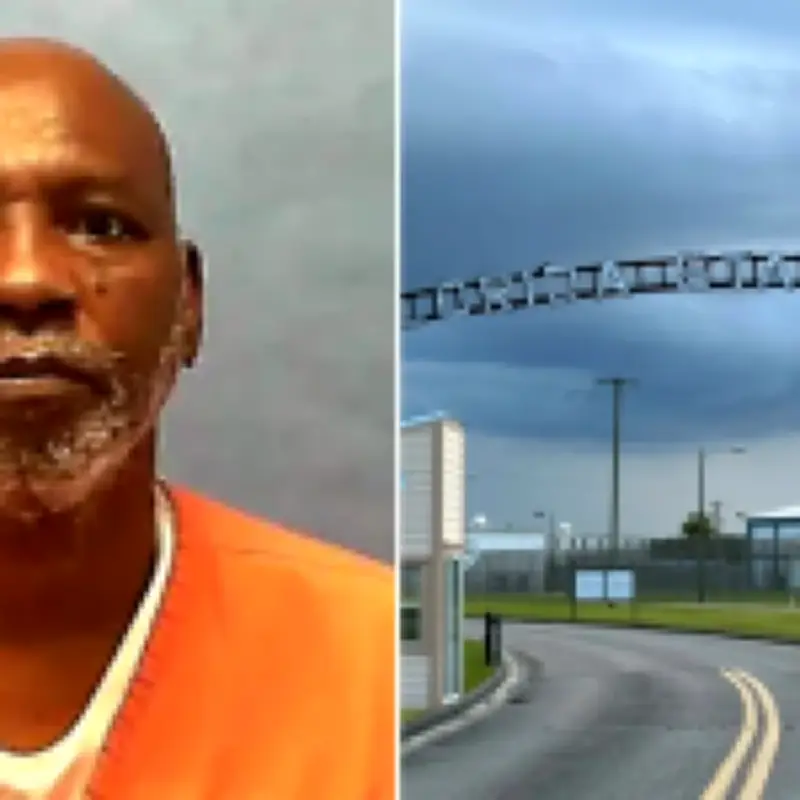
Florida carried out its eighth execution of a death row inmate aged over 70 this year on Tuesday, when William Reaves, 77, was put to death by lethal injection at Florida State Prison. Reaves was convicted of first-degree murder for the shooting of Indian River County deputy Richard Raczkowski in 1986.
Reaves was pronounced dead at 6.12pm, twelve minutes after the execution curtain was raised to reveal him strapped to the gurney with an IV in his arm. When asked if he had any final words, he replied: 'No, I do not.' According to The Guardian, he took several big breaths and then stopped moving around 30 seconds after the lethal dose was administered.
Sheriff's Reaction to the Execution
Indian River County Sheriff Eric Flowers commented after the execution, saying: 'Would we all be so lucky to be 77 years old and to die so peacefully? That's not justice in any way, in my opinion.'
Raczkowski was killed in September 1986 after responding to a 911 call placed from a convenience store in Vero Beach, Florida—a call Reaves later admitted to placing himself. During the encounter, a gun fell from Reaves' shorts, leading to a struggle as he tried to regain control of the weapon. He ultimately succeeded, shooting the deputy four times as he attempted to flee.
Appeals and Legal History
Reaves was originally sentenced to death a year after the murder, but the conviction was overturned due to a conflict of interest with the prosecutor. He was retried and again sentenced to death in 1992, with subsequent appeals proving unsuccessful. The final appeal was rejected by the US Supreme Court on Tuesday, just hours before the execution, and Florida's Supreme Court also turned down the plea.
Veterans also attempted to prevent the execution, as defense lawyers had highlighted that Reaves, a Vietnam veteran, was classified as 100% disabled by PTSD—a fact not made clear to jurors who recommended the death penalty.
Record Number of Executions
Reaves' execution was the 18th in Florida this year under Governor Ron DeSantis, who has accelerated executions before leaving office in January. The state holds the record for the most executions in a single year, with 19 in 2025, a number it could equal if another scheduled execution proceeds.
The high number of elderly inmates executed has drawn attention to the aging death row population, both in Florida and elsewhere, with many prisoners having spent decades awaiting their sentences. The issue has sparked debate, with some arguing that lengthy appeals are necessary despite delaying justice for victims' families, while opponents of capital punishment highlight the humanitarian concerns of executing elderly prisoners. Florida's next scheduled execution is that of 64-year-old Jesse Guardado on November 5.