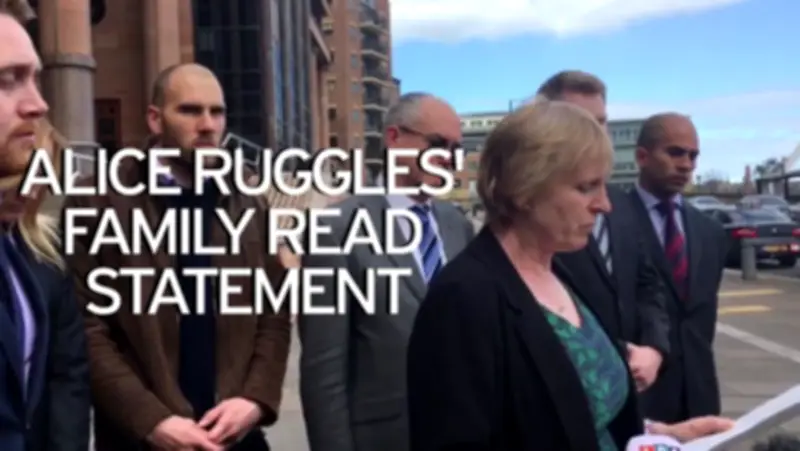
The parents of Alice Ruggles have revealed they waited three years to confirm that her killer, Trimaan Dhillon, would not be allowed to return to India to serve his life sentence. Professor Clive Ruggles and his wife, Dr Sue Hills, feared that if Dhillon returned to India, he might secure an early release and carry out a revenge attack on other family members, including Alice's sister Emma.
Killer's transfer application rejected
Dhillon, a former soldier, applied for a prisoner transfer to India in June 2020. Clive Ruggles only learned of the application when the UK Government was considering a decision on the move. The application was finally rejected in June 2023.
Government sources said that "all factors" were considered in a prisoner transfer application, including the seriousness of the offending, the sentence imposed, and concerns raised by victims or their family. These factors are taken into account in all Prisoner Transfer agreements, regardless of prison capacity pressure.
Family's fears and campaign
Clive said: "We discovered his application to be transferred to India had been approved. We had to communicate with the Minister to ensure they did not permit it. It took 18 months but we finally received a letter stating it had not been permitted. Every year we get an update from a liaison officer. My fear was always that this whole process would go through without us knowing about it."
Sue added: "He had already threatened our other daughter before he murdered Alice - he still poses that risk. He has never admitted responsibility for what he did. We thought he would at least pretend to have some regret. He has not even done that. It makes it easier that you don't have to worry about forgiving him."
Dhillon murdered Alice, 24, in her flat in Gateshead, Tyne and Wear, on October 12, 2016. He travelled more than 120 miles from his barracks in Edinburgh, defying an order preventing him from contacting her. At trial, he claimed he had acted in self-defence after Alice attacked him.
Campaign for awareness and legal changes
Alice's parents set up the Alice Ruggles Trust to warn of the dangers of stalking. Volunteers teach schoolchildren about the warning signs, and the couple go into schools to meet pupils. They have also helped change police officer training to highlight the need to protect stalking victims.
Research commissioned by the Suzy Lamplugh Trust in the wake of Alice's death was conducted by Professor Jane Monckton-Smith. She looked into the murders by men of 358 women over three years and found that 94 per cent involved stalking. The research was concluded in 2017. By 2025, the Trust found that around 1.4m over-16s were victims of stalking.
Clive has met with Government officials to discuss life sentencing and is calling for foreign prisoners to be unable to move abroad to serve their life terms. He said: "You cannot have prisoner exchanges in a situation where the sentence is life imprisonment for murder. You cannot do that - it is a minimum tariff."
Government response
A Government spokesperson said: "Our thoughts are with Alice's loved ones on the 10th anniversary of her horrific murder. We must use every lever available to tackle violence against women and girls, moving further and faster to stop harm before it happens.
"We are strengthening the use of Stalking Protection Orders, investing over £13m to establish specialist protection order teams. Last year we appointed Richard Wright KC, who prosecuted Alice's case, to conduct an independent review to ensure the law is fit for purpose."
More than £1billion is being invested in victim support over the next three years, including £550 million for victim services. The Government has placed domestic abuse specialists in 999 control rooms in the first 17 police forces to support frontline responders. It is also rolling out Domestic Abuse Protection Orders, put in place to safeguard victims.