UK Brings Historic Charges Against Syrian Ex-Intelligence Officer for 2011 Atrocities
A 58-year-old man has been charged with crimes against humanity allegedly committed in Syria during the brutal suppression of pro-democracy demonstrations in 2011. The Metropolitan Police served the man with a Postal Charge Requisition relating to his time working with the Syrian Air Force Intelligence in Damascus.
Unprecedented Prosecution Under UK Law
This represents the first prosecution of its kind in the United Kingdom where the Crown Prosecution Service has brought charges of murder as crimes against humanity. The charges include three counts of murder as a crime against humanity, three counts of torture, and one offence of conduct ancillary to murder as a crime against humanity.
The man allegedly led a group to suppress demonstrations in the Jobar area, a suburb east of Damascus's centre, at the beginning of what would become the Syrian civil war. According to legal definitions, crimes against humanity apply when attacks form part of widespread or systematic attacks directed against civilian populations, conducted with knowledge of that context.

Complex International Investigation
Commander Helen Flanagan, who leads Counter Terrorism Policing London, described the investigation as "incredibly complex and challenging," involving enquiries across multiple countries. The investigation was conducted by Counter Terrorism Policing's War Crimes Team in close cooperation with several international partners.
The War Crimes Team began investigating the 58-year-old after receiving a referral in November 2020 containing allegations that the man had been a member of the Syrian armed forces during the early 2010s. A year later, Metropolitan Police officers visited an address in Buckinghamshire where a man in his 50s was arrested on suspicion of involvement in crimes against humanity, with a search conducted at the property.
After being released on bail initially, the man was subsequently charged with crimes against humanity following further detailed enquiries by investigators.
Background to Syria's Conflict
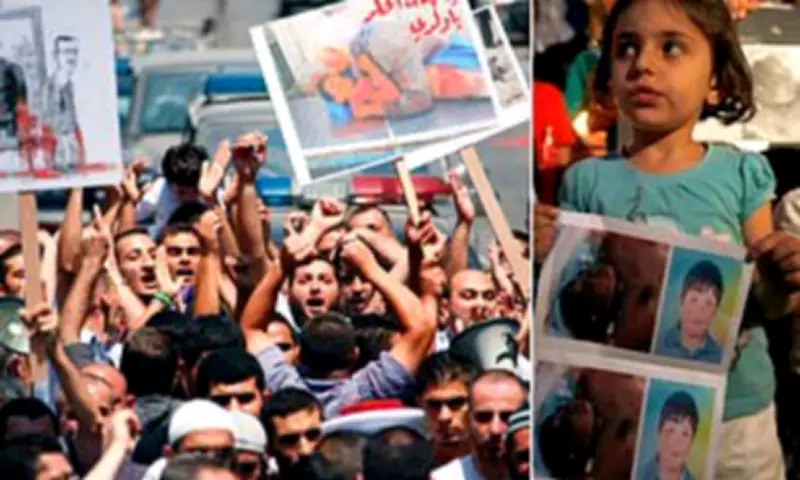
Syria's conflict began amid the 2011 Arab Spring uprisings against dictators across the Middle East, as President Bashar al-Assad's regime crushed what were largely peaceful protests. The situation quickly escalated into a full-blown civil war following a brutal regime crackdown that has resulted in more than half a million deaths and forced over five million people to flee the country as refugees.
In December 2024, rebel groups led by Hayat Tahrir al-Sham took control of Syria's largest cities, bringing the Assad regime's 54-year rule to an end. Following the regime's collapse, horrifying images emerged showing the conditions prisoners endured in facilities like Sednaya Military Prison.
Widespread Allegations of Atrocities
Both Bashar al-Assad and his father Hafez, who preceded him as president until his death in 2000, have long faced accusations from rights groups and governments of widespread extrajudicial killings, including mass executions within Syria's prison system and the use of chemical weapons against Syrian civilians. Assad has repeatedly denied that his government committed human rights violations, instead characterizing his detractors as extremists.
Mouaz Moustafa, head of the US-based Syrian Emergency Task Force, has estimated that at least 100,000 bodies were buried at a single site in Qutayfah, approximately 25 miles north of Damascus. The International Commission on Missing Persons in The Hague has separately received data indicating there may be as many as 66 unverified mass grave sites throughout Syria.
According to international and Syrian organizations including the United Nations and the Syrian Network for Human Rights, more than 150,000 people remain missing from the conflict.
Official Statements on the Case
Commander Flanagan emphasized: "The charges are extremely serious and show that we fully support the UK's 'no safe haven' policy in relation to alleged war criminals. Where we are presented with allegations of war crimes and crimes against humanity that fall within our jurisdiction, then, as we have shown here, we will not hesitate to investigate those rigorously and robustly."

Bethan David, Head of the Crown Prosecution Service's Counter Terrorism Division, stated: "We have determined that a 58-year-old man should be prosecuted with charges of murder as a crime against humanity and torture. Our prosecutors have concluded that there is sufficient evidence to bring seven offences under the International Criminal Court Act 2001 and the Criminal Justice Act 1988."
David added: "We have worked closely with the War Crimes Team at the Metropolitan Police Service as they carried out their investigation. As always, we remind all concerned that proceedings against this defendant are active and that he has a right to a fair trial. It is vital that there should be no reporting, commentary or sharing of information online which could in any way prejudice these proceedings."
The defendant is expected to appear at Westminster Magistrates' Court on 10 March. His name has not been disclosed as his lawyers intend to seek a reporting restriction regarding the case details.