Kosovo's Thaci Demands Acquittal in War Crimes Trial at The Hague
Hashim Thaci, the former president of Kosovo, has called upon international judges to acquit him in his ongoing war crimes case at the Kosovo Specialist Chambers in The Hague. Thaci described the charges against him as entirely groundless, framing himself as a dedicated statesman and peacemaker throughout the proceedings.
Thaci's Closing Statement and Self-Portrayal
In his closing statement delivered on Wednesday, Thaci emphasized his lifelong commitment to defending freedom, life, and dignity for the people of Kosovo. He asserted that he was consistently guided by Western ideals of democracy, equality, and justice. Thaci stated, "Throughout my life, I stood with the people of Kosovo defending freedom, life and dignity. I was always guided by the Western ideals of democracy, equality and justice." He further declared that "the only just decision would be my full acquittal," maintaining his innocence throughout the nearly three-year trial.
Thaci recounted his return from studies in Switzerland to assist in defending Kosovo against brutal attacks by neighboring Serbia. He highlighted his role as a key representative of the Kosovo Liberation Army (KLA) in Western-brokered peace talks and his subsequent presidency. "During all that time, the only power I had was the power of my voice," he told the court, adding that he used his voice to promote a multi-ethnic and tolerant society in Kosovo.

Courtroom Atmosphere and Support
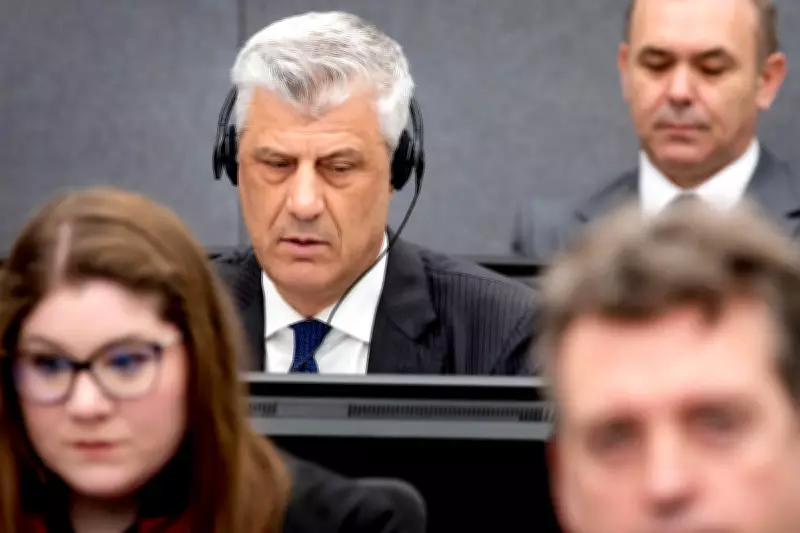
The courtroom atmosphere was charged with emotion as supporters in the public gallery pushed against the glass wall separating them from the proceedings to wave at Thaci at the beginning of his speech. Security guards intervened to chastise them, and one man was seen wiping away tears as Thaci spoke. This display of support coincided with thousands of people marching through Kosovo's capital, Pristina, in solidarity with Thaci and other former fighters on trial, marking the anniversary of Kosovo's independence.
Prosecution's Case and Charges
Prosecutors have requested a maximum 45-year prison sentence for Thaci and his co-defendants—Kadri Veseli, Rexhep Selimi, and Jakup Krasniqi. On Monday, prosecutor Kimberly West presented a starkly different narrative, alleging that witnesses provided "overwhelming evidence" that Thaci and the defendants, while commanding the KLA, pursued a policy of targeting political opponents and civilians perceived as collaborators and traitors. Thaci also faces a separate trial later this month on charges of intimidating witnesses.
Thaci resigned from office in 2020 to defend himself against ten charges of crimes against humanity and war crimes, allegedly committed during Kosovo's 1998-99 war for independence from Serbia. He and the three other former KLA leaders have been in custody since November 2020 at the court in The Hague, which is formally part of Kosovo's judicial system. They must now wait, likely for months, until judges reach their verdicts.
Historical Context and Regional Tensions
The trial occurs against a backdrop of ongoing regional tensions. Kosovo declared independence from Serbia in 2008, a move that Belgrade refuses to recognize. Despite nine years of negotiations mediated by the European Union and supported by the United States, ties between Kosovo and Serbia remain strained. Many Kosovars view the court's proceedings as an attempt to rewrite history, arguing it seeks to equate Serbia's crimes with their suffering.
During the war, most of the 13,000 fatalities were ethnic Albanians. A 78-day campaign of NATO airstrikes against Serbian forces ended the conflict, but approximately 1 million ethnic Albanian Kosovars were displaced from their homes. Thaci dismissed claims that Kosovo Albanian fighters harvested organs from prisoners as "Russian and Serbian propaganda."
In his final remarks, Thaci reiterated his motivations: "I did not return to risk my life for control or for power. I returned to my homeland, risking my life, for freedom and for peace." The Associated Press writer Molly Quell in The Hague contributed to this report.