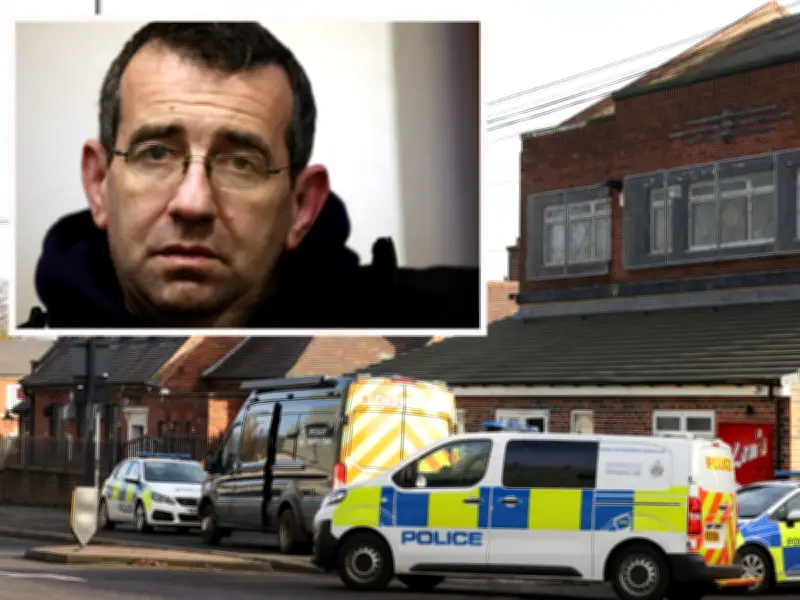
Barristers representing John Henry Sayers and his son told the Old Bailey they were acting in reasonable self-defence and claimed prosecutors have 'woefully failed to prove their case'. Sayers and John Henry Sayers jnr are alleged to have attacked Walter Patterson with a machete and metal pole after catching him torching a car which had been rammed into their home.
Background of the case
Jurors at the Old Bailey have heard it was the latest in a series of attacks on the Sayers family orchestrated and carried out by an organised crime group named in court as the Freemans. Sayers snr and jnr deny causing Patterson GBH with intent and the lesser alternative of GBH and are standing trial at the Old Bailey, in London.
Michael Holland, for Sayers snr, said he believed Patterson had a knife when he left his home on Fossway, Byker, Newcastle, after a Range Rover was rammed into it. After seeing Patterson set fire to the car, Sayers appears on footage to strike two blows towards him with a machete.
Key arguments from the defence
With reference to the first swing of the machete, Mr Holland said: 'We suggest the prosecution have not proved that is an unreasonable action in the circumstances, with (a child) upstairs, not knowing what will happen next and with a fireball right next to you.' Mr Holland put it to the jury: 'What would you have done in his circumstances? What else could he do.'
He added: 'The prosecution say he is not out there to defend his (family) and property, he is out there to get Patterson, to attack him. You think about that now. There is Patterson on the floor. This is him with his opportunity to get him, because he really wants to get him. What does he do? There's one blow which looks like it makes contact with the road rather than his leg because there's no injury, there's no cut on the tracksuit bottoms, no mark on them, there's no injury caused. He then walks off to save (a child). That car is on fire, he is protecting his family but putting himself at considerable risk, you may think, by putting his head into a burning car to reach for the pedal to release the brake. That's someone trying to save his family, not a man trying to get Patterson. Once he has been put on the floor, he walked off and left.'
Mr Holland added: 'If you want to think what's in Mr Sayers' head, it's getting the car away from his home. That is completely inconsistent with the prosecution case. That is something I suggest the prosecution have no answer to and that's why they have not addressed it.'
Injuries and self-defence claim
Mr Holland said: 'He gets burned doing this. When he is arrested he has burn injuries from doing this.' He added that he feared Sayers jnr would be stabbed so went down the street to detain Patterson. Mr Holland said: 'We suggest the arm was struck right at the start, where we suggest you will have no difficulty concluding he was acting in self-defence or defence of his family. And the prosecution have not proved it's unreasonable.'
Mr Holland reminded the jury Sayers said the gang had nearly killed him before and he thought they were trying to kill him again. Sayers said to police if the Range Rover had caught fire while smashed into his property, the whole building would have gone up. He also said: 'I'm just pleased it didn't blow up when I had my head in it.'
Closing statements
Concluding his speech, Mr Holland told the jury: 'The prosecution have woefully failed to prove their case. They have had to construct this idea of nuanced intent - well maybe you wanted to defend yourself but maybe you wanted to retaliate. What is the suggestion? That you leave your house coolly, you should not be angry, you should not think I'm about to confront murderous individuals who are about to attack me and my family?' Mr Holland also said: 'There's a much bigger, human element to this case. Imagine your child and what you would do.'
Laura Miller, who represents Sayers jnr, said in her closing speech he has never been in trouble with the police before and was described in a character reference as 'fundamentally decent'. Miss Miller asks the jury to consider how events unfolded that night from Sayers jnr's perspective. She said he was at home with his dad and younger family members when their home came under attack.
She said: 'You might reasonably conclude the first he was aware of the attack was when that Range Rover crashed into the building. You might think he likely heard it and you might think he likely felt it.' Miss Miller said there was 21 seconds between the first collision between the Range Rover and the building and Sayers following his dad outside. In that 21 seconds, the Range Rover collided with the building again, having rolled forward.
Miss Miller referred to the previous attacks on the Sayers family, including people using weapons and using vehicles as weapons. She told the jury: 'You might form the view this was a sustained, planned and deliberate series of attacks on the family.' She added: 'You might think those attacks would have been in his mind as he heard and felt the collisions with the building.'
Perspective of the son
'When you put yourself in his shoes and look at this from his perspective, as he was walking out of the house, you might take the view he was walking into an unknown and likely hostile situation, with an unknown number of attackers, unknown number of weapons, an unknown number of associates waiting in the wings. You might think the consequences of not going out of that door might have been catastrophic, because Walter Patterson and Grant Curley had, you might think, already shown their commitment to ensuring that vehicle was lodged in that property when it was set on fire. They had attacked the most vulnerable part of that building, those double doors at the front of the diner, where the cooking equipment is and the electrics. Had that vehicle gone up when it was still in the property, you might think the consequences of that fire bomb going up would be catastrophic.'
Miss Miller says the pole used by Sayers jnr was 'not really the weapon of choice in this context' and suggests he picked it up as he rushed outside. She added: 'He was trying to protect himself and his family.' She continued: 'He would have seen that fire being lit and start to take hold and seen that vehicle ignite. He has very little time to assess the danger posed by Walter Patterson, the danger posed by that vehicle, the danger posed by a couple of cars in the road, unknown entities as far as he was concerned. Where is the driver? Because Walter Patterson is not on the driver's side of the vehicle. Does he know if others are waiting in the wings. All of this takes a split second to assess the danger posed.'
Miss Miller said Sayers jnr stopped hitting Patterson once the burning car had been moved by his dad. She also told the jury: 'Think about where he was aiming. We suggest he was aiming at the back and shoulders and body and leg.' Miss Miller suggested these may be areas of the body someone would target to keep someone down and deal with the danger in the moment.
Conclusion of defence arguments
Miss Miller told the jury: 'We say what he did by that car was in necessary and lawful self-defence.' She added: 'It's for the prosecution to make you sure of guilt in respect of each count on the indictment. The prosecution have to make you sure he was not acting in reasonable self-defence when he left that property. For all of the reasons I've set out, we invite you to conclude he was acting in lawful and reasonable self-defence and to find him not guilty of both count one and count two.' Miss Miller concluded her speech by saying to the jury: 'You took an oath to decide this case based on the evidence. On the evidence, John Henry Sayers junior is not guilty of both counts and we invite you to find him not guilty.'
Sayers snr, 62 and Sayers jnr, 29, both of Fossway, Byker, Newcastle, deny causing GBH with intent and inflicting GBH. The trial continues.