Prosecutors Defend 2000 Murder Conviction While Condemning Judge's Past Conduct
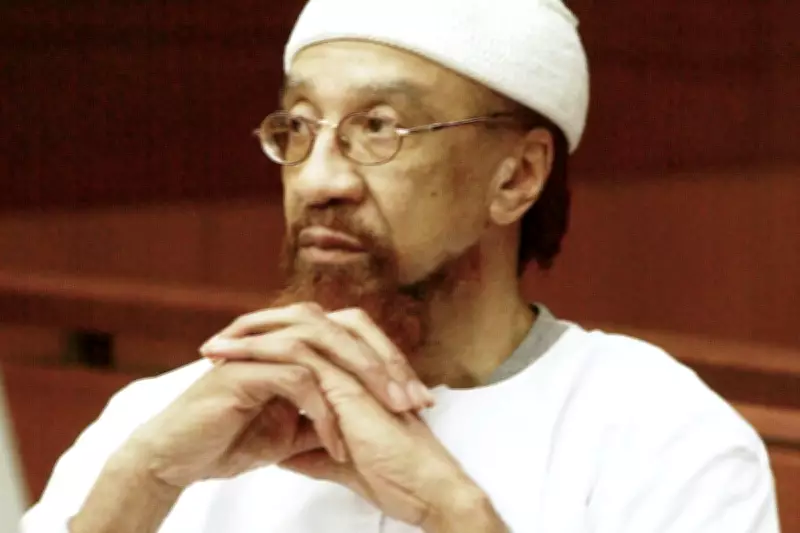
Georgia prosecutors have filed a striking legal document defending the 2000 murder conviction of former Black Panther leader Jamil Abdullah Al-Amin, while simultaneously accusing the original lead prosecutor of "grave and clear" misconduct. The filing from Fulton County District Attorney Fani Willis' office acknowledges serious wrongdoing but argues modern DNA testing, ballistic evidence, and trial testimony leave little doubt about Al-Amin's guilt in the shooting that killed one sheriff's deputy and wounded another.
Judge's Conduct Described as "Most Egregious" Issue
The former prosecutor, Robert McBurney, now serves as a superior court judge and has handled several high-profile political cases. Prosecutors described his conduct during Al-Amin's trial as "the most egregious" problem in the case. Despite standing by the conviction, Willis' office stated it does "not object to a hearing to evaluate the case in its entirety," potentially keeping alive a public reexamination of a prosecution that has long divided civil rights advocates and law enforcement.
Al-Amin died in prison in November 2025, but his family continues to seek a hearing to clear his name. Their attorney Mawuli Davis emphasized, "His legacy is still at the center of this." Notably, McBurney recently oversaw the special grand jury Willis used in her investigation that resulted in the indictment of former President Donald Trump and others over allegations of illegally trying to overturn Georgia's 2020 election results.

"Trifecta of Issues" Undermined Justice
The filing states, "This case had a trifecta of issues which undermined the process and the public's confidence in justice." During closing arguments, McBurney displayed a chart titled "Questions for the defendant" and asked questions meant to focus the jury's attention on Al-Amin's decision not to testify. Al-Amin had court permission to remain seated during trial for religious reasons, including not standing when the jury entered, yet McBurney implored jurors, "Don't stand for him."
Federal courts have previously ruled that McBurney violated Al-Amin's constitutional rights, though they determined it unlikely his actions substantially affected the verdict. The new filing argues McBurney "crossed the line from aggressive advocacy into misconduct that undermined the core principles of justice," accusing him of misrepresenting evidence and withholding critical information from the defense.
"These were not minor oversights; they reflected a troubling pattern of behavior that prioritized winning over truth, and conviction over justice," the document states. McBurney did not immediately respond to requests for comment on Thursday.
FBI Agent's Conduct Also Questioned
The filing also details misconduct by FBI Special Agent James Campbell, who approached Al-Amin while he was handcuffed on the ground, kicked and spit on him, and declared, "This is what we do to cop killers." A subsequent reprimand "did not clear SA Campbell's stain on the investigation," according to prosecutors.
Al-Amin's lawyers have long maintained that Campbell planted the guns used to shoot the deputies at the arrest site. Campbell had been transferred to Atlanta after shooting an unarmed Muslim man in the back of the head, with that man's supporters accusing him of planting a gun at that scene as well. The trial judge did not allow the jury to hear about the prior shooting after defense attorneys presented newspaper articles about it.
New DNA Evidence Presented
Willis' office conducted DNA testing unavailable at the time of the original trial. While tests excluded Al-Amin from DNA found on both guns used in the shooting, his DNA was identified on a leather belt wrapped around one weapon. Prosecutors argue this evidence strongly indicates guilt when combined with prior ballistic evidence and testimony.

Background of the Case
As a radical activist in the 1960s known as H. Rap Brown, Al-Amin once declared violence was "as American as cherry pie" and that Black people would use violence if necessary to fight oppression. He converted to Islam during a prison sentence and moved to Atlanta in the 1970s, becoming leader of one of the nation's largest Black Muslim groups, the National Ummah.
On March 16, 2000, Fulton County sheriff's deputies Ricky Kinchen and Aldranon English went to Atlanta's West End neighborhood to serve a warrant for failure to appear in court on charges of driving a stolen car and impersonating a police officer. English testified that Al-Amin fired a high-powered assault rifle when deputies tried to arrest him, then used a handgun to fire three shots into Kinchen's groin as the wounded officer lay in the street.
Al-Amin was arrested four days later in White Hall, Alabama, a small town where he had helped develop a Muslim community. The case continues to resonate through Georgia's legal and political landscape, with prosecutors simultaneously defending a conviction while condemning the conduct that helped secure it.