The Fateful Afternoon That Unmasked a Monster
On a sweltering summer afternoon in the quiet Borders village of Stow, retired postmaster David Herkes was mowing his front lawn when a chilling sight disrupted the pastoral calm. As he knelt to adjust the mower blade, his glance under a parked delivery van captured a moment of pure horror: a young schoolgirl's feet lifting up and vanishing as if swallowed by the vehicle. The child had been walking past the van moments before, only to disappear without a trace.
A Pensioner's Quick Thinking
Before Mr Herkes could intervene, the van drove away, but the alert pensioner managed to note the license plate. Convinced the girl faced terrible danger, he immediately ran to the local police station, triggering a manhunt within minutes. Less than half an hour later, as Mr Herkes spoke with a local officer, astonishingly, the same van returned along the road after taking a wrong turn.
The policeman stepped bravely into the vehicle's path, forcing it to stop. Opening the back revealed a six-year-old girl hooded, bound, gagged with Elastoplast, and stuffed inside a dirty sleeping bag where she would have suffocated within an hour. With growing horror, the officer realized the petrified child now clutched safely in his arms was his own daughter.

The Depraved Pattern Emerges
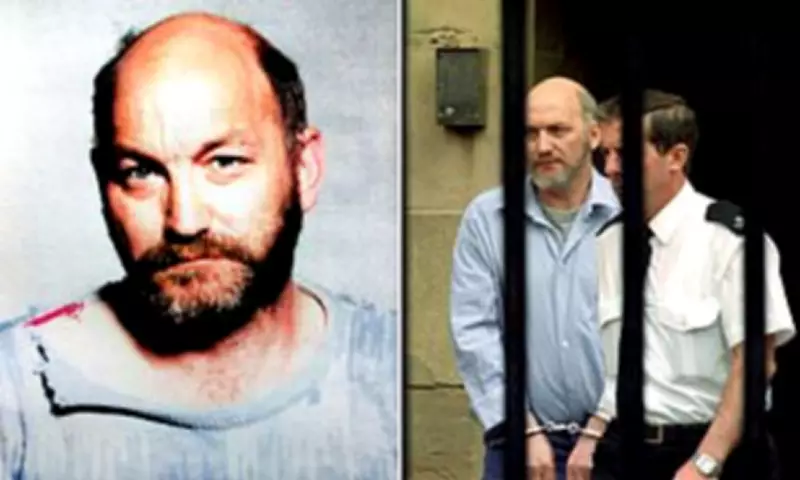
In her brief captivity, the traumatized youngster had been sexually assaulted by a monster who had already murdered and targeted numerous young girls across the UK. This July 1990 incident would become the catalyst for capturing Scots serial killer Robert Black, whose delivery driver job provided cover for abducting victims and transporting their bodies hundreds of miles from home.
As a new Netflix documentary Child Snatcher: Manhunt reveals, Black exploited gaps between fragmented police jurisdictions to evade capture for nearly a decade. The two-part series charts his relentless pursuit by law enforcement officers often grappling with their forces' systemic failures, while highlighting the enduring trauma carried by grieving families.
A Trail of Young Victims
Black's known victims include Susan Maxwell, Caroline Hogg, Sarah Harper, Jennifer Cardy, and Genette Tate – names and images that still fill every parent's heart with dread. The true number of young lives he took may never be known, but his method followed a consistent, horrifying pattern.
After his arrest for the Stow abduction, Black seemed utterly unfazed, telling police: "What a day it's been. It was a rush of blood. I've always liked young girls since I was a young kid." He pled guilty to charges of abduction and assault to the danger of life, receiving a mandatory life sentence at Edinburgh's High Court within a month of the attack.
Connecting the Crimes
With Black safely imprisoned, detectives from across the UK began investigating his potential involvement in unsolved cases. The evidence painted a picture of a predator traveling the length and breadth of the country, prepared to forcibly abduct children.
Nine-year-old Jennifer Cardy disappeared in August 1981 near her family home in County Antrim while riding her new bicycle. Sexually assaulted and strangled, her body was dumped sixteen miles away. Eleven-year-old Susan Maxwell vanished in July 1982 while walking home from a tennis match in Coldstream; her body was found 264 miles away in Uttoxeter thirteen days later.
Five-year-old Caroline Hogg disappeared from Portobello beach in July 1983, last seen with a "scruffy man" who paid for her carousel ride before leading her away. Her naked body was discovered 310 miles from home. Ten-year-old Sarah Harper vanished from Morley, Leeds, in March 1986; her partially clothed body was found 71 miles away in the River Trent nearly a month later.
The Investigation Intensifies
The operation became the biggest serial killer investigation since Peter Sutcliffe's arrest, with over 187,000 people interviewed, 60,000 formal statements taken, and more than a quarter million vehicle records reviewed. Four police forces collaborated, using a central computer to sift through mountains of evidence from across the country.

Retired Detective Chief Superintendent Roger Orr noted that everything pointed to Black traveling extensively and prepared to forcibly abduct children. "And it was really quite menacing," he observed. Former Deputy Chief Constable Tom Wood explained how prosecutors used "evidence of similar fact" to demonstrate that three killings were carbon copies almost certainly committed by one man.
The Critical Breakthrough
While Black's rented London bedsit failed to provide forensic links to any murders, it yielded a pile of meticulously documented petrol receipts. Combined with employment records, these allowed detectives to track his movements precisely. "He was a prolific hoarder of receipts which allowed us to put him at a particular place on a particular day and at a particular time," said Mr Orr.
In 1994, Black stood trial at Newcastle Crown Court for the murders of Susan Maxwell, Caroline Hogg, and Sarah Harper. The jury found him unanimously guilty of all charges, and he received ten life sentences. Hector Clark, the assistant chief constable who led the manhunt, branded Black a "vile, evil man."
Justice Delayed but Not Denied
For Northern Ireland detectives, there remained more evil to uncover. After nine years of evidence sifting, lead detective Raymond Murray conducted three prison interviews with Black, using a female officer to coax him into talking. The strategy worked beyond expectations, with the killer describing how he would abduct youngsters while traveling.
Though Black claimed to be describing fantasies, one account matched Jennifer Cardy's murder with startling similarity. In one recording, Black admitted: "I'm not exactly proud of the way I feel towards young girls. There's a part of me that knows I'm wrong... But there's the other part that says, 'You like it, go on.'"
In 2011 – thirty years after Jennifer's death – Black was finally convicted of her murder at Armagh County Court, adding to his existing minimum thirty-five-year sentence. He remains suspected of murdering many more children between 1969 and 1990, including thirteen-year-old papergirl Genette Tate who disappeared in 1978, and numerous victims in Ireland, the Netherlands, West Germany, and France.
A Monster's End
Police were days away from charging Black with Genette Tate's death when he died of a heart attack aged sixty-five in Maghaberry Prison on January 12, 2016. His funeral was a basic cremation costing approximately £1,000, with ashes disposed of at sea after no one claimed them.
The memories of his young victims remain cherished by their loved ones to this day. Robert Black, whose evil exploited routine and distance to commit unthinkable acts, will be mourned by no one – a fitting end for one of Britain's most notorious child killers, whose capture ultimately depended on a quick-thinking pensioner's vigilance on a lazy summer afternoon.