Mexico's government has announced that as many as 40,367 individuals, representing approximately 31% of the country's 130,000 registered missing people, exhibit signs of life in official records. This revelation, detailed in a new report released on Friday, has ignited fierce criticism from search collectives and families who argue it undermines the severity of Mexico's disappearance crisis.
Government Methodology and Findings
Security official Marcela Figueroa explained that by cross-referencing vaccination records, birth and marriage registries, and tax filings, authorities identified activity in government databases for these individuals since they were reported missing. Figueroa stated this indicates they might still be alive, with 5,269 people already tracked down and marked as "found." She described many cases as "voluntary absences," citing examples such as men leaving partners for other relationships or women fleeing abusive situations.
"Not all disappearances are the same," Figueroa emphasized, adding that the government continues to work diligently to locate Mexico's missing population. She also noted that less than 10% of cases showing no registered activity are under criminal investigation, labeling this a failure by Mexican authorities.

Criticism from Search Groups
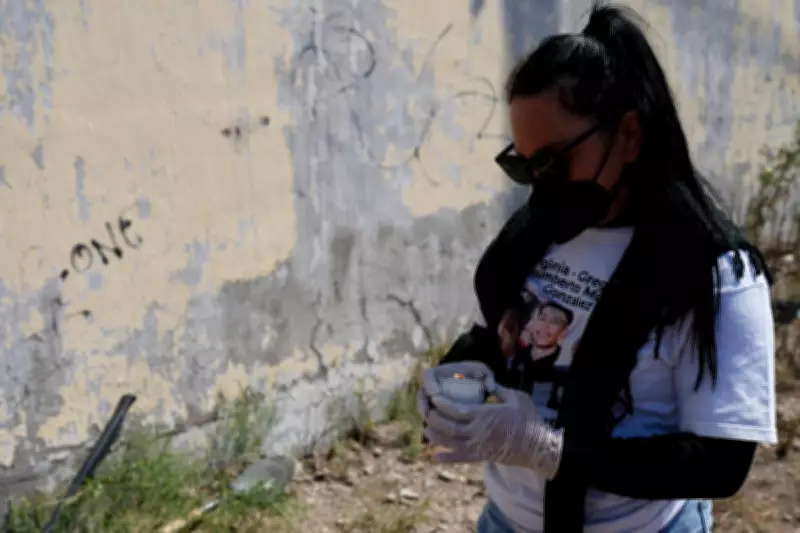
Héctor Flores, a leader of a search collective in Jalisco—a state at the heart of the disappearance crisis—called the report "misleading" and criticized the government's methodology for lacking transparency. Flores, whose 19-year-old son was forcibly disappeared by state agents in 2021, accused the administration of attempting to "hide and downplay the numbers" to present a distorted picture of reality.
Search groups have long alleged that the government seeks to "disappear the disappeared" to improve its international image. Historic impunity in such cases has bred deep distrust among families, who fear that registry changes could remove genuine cases and hinder search efforts.
Data Challenges and Government Response
According to Friday's figures, 46,000 registered disappearances (36%) contain incomplete data like missing names or dates, making searches impossible. Meanwhile, 43,128 cases (33%) show no activity in government databases. Figueroa announced that the government is intensifying monitoring of local prosecutor's offices that have failed to investigate or document cases properly, aiming to boost the number of cases under investigation.
"Society and the families can trust in the records and better tools to search for people," Figueroa asserted, highlighting efforts to bring order to a convoluted dataset linked to national trauma.
Broader Context and Historical Disputes
The reinterpreted figures are part of a larger debate over how Mexico tracks its disappearance crisis. Forcible disappearance has been a tactic used by cartels to consolidate control through terror while concealing homicide numbers. The 130,000 missing since 2006 would fill a small city, with their faces plastered on fliers across major urban centers.
Controversy has festered for years, escalating under former President Andrés Manuel López Obrador (2018-2024), whose government launched a census of the disappeared after claiming figures were inflated to discredit him. In 2023, a cascade of criticisms led to the resignation of the official leading the search for the disappeared.
Ongoing Disputes and Human Rights Concerns
The government maintains that the official registry is an overcount, plagued by faulty data from local offices and duplicate reports. However, search groups and the U.N. Committee on Enforced Disappearances argue the real number is likely higher due to local government failures, fear among families to report cases, and a lack of transparent data.
The Miguel Agustín Pro Juárez Human Rights Center welcomed efforts to improve data reliability but stated that the government's framing "minimizes the state’s responsibility" and offers little aid to families who often must pursue justice independently. This fierce argument over the disappeared continues to scar the Latin American nation, reflecting deep divisions in addressing one of its most pressing humanitarian crises.