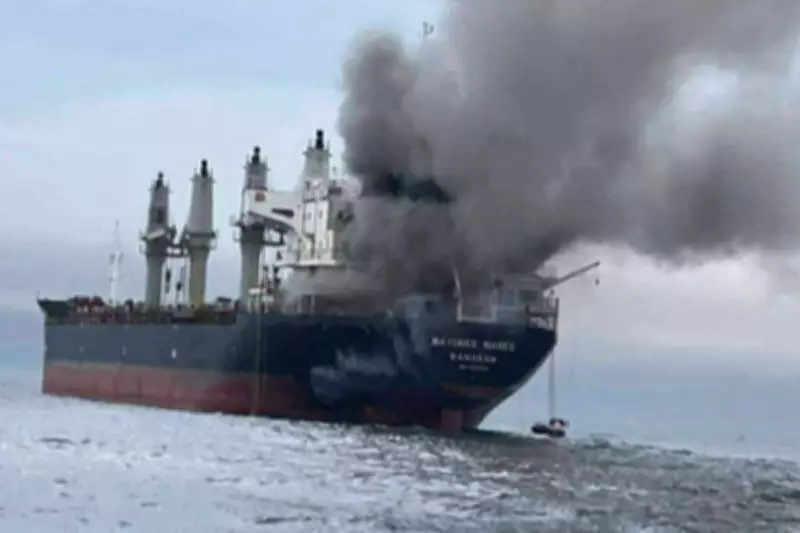
Human Remains Discovered on Thai Cargo Vessel Following Iranian Drone Strike in Strait of Hormuz
In a grim development, human remains have been found aboard the Thai-flagged cargo ship Mayuree Naree, which was attacked by Iranian drones in the strategically vital Strait of Hormuz last month. The vessel's owner, Precious Shipping, confirmed the discovery during a second boarding operation conducted to assess the extensive damage and search for missing crew members.
Details of the Attack and Aftermath
The Mayuree Naree was struck on March 11, 2026, in an incident that resulted in severe damage, including a significant fire and flooding that hampered initial rescue and recovery efforts. This attack occurred in one of the world's most critical maritime chokepoints for global oil transportation, heightening concerns over regional security and international trade routes.
Iran's Revolutionary Guards publicly claimed responsibility for targeting the vessel, asserting that it had ignored repeated warnings amid escalating conflicts in the region. The Strait of Hormuz, a narrow passage linking the Persian Gulf with the Gulf of Oman, has long been a flashpoint for geopolitical tensions, particularly involving Iran and its adversaries.

Search Operations and Crew Status
Following the attack, 20 Thai crew members were successfully rescued and repatriated to their home country in mid-March. However, three crew members were reported missing, prompting ongoing search operations. The recent discovery of human remains has brought a somber turn to these efforts, though the exact number and identities of the deceased have not yet been determined.
Families of the three missing crew members have been notified of the discovery, as authorities work to provide closure and support. The challenging conditions aboard the damaged vessel, compounded by fire and flooding, have made forensic examinations and identification processes particularly difficult.
Implications for Maritime Security
This incident underscores the persistent volatility in the Strait of Hormuz, where maritime attacks have periodically disrupted global energy supplies and raised alarms among international shipping communities. The use of drones by Iranian forces highlights evolving threats in asymmetric warfare, posing new challenges for naval and commercial vessel protection.
Analysts warn that such attacks could escalate regional conflicts, impacting not only security but also economic stability through potential disruptions to oil shipments. The international community is closely monitoring the situation, with calls for enhanced diplomatic efforts to de-escalate tensions and safeguard crucial sea lanes.
As investigations continue, the focus remains on supporting the affected families and ensuring thorough accountability for the attack. The discovery of human remnants serves as a stark reminder of the human cost embedded within these geopolitical confrontations.