Descendants Gather in Fort Worth for Choctaw Code Talkers Marker Unveiling
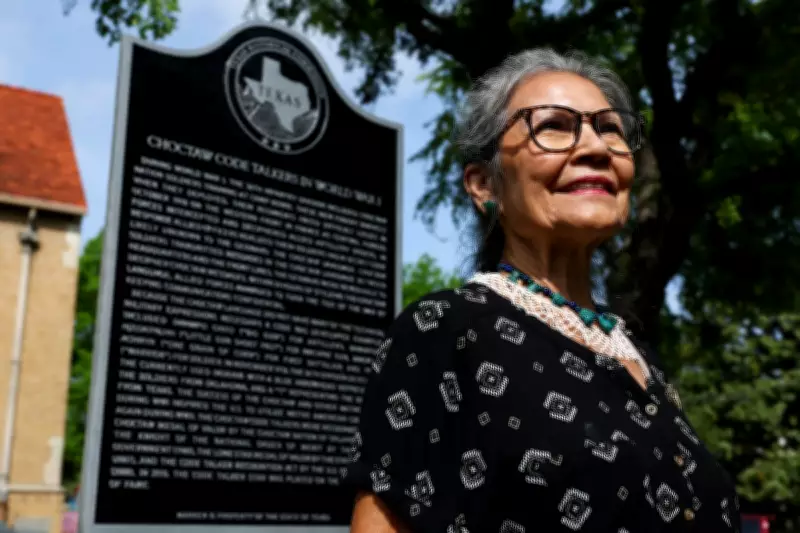
Descendants of the pioneering Choctaw code talkers assembled in Fort Worth for a poignant ceremony to unveil a historical marker honouring the 19 Native American soldiers who utilised their indigenous language to transmit encrypted messages during World War I. The event, held on April 1, marked a significant step in preserving a legacy long shrouded in secrecy.
A Legacy Uncovered and Championed
Nuchi Nashoba, president of the Choctaw Code Talkers Association, has dedicated over two decades to advocating for recognition of these soldiers, including her great-grandfather, Ben Carterby. Nashoba grew up with only a photograph and the knowledge that Carterby was a World War I veteran. It was not until 1989, when she was in her late twenties, that she discovered his pivotal role as a code talker.
"Seeing the marker really brings me a lot of joy," Nashoba expressed. "This is what preserves the history for generations to come." The new plaque, installed at Fort Worth's Veterans Memorial Park, was unveiled through a collaborative effort by the Choctaw Nation of Oklahoma, the Texas Historical Commission, and the city's parks and recreation department.

The Pioneering Role of Choctaw Code Talkers
The Choctaw code talkers were volunteers who fought for the United States in World War I at a time when Native Americans were not yet recognised as citizens—a status not granted until 1924. While serving in northern France, their use of the Choctaw language was overheard and subsequently developed into a secure communications code.
Positioned on front lines and at command posts, these soldiers transmitted critical messages using terms like "tanampo chito" for artillery and "tvshka" for warriors. German forces famously failed to decipher these transmissions within 24 hours throughout the conflict. This group is widely regarded as the first Native American code talkers in U.S. military history, paving the way for the renowned Navajo code talkers of World War II.
Fort Worth's Historical Connection
The soldiers were part of the 36th Infantry Division trained at Camp Bowie, a World War I training site in west Fort Worth that prepared over 100,000 troops. Council member Macy Hill, representing the Camp Bowie area, emphasised the fitting nature of the honour. "This is where the Choctaw code talkers were initially trained and where they will forever be remembered," she stated.
Colonel Brent Kemp, commander of the 56th Infantry Brigade Combat Team of the National Guard, highlighted the broader significance at the unveiling. "Their story is a testament to the resilience and patriotism of the Choctaw Nation," he said. "Their ingenuity and bravery remind us of the power of cultural heritage and the importance of preserving Indigenous languages."
Descendants Carry the Torch Forward
Ta'Na Alexander, Nashoba's daughter and the great-great-granddaughter of Ben Carterby, felt immense pride witnessing the marker's unveiling. "It's pretty monumental to realize that more people are starting to recognise the significant part of these men who were sworn to secrecy," Alexander remarked. "This marker connects the past to the future." She credited her mother's leadership for advancing education about the code talkers' contributions.
The Choctaw Code Talkers Association has been instrumental in several recognition efforts, including installing a bronze sculpture at the Choctaw Cultural Center in Oklahoma last May and advocating for the renaming of 23 Oklahoma bridges after code talkers and other Native veterans. The Fort Worth marker represents the group's first venture into Texas, with Nashoba noting explorations for further statewide recognitions.
A Message of Shared Heritage and Freedom
Alexander extended an invitation to Fort Worth residents to visit the memorial park, framing the story as one of universal American values. "You might not be Native or Choctaw, but what we do share in common is that we have the right to vote," she reflected. "We have a voice. We have a freedom that exists here that doesn't exist anywhere else."

The ceremony not only honoured a hidden chapter of military history but also reinforced the enduring importance of cultural preservation and national unity.