A man who opened fire during the chaotic aftermath of the Kansas City Chiefs' 2024 Super Bowl victory celebration has been sentenced to a mere two years in prison, after prosecutors dropped a murder charge against him, citing the complexities of Missouri's self-defence statutes.
Initial Murder Charge Reduced to Weapons Offence
Dominic Miller, who was among at least six individuals who discharged firearms during the melee that followed the Chiefs' championship win, initially faced a second-degree murder charge. That charge carried a potential sentence ranging from ten years to life imprisonment.
However, as part of a plea agreement reached on Monday, Miller pleaded guilty to a weapons charge. The Jackson County prosecutor's office subsequently issued a written statement explaining the legal hurdles presented by state law.

Legal Hurdles Presented by Self-Defence Doctrine
"Under Missouri's self-defence and defence-of-others doctrines, we must prove beyond a reasonable doubt that any charged defendant was the initial aggressor or did not act in lawful self-defence or defence of others to overcome justification," the prosecutor's office stated.
This legal framework proved decisive in Miller's case. Missouri is one of more than thirty American states that have enacted some form of stand-your-ground legislation over the past two decades. These laws significantly expand traditional self-defence rights, removing the duty to retreat and allowing the use of force in any location, not solely within one's home.
Chaotic Scene at Union Station
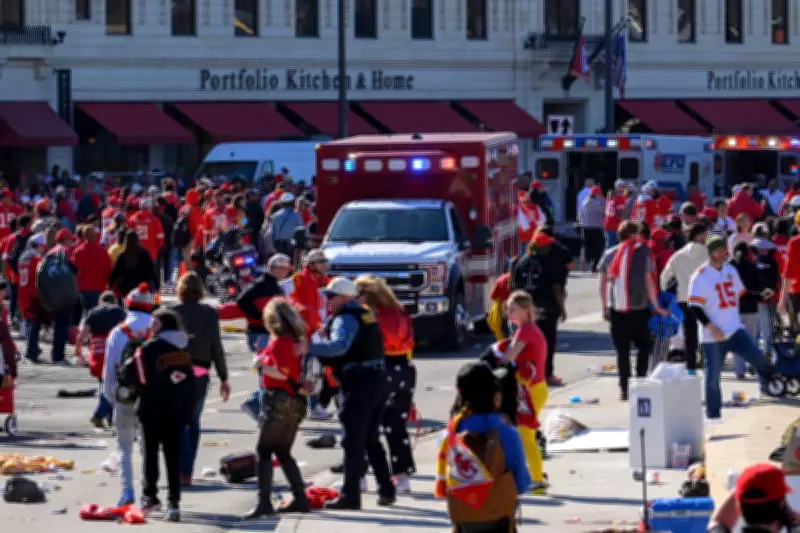
The gunfire erupted outside Kansas City's historic Union Station as an estimated one million fans were concluding their celebrations. The incident sent players, city officials, and hundreds of spectators scrambling for cover in panic.
Tragically, the violence claimed the life of Lisa Lopez-Galvan, a host of a local radio programme, who was watching the rally with her family. Approximately two dozen other individuals, many of them children, were wounded but survived the shooting.
Sequence of Events and Ballistic Evidence
According to court records and authorities, the shooting began when one group confronted another for staring at them. Lyndell Mays is accused of being the first person to open fire. Following this, a fifteen-year-old began shooting toward Mays and struck Miller, who admitted to returning fire with several shots of his own.
In total, twelve people were found to have brandished firearms at the scene, with recovered weapons including at least two AR-style rifles. Initially, ballistic evidence suggested the bullet that killed Lopez-Galvan was linked to a handgun Miller admitted firing.
However, prosecutors clarified in their latest statement that there was insufficient evidence to conclusively prove Miller's shot caused her death. An email seeking comment was sent to Miller's attorney regarding the sentencing and dropped charges.
Victim's Family Seeks Broader Accountability
The family of Lisa Lopez-Galvan was consulted throughout the legal process. In a statement released through the prosecutor's office, they acknowledged the legal challenges while emphasising the need for accountability and change.
"The greatest justice would be having Lisa back, but since that is not possible, accountability still matters," the family said. "We also share the hope expressed in court that change can come from this and that people recognize the importance of making better choices."
Ongoing Legal Proceedings for Other Defendants
While Miller's case has reached a conclusion, legal proceedings continue for others involved. Lyndell Mays, accused of firing the first shots, is scheduled to stand trial next year on charges that include second-degree murder.
The fifteen-year-old who was involved in the exchange of gunfire has already been sentenced previously to a state facility for youths. The case highlights the intricate legal and societal issues surrounding gun violence, self-defence laws, and public safety at large-scale events.