Ancient Dacian Gold Helmet Recovered After Dramatic Dutch Museum Heist
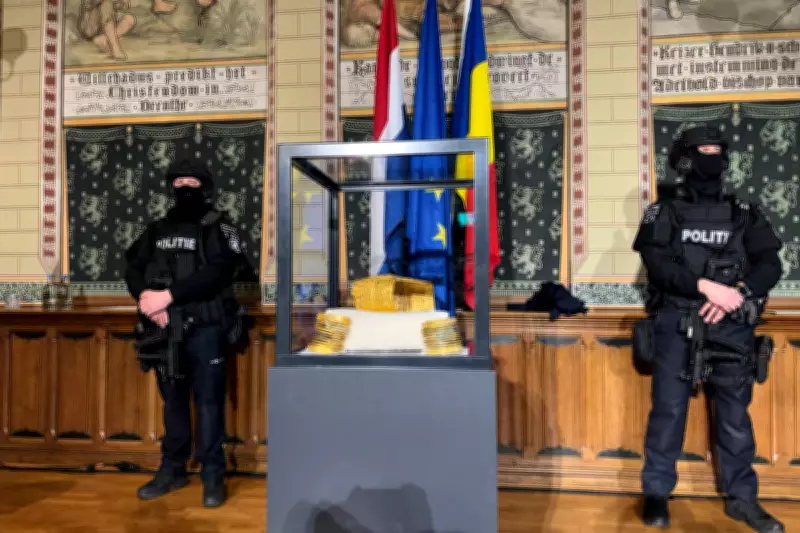
Dutch prosecutors have confirmed the recovery of a 2,500-year-old gold helmet taken during a violent museum break-in in the Netherlands, bringing to a close months of uncertainty surrounding the fate of one of Romania's most significant historical treasures. The Coțofenești helmet, dating to approximately 500BC and linked to the ancient Dacian civilisation that predates the Roman conquest of present-day Romania, was presented to journalists in Assen under heavy armed guard.
Recovery of Priceless Artefacts
Alongside the helmet, two associated gold bracelets were also recovered, though a third bracelet remains missing, with search efforts continuing for the final piece. The items had been on loan from Romania's national history museum as part of a six-month exhibition on Dacian culture at the Drents Museum when they were stolen in January 2025 during the final weekend of the display.
Dutch prosecutor Corien Fahner described the recovery as a profound relief following a prolonged and uncertain investigation. "We are incredibly pleased," she stated. "It has been a roller-coaster. Especially for Romania, but also for employees of the Drents Museum." Romanian officials echoed this sentiment, with prosecutor Daniela Buruiană noting, "It's a long-awaited result. We are happy that we are now witnessing here the recovery of the Romanian artefacts."

Legal Proceedings and Condition of the Artefacts
The objects were handed back to authorities on Wednesday after negotiations involving lawyers representing three suspects. Two men in their mid-30s and a 21-year-old, arrested shortly after the raid, are due to stand trial later in April. Prosecutors indicated that the return formed part of a pre-trial arrangement.
Despite fears that the helmet might have been destroyed due to its distinctive design making it difficult to sell on the illicit market, it survived with only minor damage. Drents Museum director Robert van Langh explained, "The helmet is slightly dented, but there will be no permanent damage. The armbands are in perfect condition."
Violent Theft and National Impact
The theft itself was executed with considerable force. Investigators revealed that the gang used a homemade explosive device and tools including a sledgehammer and crowbar to gain entry. Security footage released after the incident appeared to show three individuals forcing open a door before an explosion inside the building.
The case provoked a sharp reaction in Romania, where the artefacts are regarded as central to national heritage. Justice minister Radu Marinescu previously labelled the theft a "crime against our state" and emphasised that their recovery "is an absolute priority." Romanian prosecutor Rareș-Petru Stan highlighted the broader impact, describing the incident's "major impact" domestically and thanking Dutch authorities for their "hard work and keeping the faith." He added, "We are continuing the investigation to find the last bracelet, and we are grateful that we will be able to return this treasure to the Romanian people."
Diplomatic and Security Implications
The theft strained diplomatic relations between the Netherlands and Romania. The Dutch government paid €5.7m (£5m) in insurance compensation following the incident, though Romanian officials have declined to comment on what will happen to the funds now that the artefacts have been recovered.
Questions have been raised about museum security and the risks associated with lending valuable artefacts abroad. The helmet and bracelets were displayed in a glass case that offered limited resistance to the attackers. This incident underscores broader challenges in protecting high-value objects, particularly as several smaller museums in the Netherlands have been targeted in recent years.

Art specialists have suggested that the items may have been stolen to order by organised criminals. The controversy had significant consequences in Romania, where the former head of the national history museum, Ernest Oberländer-Târnoveanu, lost his position shortly after the theft amid criticism over the decision to loan the objects internationally. He later described the helmet as "a unique item in European and even global cultural heritage" and "an important social and political symbol of Dacian civilisation."