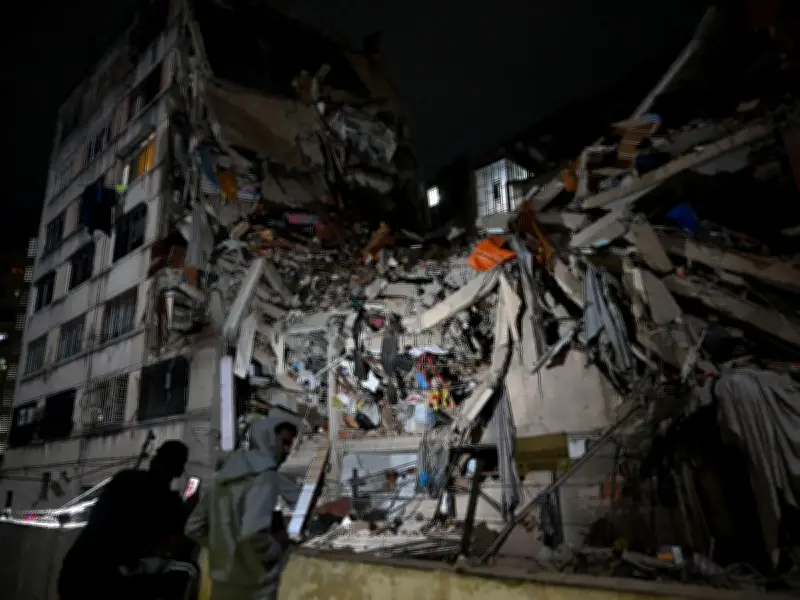
At least 32 people have been killed and 700 injured after two powerful earthquakes struck Venezuela on Wednesday evening, acting president Delcy Rodríguez confirmed early Thursday. The death toll is expected to climb as rescue teams reach the hardest-hit areas, particularly the state of La Guaira, which Rodríguez described as a "disaster zone."
Double Earthquake Strikes Venezuela
The first earthquake, with a magnitude of 7.2, struck west of Morón on the Caribbean coast at a depth of 22 kilometres, according to the U.S. Geological Survey. Just one minute later, a second quake measuring 7.5 magnitude hit with an epicentre 16 kilometres southwest of Morón at a depth of 10 kilometres. These are among the most powerful earthquakes to hit Venezuela in over a century.
Rodríguez declared a state of emergency in a late national address, confirming damage across multiple states. The initial casualty figures did not include La Guaira, where dozens of buildings collapsed. "Dozens of buildings have collapsed there, about 30 kilometres north of Caracas, and we are currently carrying out intensive rescue operations to save lives," she said.
Rescue and Damage
State-run VTV broadcast footage of three children being rescued alive from debris in La Guaira, covered in dust. The earthquakes forced the closure of Simón Bolívar International Airport near Caracas, Venezuela's main airport. Schools were shut, and subway and natural gas services in Caracas were suspended. Rodriguez urged citizens to use a government app to report damage.
In the coastal state of Falcon, Governor Víctor Clark reported 32 people hospitalised and 15 trapped. The tremors were felt as far as Brazil's Amazon, approximately 1,700 kilometres from Caracas.
International Aid
Several countries offered assistance, including Argentina, Chile, Panama, and Uruguay. U.S. Secretary of State Rubio announced on X that the United States is "immediately deploying search and rescue teams, medical resources, and humanitarian assistance to Venezuela." Rodríguez thanked U.S. President Donald Trump and confirmed she spoke with Rubio by phone. She also thanked leaders of Qatar, Mexico, and El Salvador, who had already dispatched rescue personnel. El Salvador President Nayib Bukele, previously at odds with Venezuela's government, offered aid. Ecuadorian President Daniel Noboa ordered immediate humanitarian relief, and Bolivian President Rodrigo Paz pledged support.
Television coverage showed emergency teams using power tools on collapsed buildings, with many residents spending the night in vehicles, subway stations, and public spaces after warnings to avoid damaged structures. Fallen power lines and debris blocked roads. Caracas resident Hector Ricci said, "It started off gently and then gradually grew, and in the end, we all had to leave our houses, go outside and gather together." Another resident, Roberto Gama, said his building "really shook from side to side. Unreal. The force was incredibly strong." Mobile phone coverage was unavailable in parts of Venezuela, adding to the anguish of families, especially among the more than 7.7 million people who have left the country.