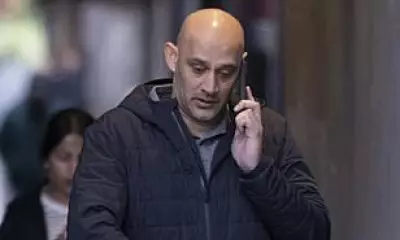
A father and daughter from New Jersey have pleaded guilty to orchestrating a prolonged counterfeiting scheme that deceived art galleries and auction houses into purchasing forged paintings attributed to renowned artists such as Andy Warhol, Banksy, and Pablo Picasso.
Federal prosecutors revealed that Erwin Bankowski, 50, and Karolina Bankowska, 26, commissioned a Polish artist to create at least 200 counterfeit artworks, ultimately defrauding buyers of more than $2 million. The forgeries often replicated lesser-known works by prolific artists, making them harder to detect.
The most lucrative fake, purportedly by artist Richard Mayhew, was sold by DuMouchelles auction house in October for $160,000. A representative for DuMouchelles confirmed cooperation with federal authorities but declined further comment. Other targeted auction houses, including Bonhams, Phillips, Freeman's, and Antique Arena, either declined to comment or did not respond.

In a New York court on Tuesday, both father and daughter expressed remorse. They face potential prison sentences exceeding three years under federal guidelines, along with $1.9 million in restitution and possible deportation to Poland. Bankowska told the judge her "conduct was wrong and I am guilty," while her attorney noted she had placed over $1 million in an escrow account. Through a Polish interpreter, Bankowski also apologized, with his attorney stating his client had "regrettably made a terrible decision in an effort to support his family."
The pair, Polish citizens residing in New Jersey, faced charges of wire fraud conspiracy and misrepresenting Native American-produced goods, stemming from their duplication of works by Luiseño artist Fritz Scholder. US Attorney Joseph Nocella Jr. stated, "For years, these defendants painted themselves as purveyors of fine art while selling lies on canvas to unsuspecting collectors. Today's convictions strip away the varnish and reveal the fraud underneath."
Experts described the scheme as a classic art forgery case. Erin Thompson, a professor of art crime at the City University of New York, noted, "The only unusual thing about this case is that the forgers got caught. People think of the art world as a genteel place full of cultured people who just want to share the wonder of beautiful art. You should assume there are a lot more fakes out there."
Prosecutors said the father and daughter began commissioning the unnamed Polish artist in 2020 to create counterfeits. They used antique paper and forged gallery stamps to make the paintings appear authentic, adopting names of shuttered galleries where the artists might have exhibited. The scheme drew scrutiny in March 2023 when representatives for artist Raimonds Staprans noticed a forged painting titled Triple Boats for sale. Despite their contact with the auction house, the painting sold for $60,000. Thompson also observed irregularities, such as a gallery stamp on a fake Wyeth painting listing a 1976 year but a zoning address phased out in 1962.