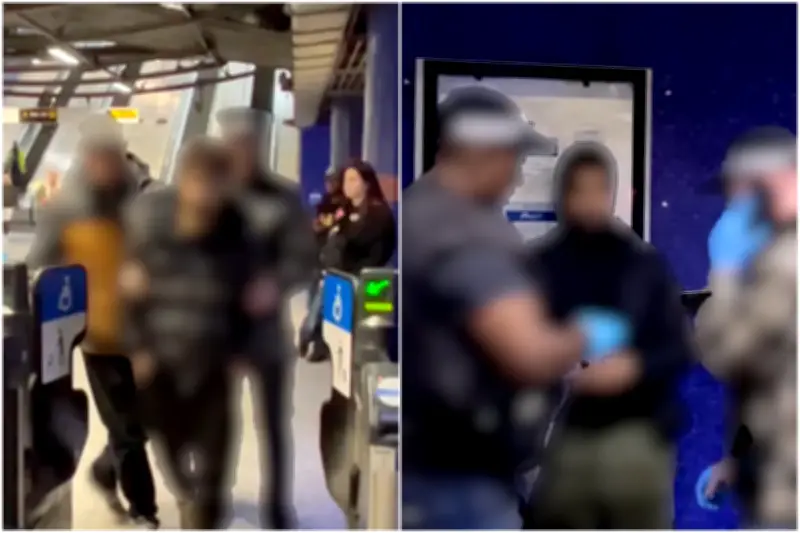
Plain-clothed British Transport Police (BTP) officers have stopped 467 people, issued 156 penalty fares, made 24 arrests and submitted 175 reports for possible prosecution in the first month of Operation Vector, TfL's crackdown on fare evasion at London stations.
Operation Vector targets fare evasion hotspots
Operation Vector uses data to pinpoint fare-dodging hotspots, such as key interchange stations, alongside intelligence from station staff. Plain-clothed BTP officers are deployed alongside Revenue Control teams and uniformed Transport Support Enforcement staff to catch those routinely pushing through ticket barriers without paying.
Siwan Hayward, Director of Security, Policing and Enforcement at TfL, said: "TfL has got a really strong commitment to tackling fare evasion. We recognise fare evasion robs Londoners of valued investment in the transport network and it's also just not fair when you see someone pushing through the gates, trying to shuffle behind you, or tailgating as you go through."
Officers intercept suspects at North Greenwich
The Standard visited North Greenwich, where Operation Vector is being trialled, and saw around 15 officers stationed near the barriers, ready to intervene at the first sign of someone tailgating another passenger or deliberately forcing their way through. Suspects were pulled aside and questioned. Some were allowed to continue their journeys, others were told to turn back and buy a ticket, while BTP say some were arrested.
At the operation, a total of 50 people were spoken to by BTP officers, with six people questioned further before being let through. Officers were also positioned throughout the station to create a second line of defence against fare dodgers.
Fare evasion costs TfL millions
Fare evasion is estimated to cost TfL between £190 million a year, although recent disclosures suggest the figure could be as high as £211 million. The network's estimated fare-evasion rate currently stands at 3.5 per cent, down from 3.8 per cent last year, though TfL wants to bring it down to 1.5 per cent by 2030.
Analysis from the Centre for Government Reform suggests that almost all of the £165 million expected from March's fare increase could be wiped out by fare evasion, depriving the network of much-needed investment as TfL continues to grapple with £13.9 billion in debt.
Asked whether Operation Vector offers value for money, Ms Hayward said: "We've got a real direct measurement of the value in terms of increased ticket revenue, but the value is much bigger than that because what we also see is the confidence it gives to frontline staff and the confidence it gives to Londoners that we are taking fare evasion seriously."
Officers tackle aggressive offenders
TfL staff have reported serious abuse and threats of violence when attempting to challenge fare evaders in recent months. At North Greenwich, a staff member told The Standard that the operation had made for a much easier day than usual, with some estimating that hundreds of people travel through the station each day without paying.
Station staff are advised not to confront fare dodgers if they feel unsafe, but to report incidents so TfL can use CCTV footage to build up intelligence and identify repeat offenders. The key difference with Operation Vector is the involvement of BTP officers, who are better equipped to deal with more aggressive or challenging individuals.
Since April 2026, more than 2,400 people have been reported for misusing ticket barriers, TfL says. Over the same period, revenue enforcement teams have issued more than 33,000 penalty fares and referred a further 11,000 people for possible prosecution.
BTP Chief Inspector Daniel Rushall said: "We know there are several reasons why people choose to fare evade and one of those is due to their links to more serious criminality. In its first month, this operation has already provided us with valuable opportunities to identify and apprehend criminals and high harm offenders using London's transport network, including the seizure of weapons and drugs."