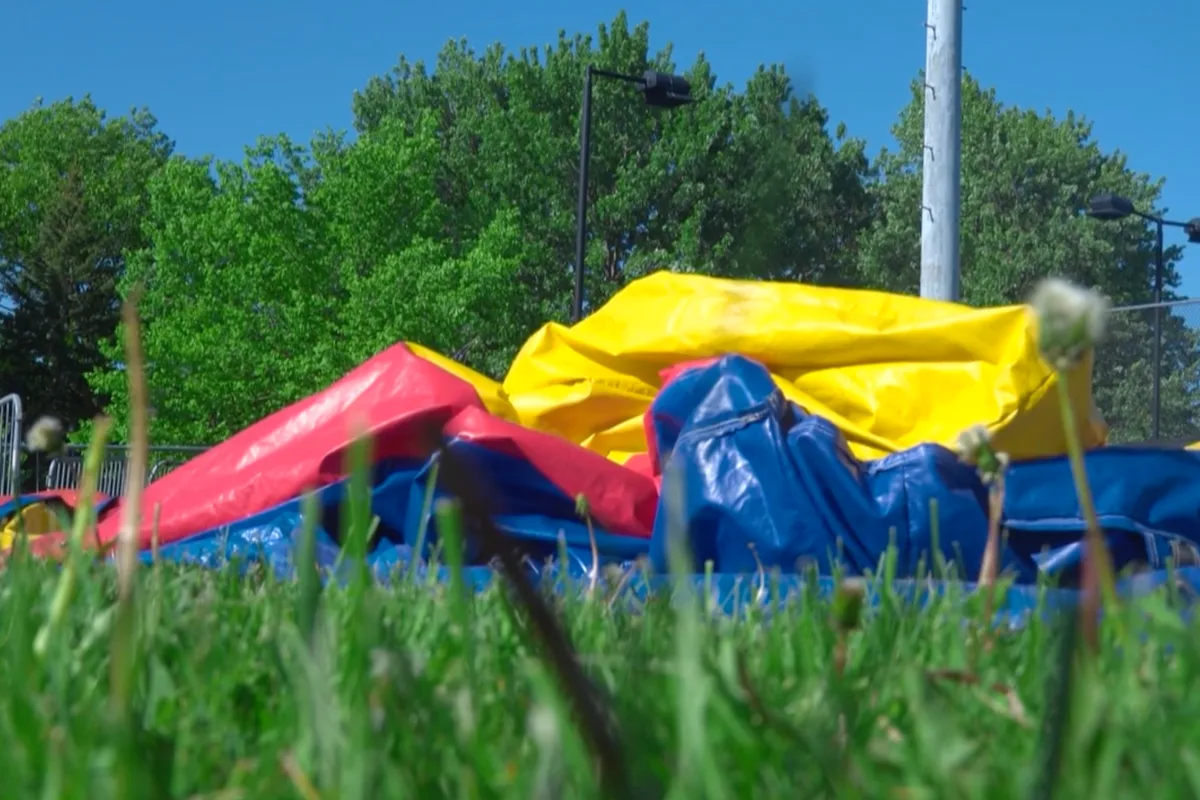
A three-year-old girl has died after a bouncy castle was lifted into the air by strong winds during a party in a Montreal park. The incident occurred on May 31 at Parc Ouellet in LaSalle, a borough in southwest Montreal, where an inflatable castle and a tent were tossed by high winds.
Eleven people were injured, with six taken to hospital. Environment Canada reported wind speeds of up to 50 km/h (31 mph) at the time of the accident, which occurred during a church-organised party. Coroner Martine Lachance has been appointed to investigate the circumstances of the death.
Cathy Denis, owner of an inflatable-structure rental company in Quebec, stated that she does not install or operate bouncy castles when forecasts predict wind speeds exceeding 38 km/h (24 mph). She emphasised that this limit is crucial because inflatables have a large surface area, and sudden gusts can move them even when properly installed.

Similar tragedies have occurred worldwide. In 2022, an eight-year-old girl died in Spain after a bouncy castle was blown into the air. In 2021, six children died in Australia when a jumping castle was lifted about 10 metres. In 2017, a six-year-old girl died in Spain after an inflatable came loose from its stakes.
Health Canada advises operators to securely anchor inflatable structures to prevent movement or lifting. A 2013 study by the Public Health Agency of Canada identified 674 injuries associated with inflatable attractions between 1990 and 2009, with children aged 2 to 9 most affected. Another study found inflatables caused 42% of amusement-ride injuries in a US database in 2010.