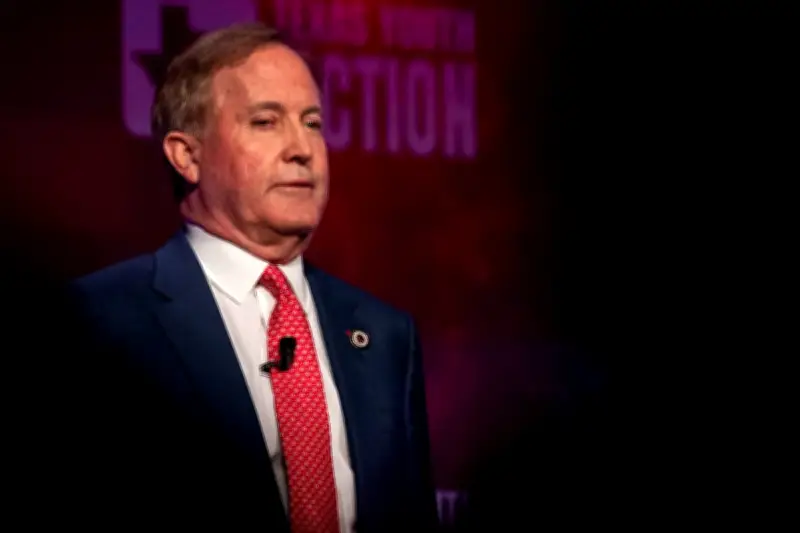
Texas Attorney General Ken Paxton, the Republican candidate for the US Senate, has launched an investigation into an alleged conspiracy between pediatricians, vaccine makers and insurance companies. The move aligns him with the Make America Healthy Again (Maha) movement and could further restrict access to vaccines as deadly outbreaks unfold.
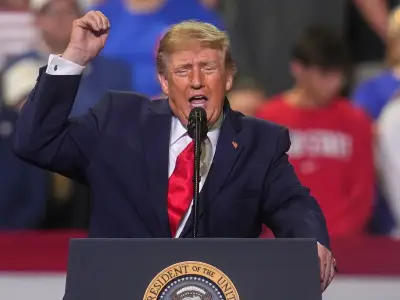
Paxton announced the inquiry in January, alleging a sweeping collusion that “illegally incentivized” doctors to administer vaccines. He linked his efforts to a campaign against vaccines from Donald Trump and Robert F Kennedy Jr, the secretary of the US Department of Health and Human Services (HHS), and directly referenced the Maha movement in his announcement. The president endorsed Paxton’s Senate run in May.
Investigation details and support
Paxton alleges that the pharmaceutical and insurance industries were attempting to “bribe” medical providers. In August, he launched a separate investigation into the American Academy of Pediatrics (AAP), accusing them of potentially recommending vaccines for financial gain. He referenced a lawsuit the AAP filed earlier this year to halt sweeping changes to the childhood immunization schedule and again invoked Trump and Kennedy’s moves on vaccines.
At least one Texas pediatrician now says she is under investigation. According to reporting from the New York Times, she has received letters indicating she is being investigated by the attorney general’s consumer protection division about her records of vaccination, including “potential misleading or deceptive acts regarding incentives associated with the administration of childhood vaccines”. The investigators are requesting details on every “reward, financial benefit, bonus, discount, return, rebate or other consideration” from vaccine makers, prompting the pediatrician to spend thousands in legal fees.
Impact on vaccination rates and pediatricians
A new law in Texas makes it easier for parents to request school vaccine exemptions, as the rate of measles, mumps and rubella (MMR) vaccination falls in the state. Only 93.3% of kindergarteners in Texas are now fully vaccinated against measles.
Pediatricians are one of the lowest-paid medical specialties and “barely break even” on vaccines, said Marjan Linnell, a pediatrician and president-elect of the Texas Pediatric Society. Katherine Wells, director of Lubbock Public Health, said she gets reimbursed as little as $6 for giving a vaccine. Even when her health department receives vaccines for free from the state, it only receives about $13 for the costs of administering the vaccine.
“That does not cover the time of a nurse to talk to the parents, review the shot record, draw up the vaccine, give the injection, provide the education. It’s way more than six bucks for me to do that in a health department, and I’m a low-cost, low-overhead entity,” Wells said. She added: “I’m taking a loss every time I give a vaccine, but it’s the right thing to do.”
Reactions and broader context
Primary care doctors and the AAP have high levels of trust, with both ranked as more trustworthy than federal health agencies in a February survey. “Pediatricians are beloved,” said Paul Offit, a vaccines expert at Children’s Hospital of Philadelphia. “People see them as nice people trying to do the right thing.” Offit added: “I just think this war on pediatricians is not a winner. Ken Paxton, I think, is desperate. He very well may lose to Talarico, and this is a stupid, desperate thing to do.”
Despite their broad popularity, pediatricians have frequently been targeted by anti-vaccine activists, including recent claims from Children’s Health Defense that they’ve reported doctors in Lubbock to the Texas medical board for treating measles patients. The organization, which was previously led by Kennedy, also sued the AAP for racketeering on the same day that Paxton announced he would investigate pediatricians.
Kennedy has frequently criticized the healthcare system in America, decrying what he says are doctors who make decisions based on a “financial bonus” and “hidden incentives that corrupt medical judgment”, according to a video he posted on X in August 2025. “Doctors are being paid to vaccinate, not evaluate,” Kennedy claimed, adding: “That’s not medicine. That’s coercion.”
All pediatricians could be at risk of investigations, making the future of practicing pediatrics hazy. “Texas already has a shortage of primary care,” Linnell said. Actions like these could worsen the health care shortage, she added. “If you’re going to be potentially threatened with a lawsuit that could close your business down, it’s yet another reason for people to not go into primary care.”
She worries about pediatricians at smaller practices who may be forced to choose between vaccinations and high legal and administrative fees. “If you have a fear that you’re going to have to spend a bunch of money – potentially stop your practice or really take a financial hit, having to defend a lawsuit – then it could be conceivable that you won’t be able to offer children vaccines,” Linnell said.
Making it more challenging for children to get vaccinated will increase the risk of vaccine-preventable diseases such as measles, Haemophilus influenzae type b (Hib), and others, Linnell said. These are diseases she had never seen before, and she had hoped never to see them in her entire career – but now they are spreading throughout the country, at the same time that the way to prevent them is being undermined. “Threats like this just feed into this fear,” Linnell said.
The accusations of financial gain are particularly puzzling because vaccines are expensive and time-consuming to maintain and administer, Linnell said. Staff are trained on how to administer them; storage is complicated, with special freezers that can’t ever lose power. A couple years ago, there was a freeze for five days, and the bridge to Linnell’s clinic was frozen, she said. Every vaccine in the freezer had to be thrown out. “All of those vaccines, our clinic had to pay out of pocket to replace,” Linnell said.
With vaccination, “in some cases, we barely break even”, she said. “It’s not something we would do if we didn’t think they were so critically important and so safe.” She continued: “Vaccines are expensive, but they’re worth it. They are one of the best studied, safest things that we can do to keep kids in their communities, playing, going to school.”