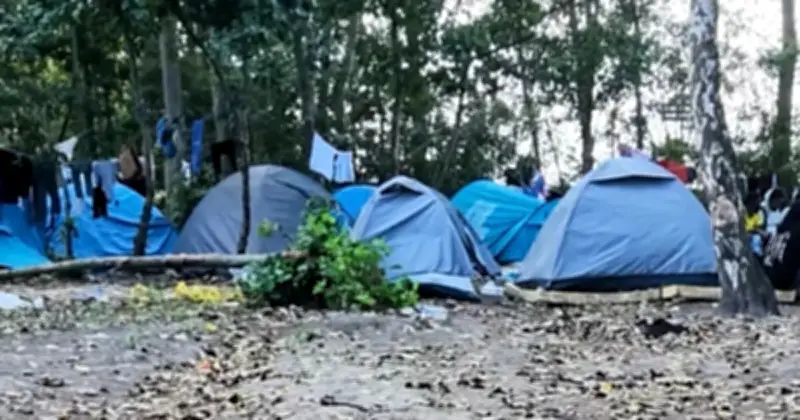
Walking through the migrant camp at Loon-Plage near Dunkirk, France, a reporter was reminded of assignments to war zones in Syria. The tents in the woods sit just a few hundred yards from shopping centres selling fresh baguettes, where people charge their Teslas in the car park.
Desperate Conditions in the Woods
The encampment is spread across several wooded areas beside a busy dual carriageway, close to a railway line and a canal. The landscape is industrial, with factories on the skyline and a large shopping centre nearby in Grande-Synthe. Migrants often walk alongside the busy road to reach the shops.
In the woods, small tents shelter men, women, children, and babies. Some shelters are corralled in groups, possibly linked by nationality or for protection. Rubbish is everywhere, and youngsters play amongst the soiled nature, sometimes dangerously close to a side road where lorries thunder past towards a construction site.
A 21-year-old woman travelling with her brother, 24, and a 22-year-old female friend said they had been at the camp for one month. The trio are from India, a country not at war. She said they are trying to get to London and want to cross over by boat to England.
“I already lived in London for one and a half years,” the woman said, although she did not answer when asked why she left. “It costs a lot of money to pay for the boat, €2,000 each. It is dangerous.”
Migrants' Stories and Hopes
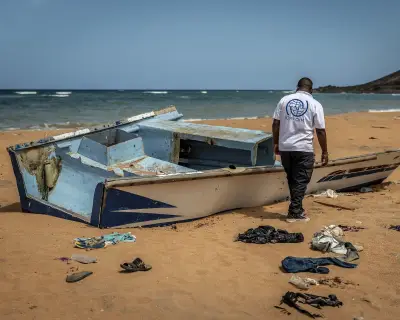
A man named Chi from Nigeria said he had been in the camp for two months after taking a migrant boat from Libya to reach Europe. When asked if he would like to reach Britain eventually, Chi, aged 30, said, “I don’t know when I get chance. I want to get a good life, a good apartment and go to school to make a good future.”
Angel from Tanzania said she had been there for three months. “They treat us like slaves, we don’t have anything to do, no food sometimes, you can stay here from morning until evening and there is nothing to eat. It’s not a good place for us, especially for women, it’s dangerous and the police don’t listen to us, they came here and broke into our tent.”
Her friend Asiah added: “We sleep in the dark and dirt, when the rain is coming, we take the water to drink, we have no shelter.” Angel and Asiah said they came to Europe by boat from Morocco.
Dangerous Crossings and Ongoing Crisis
People traffickers are dangerously packing each vessel with hundreds of migrants at a time, with one so-called ‘mega dinghy’ carrying 230 people making the trip to the UK this month. At least 24 people, including children, have died in the Channel during the crossings so far this year.
Robel, 33, from Eritrea, said, “There is no limit what people will pay for the boat, because you are only thinking about your life. You have to do everything you can to get to the UK. Everyone has their own journey and story, as you can see here it is not comfortable to live. The problem is here is only refugees and no one knows how to ask for support from the French, they feel like they are not living in the world anymore. People here are searching for peace, people like you come here from England and they ask us why do we want to go there? The answer is we are looking for peace.”
Robel said his “wish” is to bring family with him once he makes the crossing. During his time at the camp, the reporter met people from African nations, Iran, Chechnya, Afghanistan, Iraq, Vietnam, and India. It’s likely many will add to the more than 15,800 migrants who have already crossed the Channel to reach Britain so far this year, and the tide of migrants does not show any sign of stopping.