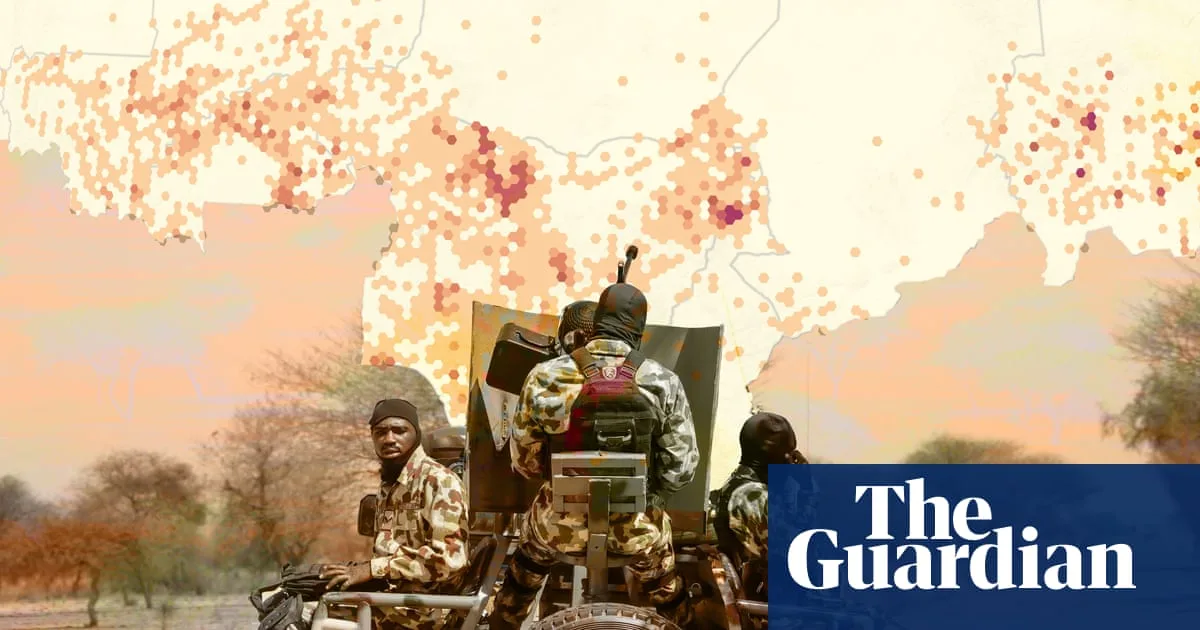
Data from Acled and the Global Terrorism Index reveals that after a brief period of improvement, insecurity in Nigeria has worsened. With general elections less than a year away, the crisis has drawn increasing scrutiny both at home and abroad.
Experts identify a governance vacuum across much of the country as the primary long-term driver of insecurity. Although Nigeria is a federation of 36 states and 774 local government areas, power is heavily centralised at the federal level. Resources trickle down to states in limited quantities and are distributed in even smaller amounts to local councils, largely at the discretion of governors.
As a result, vast areas of Nigeria consist of what academics and civil society groups call ungoverned or under-governed spaces. Non-state actors motivated by extremist ideology, economic or ethnic marginalisation, or a combination of factors can move relatively freely, recruit, and plot attacks.

The situation is exacerbated by Nigeria's thinly stretched security apparatus. The military, with about 230,000 personnel, is one of Africa's largest but is fighting insurgencies on multiple fronts in the north and a secessionist movement in the south-east. The police force of around 370,000 officers translates to one officer per 600 citizens, far below the UN-recommended ratio of one per 450. In many communities outside big cities, the only government presence is an abandoned police post, a dilapidated health centre, or a barely functioning primary school.
On Saturday, the US and Nigeria announced that a joint operation had killed Abu-Bilal al-Minuki, the second-in-command of Islamic State globally, in Nigeria's north-east. The US also targeted extremist militants in the north-western state of Sokoto late last year, and in February about 100 US soldiers arrived to advise the Nigerian military. However, those strikes and deployments have done little to stem the rising tide of violence.